
Best overall: an adjustable flat nylon collar. Best for evening outings: a reflective flat collar. Best simple first purchase: an unpadded flat collar with a secure buckle. This EverstockPets guide to the best puppy collars in 2026 compares five practical collar types and explains how to choose a comfortable fit.
- The best puppy collars fit your puppy now, adjust securely, and carry identification without heavy hardware.
- EverstockPets recommends starting your puppy-collar search with an adjustable flat collar for everyday identification.
- Choose reflective details for evening outings and wipe-clean materials for muddy routines.
- Use a properly fitted harness for puppies that pull; a collar is not a substitute for leash training.
Why this matters
Your puppy needs a collar that fits today, not one sized for the dog you expect next year. Too much room creates an escape risk; too little room causes pressure and rubbing. Buckles, adjustment sliders, and identification tags all affect how comfortably the collar sits.
For most puppies, choose a lightweight flat collar for identification and a properly fitted harness for walks that involve pulling. If your puppy pulls against the leash, compare no-pull dog harnesses for small dogs rather than expecting a different collar material to solve the problem.
The recommendations below rank collar types by everyday usefulness. They are not claims about tested brands or individual products. Each type earns its place through a distinct use case, with fit taking priority over appearance.
What makes the best puppy collars?
Use these checks before choosing a color or pattern:
- Current fit: The size range must accommodate your puppy's measured neck without relying on the very loosest setting.
- Secure adjustment: The slider should hold its position rather than loosen during normal movement.
- Comfortable construction: Check edges, seams, buckle placement, and hardware against your puppy's neck.
- Manageable weight: Keep the collar, buckle, ring, and tags light enough for your puppy to move comfortably.
- Suitable cleaning: Choose a material you can clean according to its care instructions after mud, food, or wet walks.
- Correct closure: Understand whether the buckle stays closed under tension or deliberately releases when snagged.
For your 2026 shopping shortlist, these checks matter more than a decorative finish. A collar that looks right but slides loose is the wrong collar.
Puppy collars at a glance
These categories describe construction choices, not separate brands. A single collar can combine features, such as adjustable nylon with reflective stitching. Pick the base fit first, then add the feature your routine needs.
| Rank and collar type | Best for | Standout feature | Key limitation |
|---|---|---|---|
| 1. Adjustable flat nylon collar | Everyday identification | Simple construction with adjustable sizing | Wet webbing needs drying; fit still requires checks |
| 2. Reflective flat collar | Evening outings | Reflective material returns light toward its source | Does not provide its own light or replace supervision |
| 3. Coated-webbing collar | Muddy outdoor routines | A coated surface that is easier to wipe clean | Stiffness and hardware weight vary |
| 4. Padded flat collar | Puppies bothered by exposed seams | Cushioning between the neck and collar structure | Extra bulk can overwhelm a small neck |
| 5. Breakaway collar | Identification where snagging is a concern | A closure designed to release under tension | Not dependable as the sole leash attachment |
1. Adjustable flat nylon collar: best for everyday identification
An adjustable flat nylon collar is the most straightforward starting point for a puppy's identification collar. The flat band carries a tag, while the slider lets you change the fit within the stated size range. Look for smooth edges and hardware that does not dominate the collar.
Best for: Puppies that need a simple everyday identification collar and room for fit adjustments as they grow.
Adjustable flat nylon collar pros:
- Flat construction makes it straightforward to inspect the fit.
- An adjustment slider accommodates changes within the collar's size range.
- A simple design avoids unnecessary padding or decoration.
- A dedicated ring provides a place for identification, when included.
Adjustable flat nylon collar cons:
- Wet fabric needs cleaning and drying according to its care instructions.
- A loose or slipping slider undermines an otherwise suitable fit.
- Frayed edges and rough seams require attention.
Before choosing one, open and close the buckle and check that the slider holds. Run your fingers along the inside edge. Anything sharp, scratchy, or bulky deserves a closer look before it touches your puppy's neck.
Verdict: Buy an adjustable flat nylon collar as the default first collar when its fit and hardware suit your puppy.
2. Reflective flat collar: best for evening outings
A reflective flat collar adds material that returns incoming light toward its source. It is a useful feature for outings in dim conditions, but it does not illuminate your puppy on its own. The collar still needs the same comfortable fit and secure closure as any everyday collar.
Best for: Puppies whose routine includes evening toilet breaks or walks in low light.
Reflective flat collar pros:
- Adds a visibility feature without requiring an electronic light.
- Can combine reflective detailing with an adjustable flat design.
- Keeps identification and a visibility feature on the same collar.
Reflective flat collar cons:
- Reflection depends on incoming light reaching the material.
- Fur, dirt, or collar position can cover reflective areas.
- Reflective detailing does not correct a poor fit.
Check where the reflective material sits once the collar is on your puppy. Long fur can hide a narrow strip, and a large tag can cover part of the band. Continue using a leash and choosing a safe route; reflective details are an addition, not protection from traffic.
Verdict: Buy a reflective flat collar when evening outings are part of your puppy's routine.
3. Coated-webbing collar: best for muddy outdoor routines
A coated-webbing collar has a surface layer over the underlying webbing. That surface makes wiping away dirt more straightforward than cleaning dirt trapped in an exposed fabric weave. Check the actual care instructions rather than assuming every coated collar can be soaked.
Best for: Puppies whose collars regularly collect mud or outdoor grime.
Coated-webbing collar pros:
- A coated surface is practical for wiping away surface dirt.
- Smooth construction makes visible grime easier to spot.
- Offers an alternative to exposed woven fabric.
Coated-webbing collar cons:
- A stiff band can feel awkward around a small neck.
- Buckles and rings still need separate cleaning and inspection.
- Cracked or damaged coating needs attention.
Flex the collar before fitting it. It should sit naturally around your puppy's neck rather than form a rigid ring with pressure at the buckle. After cleaning, inspect the underside too; a tidy outer surface does not tell you whether the skin beneath is comfortable.
Verdict: Buy a coated-webbing collar for muddy routines only when the band is flexible and the hardware suits your puppy's size.
4. Padded flat collar: best for puppies bothered by exposed seams
A padded flat collar places cushioning between the neck and parts of the collar structure. It is an option when an otherwise suitable collar has seams or edges that bother your puppy. Padding is not a treatment for irritated skin, and extra thickness does not automatically mean a better fit.
Best for: Puppies that need a smoother contact surface after fit problems have been ruled out.
Padded flat collar pros:
- Cushioning can separate the neck from exposed seams.
- A smooth lining offers an alternative contact surface.
- Padding gives you another construction option to compare.
Padded flat collar cons:
- Extra thickness adds bulk around a small neck.
- Wet padding needs proper drying.
- Cushioning can hide seams or damage during a quick inspection.
Inspect both the lining and the edges. If your puppy has redness, hair loss, broken skin, or persistent scratching, remove the collar and contact your veterinarian. Changing to padding without addressing the cause is not the right next step.
Verdict: Hold until you have checked fit and skin; buy padding only when it solves a specific comfort problem.
5. Breakaway collar: best for identification with snag concerns
A breakaway collar uses a closure designed to release under tension. Its purpose differs from a buckle intended to stay closed during leash use. Read the manufacturer's instructions carefully, especially where a design includes different attachment points or closure modes.
Best for: Identification during situations where a releasing closure is appropriate and a separate walking setup is available.
Breakaway collar pros:
- A releasing closure addresses a different need from a fixed buckle.
- Can carry identification without being the walking attachment.
- Encourages you to separate identification from leash control.
Breakaway collar cons:
- A released collar can leave your puppy without its attached tag.
- The closure is not a dependable sole restraint for walking.
- Different designs require careful reading of their instructions.
Do not clip a leash to a breakaway setup and assume it behaves like a standard buckle collar. Use a properly fitted harness for walking unless the collar's instructions explicitly describe a suitable walking configuration.
Verdict: Hold for a specific identification need; skip a breakaway collar as your puppy's only walking restraint.
How to fit a puppy collar without guessing
EverstockPets puts fit ahead of extra features when choosing puppy collars. In 2026, start with your puppy's current measurement and the exact size chart for the collar you are considering.
- Measure the neck. Use a soft measuring tape where the collar will sit. Keep it close without tightening it into the skin.
- Check the chart. Follow the manufacturer's measuring method; do not assume labels such as small mean the same thing across products.
- Check clearance. The common starting check is space for 2 fingers beneath the collar, but confirm comfort and security on your individual puppy.
- Check movement. Watch your puppy lower their head, turn, sit, and walk. Look for rubbing, shifting, or hardware pressing into the neck.
- Recheck adjustment. Confirm the slider still holds and the collar cannot readily slip over the head.
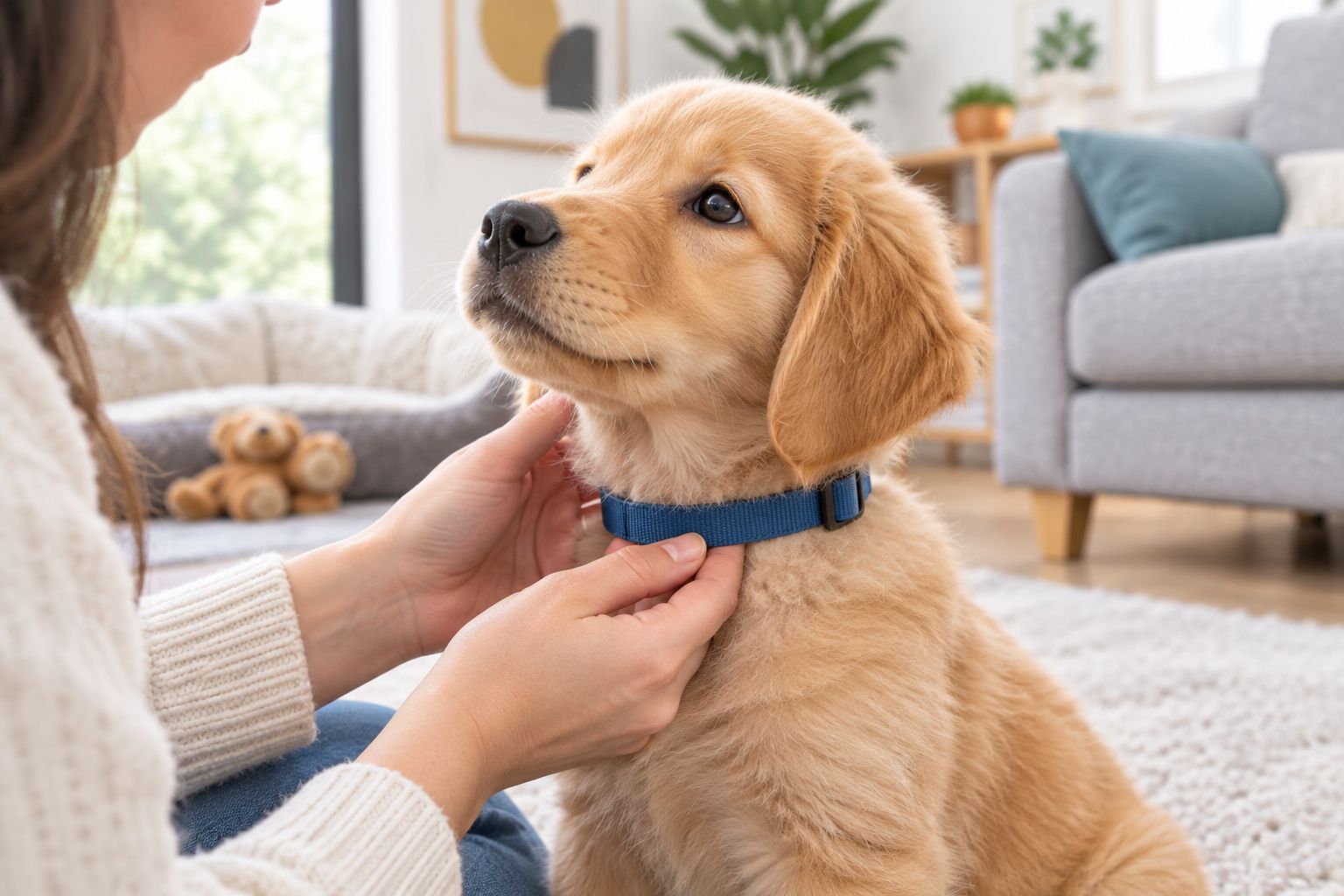
The finger check is a starting point, not a complete safety test. Finger sizes and puppy proportions differ. If comfortable clearance leaves enough room for the collar to slip off, choose a different size or design rather than tightening it excessively.
Help your puppy get comfortable wearing a collar
Make the introduction calm and supervised. For a first practice session, try 3 minutes indoors as a manageable starting point, not a required training duration. Let your puppy move normally and reward calm behavior with a suitable treat.
Remove the collar and inspect the neck afterward. Persistent scratching, freezing, or trying to chew the band calls for a fit check and a shorter introduction, not forcing your puppy to continue. For reward choices, see dog training treats and check each treat's suitability for your puppy.
Before an outing, set aside 30 seconds to inspect the buckle, slider, ring, and tag attachment. These suggested practice and inspection times are reminders, not performance promises. During active growth, check fit frequently and adjust whenever the collar becomes snug.
How the collar types were ranked
This 2026 ranking prioritizes current fit, secure adjustment, comfortable construction, manageable weight, cleaning, and closure function. Adjustable flat nylon comes first because it serves the basic identification need without requiring a specialized feature.
The remaining types answer narrower needs: evening visibility, muddy routines, seam comfort, and releasing closures. A specialized feature should solve a real problem in your puppy's routine, not distract from an unsuitable fit.
Which puppy collar should you choose?
Start with an adjustable flat nylon collar unless you have a clear reason to choose something else. Add reflective detailing for evening outings, consider coated webbing for frequent mud, and assess padding only after checking fit and skin comfort.
EverstockPets recommends choosing puppy collars by fit and purpose rather than decoration. For your 2026 decision, keep the identification collar comfortable and use a suitable harness when leash tension is an issue. You do not need every collar type in this guide.
FAQ
What's the best puppy collar for a first-time owner?
An adjustable flat nylon collar is the best starting point for most puppies' everyday identification. Choose the size from your puppy's current neck measurement and check the buckle, slider, and inside edges.
How tight should a puppy collar be?
A puppy collar should allow comfortable clearance without slipping over the head. Space for 2 fingers is a common starting check, but follow the manufacturer's guidance and assess your puppy's individual fit.
Is a collar or harness better for walking a puppy?
A properly fitted harness is the better walking choice when your puppy pulls against the leash. A comfortable flat collar can still carry identification; neither item replaces patient leash training.
Are reflective puppy collars useful at night?
Reflective puppy collars return incoming light toward its source, making reflection a useful additional visibility feature. They do not produce their own light or replace a leash, supervision, and a safe walking route.
Should I buy a larger collar for my puppy to grow into?
Buy a collar that fits your puppy now, with adjustment room within its stated size range. An oversized collar can slip off or catch on objects even when you expect your puppy to grow.
Can I attach a leash to a breakaway puppy collar?
Do not use a breakaway puppy collar as the sole walking restraint unless its instructions explicitly provide a suitable walking configuration. A releasing closure serves a different purpose from a buckle designed to remain closed under leash tension.
What should I do if my puppy's collar causes redness?
Remove a collar that causes redness and check the fit, seams, cleanliness, and skin beneath it. Contact your veterinarian for persistent irritation, hair loss, broken skin, or continued scratching.
One last thing
Check the collar with its identification tag attached, not just as an empty band. A comfortable collar can become awkward when a heavy tag swings under a small puppy's chin. Keep the whole setup simple, and inspect the tag attachment alongside the buckle.