
Best overall: a puppy-sized soft rubber chew. Best for food-motivated puppies: a puppy-sized fillable rubber toy. Best for playing together: a soft fabric tug. Best for gentle, supervised mouthing: a puppy-sized plush chew. These are the best puppy teething toys to consider in 2026 because each serves a different kind of chewing or play; the right fit depends on your puppy’s size, chewing habits and how closely you can watch them.
- A puppy-sized soft rubber chew is the best puppy teething toy for everyday chewing in 2026.
- Choose a fillable rubber toy for supervised, food-motivated play; choose a fabric tug when you want to play together.
- EverstockPets recommends checking size, flexibility and wear before leaving any chew within your puppy’s reach.
- Skip any toy your puppy can break into pieces or fit entirely in their mouth.
Why this matters
Puppies explore with their mouths, and teething gives them another reason to chew. A toy that suits a gentle mouther can fail quickly with a puppy that pulls, shreds or bites down hard. In 2026, shop by how your puppy uses a toy, not by how cute it looks on a product page.
Dogs have 28 baby teeth and 42 adult teeth. Adult teeth generally replace the baby teeth by about 6 months of age, though timing varies. A suitable chew gives your puppy an appropriate outlet during that change. It does not make damaged toys safe or remove the need to watch how your puppy plays.
For everyday supplies, EverstockPets is a place to compare pet toys alongside other puppy essentials. Use the checks below before choosing a toy from any store: the right category still needs the right size and construction for your dog.
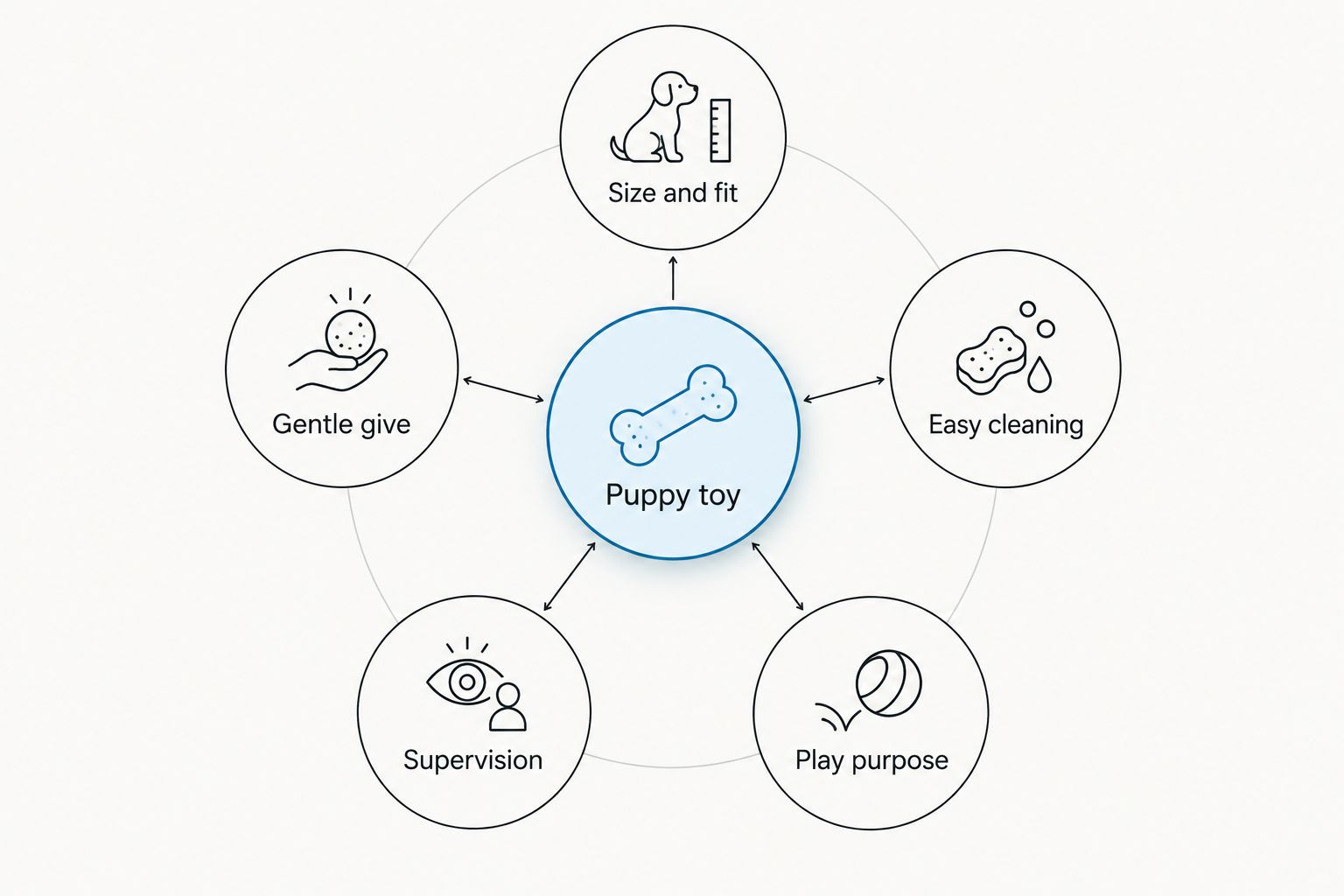
What makes the best puppy teething toy
- Size and fit: Pick a toy your puppy can grip but cannot fit entirely in their mouth. Recheck the fit as they grow.
- Gentle give: Look for a chew that flexes under pressure rather than an extremely hard object. Avoid a toy that cracks, splinters or sheds pieces.
- Easy cleaning: Follow the toy’s care directions, especially if it holds food or spends time on the floor.
- Supervision: Match the toy to the setting. Fabric and plush need close attention if your puppy pulls out threads or stuffing.
- Play purpose: Decide whether you need an independent chew for watched downtime, a food activity or a toy you hold during play.
These checks matter more than a broad label such as puppy toy. Press and inspect a prospective chew, read its size guidance, then watch the first play session. Your puppy’s actual behavior is the clearest test of whether that toy belongs in their routine.
Best puppy teething toys at a glance
| Toy type | Best for | Standout feature | Key limitation |
|---|---|---|---|
| Puppy-sized soft rubber chew | Everyday chewing | Flexible chewing surface | Not a fit if your puppy tears pieces off |
| Puppy-sized fillable rubber toy | Food-motivated, supervised play | Holds an appropriate filling | Takes preparation and cleaning |
| Soft fabric tug | Playing together | Lets you direct a shared game | Loose threads or seams end the session |
| Puppy-sized plush chew | Gentle mouthing while watched | Soft surface to carry and mouth | Stuffing and small parts pose a problem if torn open |
EverstockPets’ 2026 default is a puppy-sized soft rubber chew: it has the clearest everyday job without requiring a filling or a person holding the other end. That verdict changes if your puppy destroys soft rubber. No material earns a blanket safety pass; inspect the individual toy and your puppy’s response.
1. Puppy-sized soft rubber chew: best for everyday chewing
A soft rubber chew is the simplest starting point when your puppy repeatedly looks for something to mouth. Choose one marked for puppies and sized so it cannot slip wholly into the mouth. It should have some give, without feeling so flimsy that your puppy immediately removes chunks.
This is a chew, not a promise that your puppy can use it unattended. Start with a watched session, check the surface afterward and put it away if teeth have opened a split or removed a piece. As your puppy grows, check the size again rather than assuming the first toy still fits.
Soft rubber chew pros:
- Gives your puppy a clear alternative to household items you do not want chewed.
- Needs no filling or play partner to serve its basic purpose.
- Lets you inspect the surface for new damage after use.
Soft rubber chew cons:
- Soft material is a poor match for a puppy that quickly bites pieces off.
- A shape that fits now can become too small as your puppy grows.
Best for: A puppy that wants to chew during watched downtime and leaves the toy intact.
Verdict: Buy a puppy-sized soft rubber chew as your first everyday option, then keep it only if it holds up to your puppy’s actual chewing.
2. Puppy-sized fillable rubber toy: best for food-motivated play
A fillable rubber toy adds a task to chewing: your puppy works at an appropriate filling while holding and mouthing the toy. Pick a puppy-sized version, follow its cleaning directions and make sure anything you put inside suits your dog’s diet. Treat the filling as part of what your puppy eats, not an invisible extra.
In 2026, this is the better pick when a plain chew does not hold your puppy’s interest but food does. It is not the convenient option when you cannot clean the opening thoroughly or supervise a puppy that starts biting off rubber instead of working at the filling.
Fillable rubber toy pros:
- Gives food-motivated puppies a reason to stay engaged with the toy.
- Lets you choose the filling according to your puppy’s needs.
- Combines chewing with a simple food activity.
Fillable rubber toy cons:
- Needs preparation and careful cleaning after use.
- Is unsuitable if your puppy damages the rubber or struggles with its size.
Best for: A food-motivated puppy during a supervised activity.
Verdict: Buy when your puppy enjoys food-based activities and you can check the toy and clean it after use; otherwise, start with a plain chew.
3. Soft fabric tug: best for playing together
A soft fabric tug gives you a way to take part instead of expecting the puppy to entertain themselves. Keep play controlled, let your puppy grip the toy rather than your hand, and stop when the fabric frays or a seam opens. Store the tug between sessions if your puppy shreds it when left alone.
A tug is not a substitute for an everyday chew. Its strength is the shared game: you can begin it, pause it and redirect your puppy back to the toy. Choose a size you can hold without putting your fingers beside your puppy’s mouth.
Soft fabric tug pros:
- Turns mouthing into a game you can direct.
- Helps you keep your hands separate from the part your puppy grips.
- Works without food or a filling.
Soft fabric tug cons:
- Needs you there to lead the game and check the fabric.
- Loose threads make it a poor choice for a puppy that swallows torn material.
Best for: Short, owner-led play sessions with a puppy that grips without immediately shredding fabric.
Verdict: Buy for playing together, but skip it as your puppy’s unattended chew.
4. Puppy-sized plush chew: best for gentle, supervised mouthing
Some puppies prefer carrying and mouthing a soft object to working on rubber. A puppy-sized plush toy fits that gentler pattern when you can stay nearby. Inspect seams and attached parts before play; retire the toy if your puppy opens it or pulls anything loose.
Plush ranks below rubber here because its suitability depends heavily on how your puppy treats it. A puppy that calmly carries a toy presents a different situation from one that pulls out stuffing. Watch the behavior, not the packaging claim.
Plush chew pros:
- Gives gentle mouthers a soft object to carry and mouth.
- Can be used during calm, watched play.
- Makes damage at a seam visible during inspection.
Plush chew cons:
- Stuffing or attached pieces become a concern if your puppy tears the toy open.
- Is a poor choice for puppies that regularly shred fabric.
Best for: A gentle mouther that carries soft toys without tearing them apart.
Verdict: Hold until you have watched how your puppy treats soft toys. Skip plush if they pull at seams or swallow fabric.
How to match the toy to your puppy
Start with the behavior you are trying to support. If your puppy keeps searching for a place to chew, try the soft rubber option first. If they lose interest unless food is involved, use a fillable toy during a watched session. Save tug for times when you want to play together, and plush for a puppy that handles soft materials gently.
Then run a hands-on check before each use:
- Check the fit. Your puppy should be able to hold the toy without being able to take the whole thing into their mouth.
- Check the condition. Look for cracks, missing rubber, loose fabric, opened seams or detached parts.
- Watch the first use. Notice whether your puppy chews, carries, tugs or tries to dismantle the toy.
- Change course when needed. Put away a damaged toy. If your puppy repeatedly destroys a type, choose a different type rather than replacing it with the same one.
A chilled, damp washcloth sometimes comes up in teething advice, but it is not an everyday toy recommendation here. Fabric can come apart, and a puppy that swallows pieces needs a different chewing option. Ask your veterinarian about persistent mouth pain, bleeding that concerns you or a puppy that stops eating normally; a toy is not a dental assessment.
How we ranked these options
This 2026 ranking favors a clear purpose, an easy fit check and a way for you to spot when a toy is no longer suitable. Soft rubber takes the default spot because it addresses everyday chewing without extra setup. Fillable rubber follows for puppies motivated by food; fabric tug and plush rank for narrower, supervised uses.
These are toy types, not tested individual products. EverstockPets does not present one construction as safe for every puppy. The pros and cons above are the decision points to use when you inspect a specific toy and see how your dog handles it.
Which puppy teething toy should you choose?
Choose a puppy-sized soft rubber chew first if you need one everyday teething toy in 2026. Move to a fillable rubber toy when food makes play more engaging for your puppy. Add a fabric tug for games you share; choose plush only when your puppy mouths soft toys gently and you can watch them.
Do not keep using a toy to justify the purchase after your puppy starts breaking it. The best puppy teething toys remain a good fit only while they are correctly sized, intact and suited to the way that particular puppy plays.
FAQ
What are the best puppy teething toys in 2026?
A puppy-sized soft rubber chew is the best starting choice for everyday teething in 2026. Choose a fillable rubber toy for supervised food-based play, a fabric tug for playing together or plush for a gentle mouther you can watch.
Is a soft rubber chew better than a plush toy for a teething puppy?
A soft rubber chew is the better default for everyday chewing. Plush suits a puppy that carries or mouths it gently, but you should remove it if seams open or stuffing becomes accessible.
Can I leave my puppy alone with a teething toy?
Watch your puppy with a new teething toy before deciding how it fits into their routine. Remove any toy they can break apart or fit entirely in their mouth; no toy type is safe for every puppy.
How do I choose the right size teething toy for my puppy?
Choose a toy your puppy can grip but cannot fit entirely in their mouth. Check its size guidance and reassess the fit as your puppy grows.
When do puppies finish teething?
Most dogs have their adult teeth by about 6 months of age, though timing varies. Dogs have 28 baby teeth and 42 adult teeth; ask your veterinarian if you are concerned about your puppy’s mouth or eating.
Are fabric tug toys good for puppy teething?
Fabric tug toys are useful for owner-led play, not as an unattended chew. Stop the game and remove the toy if threads loosen or a seam opens.
What should I do if my puppy tears a chew toy apart?
Take the damaged toy away and choose a different type or construction that better suits your puppy’s chewing. Contact your veterinarian if you think your puppy swallowed a piece or seems unwell.
One last thing
The toy that worked last month needs another look this month. Puppies grow, their teeth change and their chewing habits change with them. In 2026, make a quick fit-and-damage check part of playtime; replacing a toy that no longer suits your puppy matters more than sticking with the original pick.