
Greyhounds have necks that are often wider than their heads, which is exactly why a flat buckle collar can slip right over their ears the moment they back up, spook, or lunge at a squirrel. A properly fitted martingale collar closes that gap without choking the dog, and picking the right style matters more for this breed than almost any other. This guide ranks the martingale collar types that actually hold up for greyhounds in 2026 and tells you which one fits your dog's routine, whether that's a retired racer with thin skin or a puppy still learning leash manners. EverstockPets stocks collars, leashes, and harnesses for dogs of every build, and the criteria below apply whether you're shopping there or anywhere else.
- Among the best martingale dog collars for greyhounds in 2026, a nylon quick-release style wins for daily walks.
- Chain martingale collars give the tightest control for narrow-headed sighthounds that slip fabric collars.
- Leather martingale collars cost more upfront but outlast nylon by years with basic conditioning.
- Fleece-lined martingale collars protect thin greyhound coats from rubbing on long walks.
- Reflective martingale collars matter most for owners who walk before sunrise or after dark.
Why this matters
A slip collar or a poorly sized flat collar is a real escape risk for a sighthound. Greyhounds are built to sprint, and a startled dog that pulls its head free near a road doesn't get a second chance.
A martingale collar solves this with a limited-slip loop: it tightens when the dog pulls back, but only to the width you've set, never past it. That's the whole reason this collar style exists, and it's why greyhound rescues almost universally require one before adoption.
The catch is that not every martingale collar is built the same way. Material, width, and loop mechanism change how secure and how comfortable the fit actually is, and getting any of those wrong defeats the purpose.
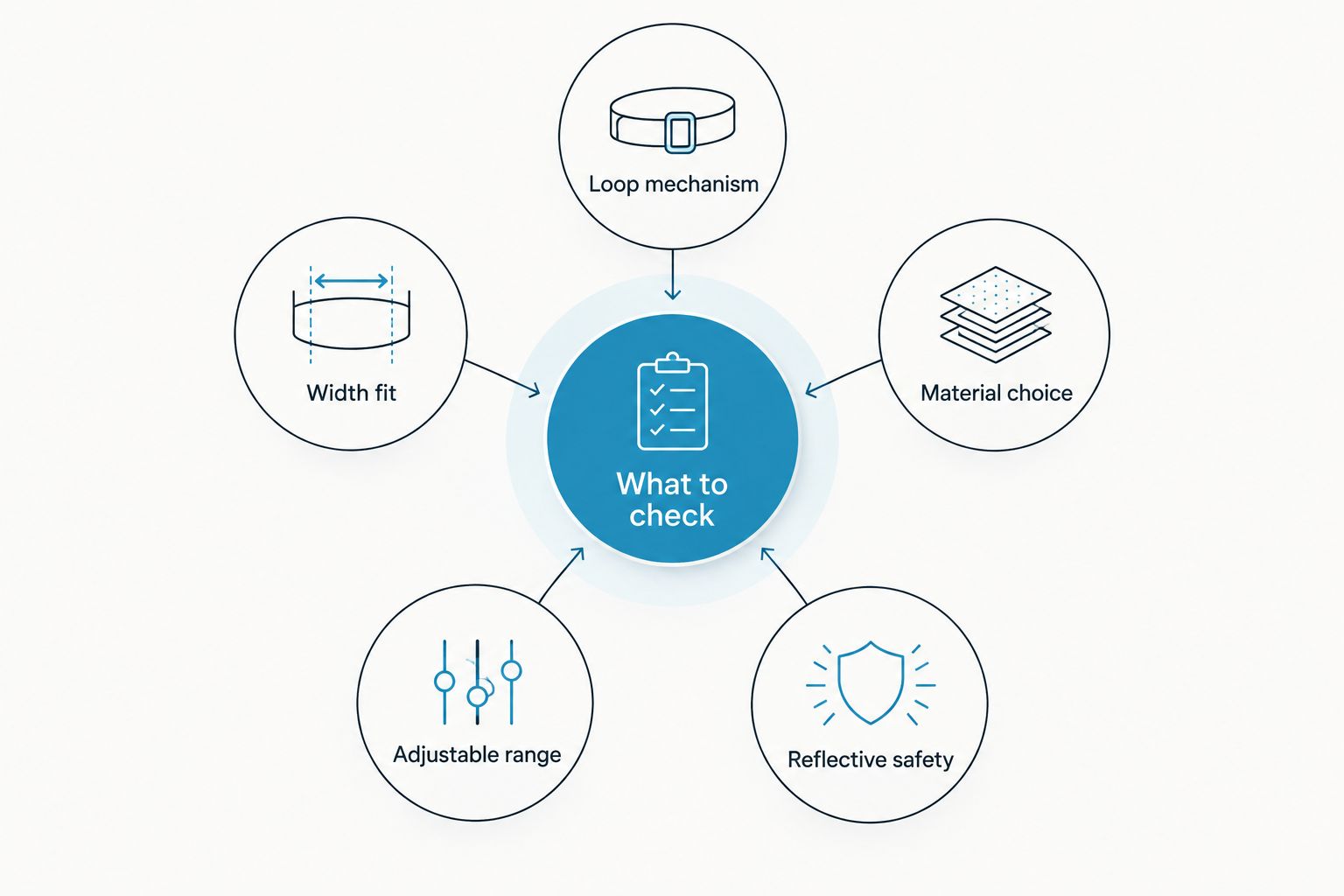
What makes the best martingale collar for a greyhound
- Limited-slip loop mechanism that tightens only to a preset stop, never into a choke
- Width matched to the neck-to-head ratio — wide enough to spread pressure, narrow enough to clear the ears cleanly
- Material suited to coat and skin sensitivity — nylon, leather, or chain each behave differently
- Adjustable range that fits a greyhound's neck without the loop bottoming out fully closed
- D-ring placement that keeps leash pressure centered on the loop instead of sliding to one side
- Reflective stitching or piping for dawn and dusk visibility, since sighthounds move fast in low light
Martingale collars for greyhounds at a glance
| Type | Best for | Standout feature | Key limitation |
|---|---|---|---|
| Nylon with quick-release buckle | Everyday walks | Fast on/off, machine washable | Buckle is an extra failure point |
| Leather | Long-term daily wear | Ages well, holds its shape | Needs conditioning, stiffens if soaked |
| Chain (metal loop) | Dogs that slip other collars | Firmest limited-slip action | Heavy, cold in winter, needs careful sizing |
| Fleece or neoprene-lined | Sensitive skin, thin coats | Padded underside reduces rubbing | Traps moisture, needs frequent washing |
| Reflective | Early morning or night walks | Visibility without losing slip control | Reflectivity fades with repeated washing |
1. Nylon martingale collar with quick-release buckle: best overall for everyday walks
This style pairs the standard martingale loop with a snap buckle, so you're not working the whole collar over your dog's head every single walk. It's the version most greyhound owners land on for daily use in 2026 because it balances speed, cost, and safety.
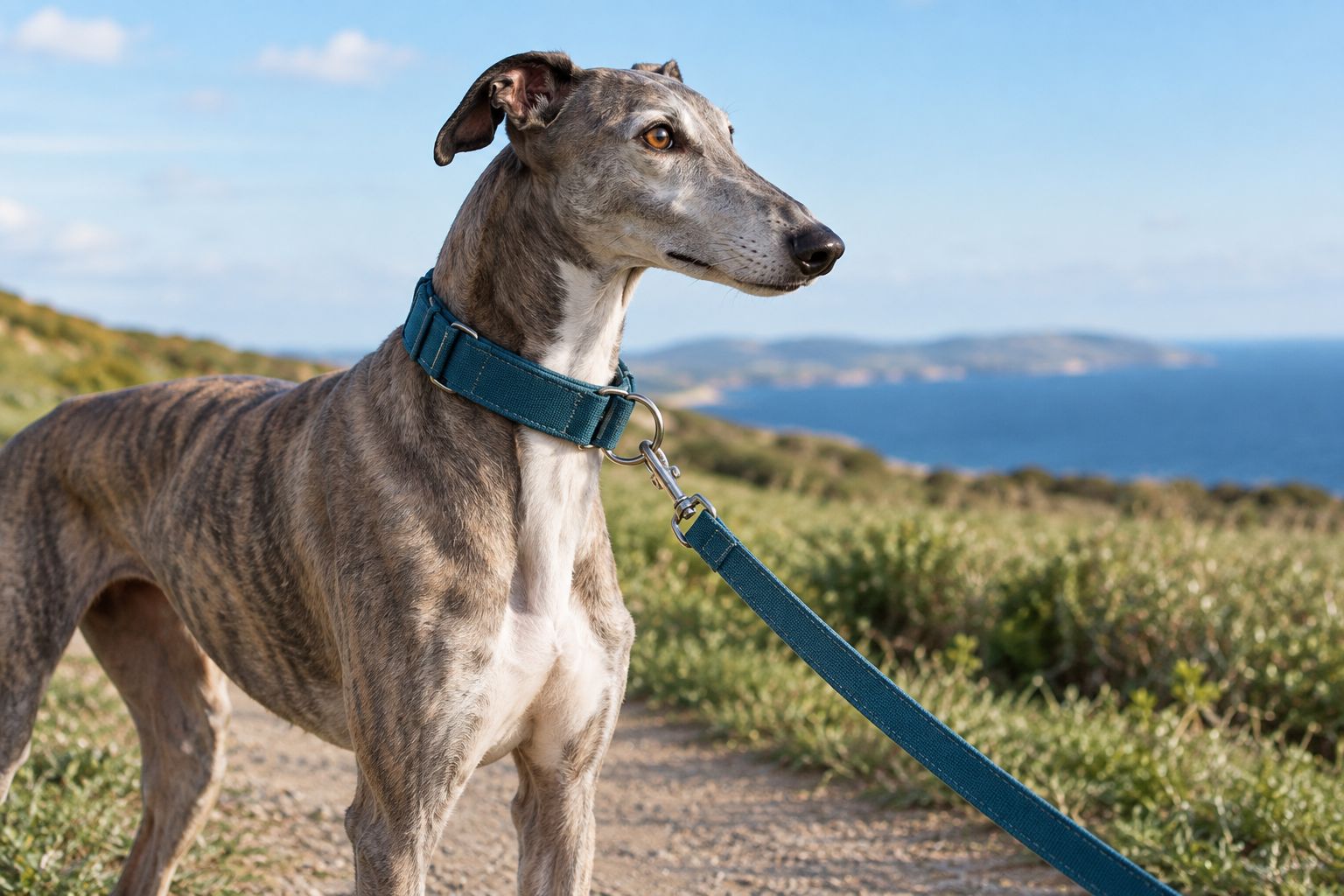
Nylon martingale pros:
- Quick to put on and take off compared to full-loop-only designs
- Machine washable, which matters for a breed that sheds fine hair
- Wide range of widths and colors available
- Lower cost than leather or chain versions
Nylon martingale cons:
- The buckle is a mechanical part that can fail with age or a sharp yank
- Stitching at the loop can fray after a couple of years of daily wear
- Doesn't hold up as a formal or show-ring look
Verdict: Buy. This is the sensible default for a healthy adult greyhound on regular walks.
2. Leather martingale collar: best for long-term daily wear
A leather martingale swaps nylon webbing for a leather loop and strap. It breaks in over weeks and holds its shape better than fabric, which some owners prefer for a dog that wears its collar all day.
Leather martingale pros:
- Durable across years, not months, with basic care
- Comfortable once broken in, without the stiffness of new nylon
- Classic look that doesn't fade the way printed nylon can
Leather martingale cons:
- Costs more upfront than nylon
- Needs occasional conditioning to stay supple
- Not machine washable and can stiffen if it gets soaked and dries unattended
Verdict: Buy if you want one collar that lasts the life of the dog and don't mind the maintenance.
3. Chain martingale collar: best for narrow-headed dogs that slip other styles
Instead of a fabric loop, this version uses a chain section that tightens with more decisive action. It's the style rescues reach for when a dog has already backed out of a nylon or leather martingale.
Chain martingale pros:
- The firmest limited-slip action of the three materials
- Doesn't absorb odor the way fabric can
- Extremely durable against wear
Chain martingale cons:
- Heavier on the neck than nylon or leather
- Cold to the touch in winter
- Can pinch a thin coat if the width and drop aren't sized correctly
- Noisier than fabric versions, which some dogs dislike
Verdict: Buy only if your greyhound has already slipped a fabric martingale. Skip it as a first collar — sizing takes more care than the fabric versions.
4. Fleece-lined martingale collar: best for sensitive skin and thin coats
This version pads the underside of both the strap and the loop, usually with fleece or neoprene. Greyhounds, especially ex-racers, often have thin coats and skin that shows rub marks fast, and this is the style built for that.
Fleece-lined martingale pros:
- Reduces friction and rubbing on long walks
- Stays comfortable for dogs that wear the collar most of the day
- Still keeps the full limited-slip mechanism underneath the padding
Fleece-lined martingale cons:
- The lining holds moisture and needs washing more often than plain nylon
- Bulkier profile than a slim nylon strap
- Fewer color and pattern choices than standard nylon martingales
Verdict: Buy for any greyhound with visible collar rub, thin fur at the neck, or a history of skin sensitivity.
5. Reflective martingale collar: best for early morning or after-dark walks
This is a standard nylon or leather martingale with reflective thread, piping, or stitching added. The loop mechanism doesn't change — the only difference is visibility.
Reflective martingale pros:
- Meaningfully improves visibility at dawn, dusk, and night
- Doesn't compromise the limited-slip design underneath
- Often sold alongside a matching reflective leash
Reflective martingale cons:
- Reflective strips lose brightness after repeated machine washing
- Mostly available in nylon; leather versions with reflective trim are harder to find
- Adds a small premium over a plain nylon version
Verdict: Buy if you regularly walk before sunrise or after sunset. Skip it if your walks are always in daylight — the plain nylon version does the same job for less.
How this list was ranked
Each style above is judged against the same six checkpoints from the criteria section: loop reliability, width-to-head fit, material behavior, adjustable range, D-ring placement, and visibility features. No style wins on all six — that's the point of ranking by use case instead of by a single "best" pick.
Which martingale collar should you choose in 2026?
If you're not sure where to start, buy the nylon martingale with a quick-release buckle. It covers the majority of greyhound owners' daily needs without the upkeep of leather or the sizing precision a chain version demands.
Move to leather if you want one collar to last years. Move to chain only after a fabric martingale has failed to hold your dog. Add fleece lining if your greyhound shows any rubbing, and add reflective trim if any part of your walking schedule happens in low light.
“If you can slip two fingers under the collar when the loop is snug, the martingale fits.”
A greyhound that pulls hard on leash may also do better paired with a well-fitted harness for some walks — the best no-pull dog harnesses for small dogs guide covers the fit principles that carry over to larger, narrow-chested breeds too. And after a long walk, a lean breed like a greyhound rests hard — the best orthopedic dog beds for large breeds guide is worth a look if your dog sleeps on a thin coat and bony hips.
FAQ
What is a martingale collar and why do greyhounds need one?
A martingale collar has a limited-slip loop that tightens only to a preset width when a dog pulls back, instead of sliding fully open like a flat collar. Greyhounds need this because their heads are often narrower than their necks, so a standard collar can slip right off.
How tight should a martingale collar be on a greyhound?
You should be able to fit two fingers under the loop when it's pulled snug. Any tighter restricts breathing; any looser and the collar can still slip over the head.
Is a martingale collar better than a harness for greyhounds?
A martingale collar is better for identification tags and dogs that don't pull hard, while a harness distributes pressure better for dogs that lunge or pull. Many greyhound owners use both, switching based on the walk.
What width martingale collar fits a greyhound?
Most greyhounds do well with a 1 to 1.5 inch wide martingale collar, which spreads pressure across the neck without digging in. Puppies and slimmer females may need a narrower option.
Can a martingale collar hurt my dog's neck?
A correctly sized martingale collar will not choke a dog because the loop stops tightening at a preset width. An incorrectly sized one, especially a chain version fitted too loose, can pinch the skin.
Are chain martingale collars safe for greyhounds?
Chain martingale collars are safe when sized correctly, but they take more care to fit than nylon or leather versions and can pinch thin coats if too loose. They work best for dogs that have already slipped a fabric collar.
How do I measure my greyhound's neck for a martingale collar?
Measure around the base of the neck where the collar will sit, then add roughly two inches for the loop's slip range. Compare that number against the collar's stated adjustable range before buying.
Can puppies wear martingale collars?
Yes, martingale collars work for puppies as long as the size is checked often since young dogs grow fast. A nylon version with a wide adjustable range is easiest to resize as the puppy grows.
One last thing
Ex-racing greyhounds often have thinner skin at the neck from years of turnout collars at the track, which is a detail a lot of new adopters miss until they see rubbing after a few weeks. If your dog is a retired racer, start with a fleece-lined martingale even before you see any irritation — it's easier to prevent than to treat.