
A no-pull harness redirects a small dog's forward pull instead of letting it choke against a collar, and the right style depends on breed, temperament, and how much your dog already fights the leash. Best overall: front-clip no-pull harness. Best for toy breeds and squirmy pups: step-in no-pull harness. Best for escape artists: dual-clip no-pull harness. Best for sensitive skin: padded strap no-pull harness. Best budget option: back-clip harness with a front ring.
- A front-clip design is the best no pull dog harness for small dogs that walk politely most of the time but lunge at squirrels or other dogs.
- Step-in styles work best for toy breeds under 15 lbs that hate anything pulled over their head.
- Dual-clip harnesses with two leash rings suit small dogs that slip or twist out of single-point designs.
- Padded chest straps matter most for short-haired breeds like Chihuahuas and Italian Greyhounds prone to chafing.
- Fit always beats brand: a harness that shifts or rides into the armpits will still let a small dog pull.
Why this matters
Small dogs pull just as hard as big ones relative to their size, and a flat collar puts that force straight on the trachea. Veterinarians commonly flag toy and small breeds as more sensitive to tracheal collapse than larger dogs, which is why a harness that spreads pressure across the chest rather than the neck matters more here than for a 70-pound retriever. In 2026, harness design for small dogs has shifted toward slimmer chest plates and lighter hardware so the gear doesn't outweigh the dog.
A harness alone doesn't teach loose-leash walking. It changes the mechanics so pulling is less rewarding and less risky on the neck. Picking the wrong style for your dog's build or temperament, though, means the harness rides up, twists, or gets shrugged off mid-walk. EverstockPets carries a range of everyday walking gear, and this guide breaks down which no-pull design actually fits a small dog's frame and habits before you add anything to a cart at everstockpets.com.
What makes the best no-pull harness for small dogs
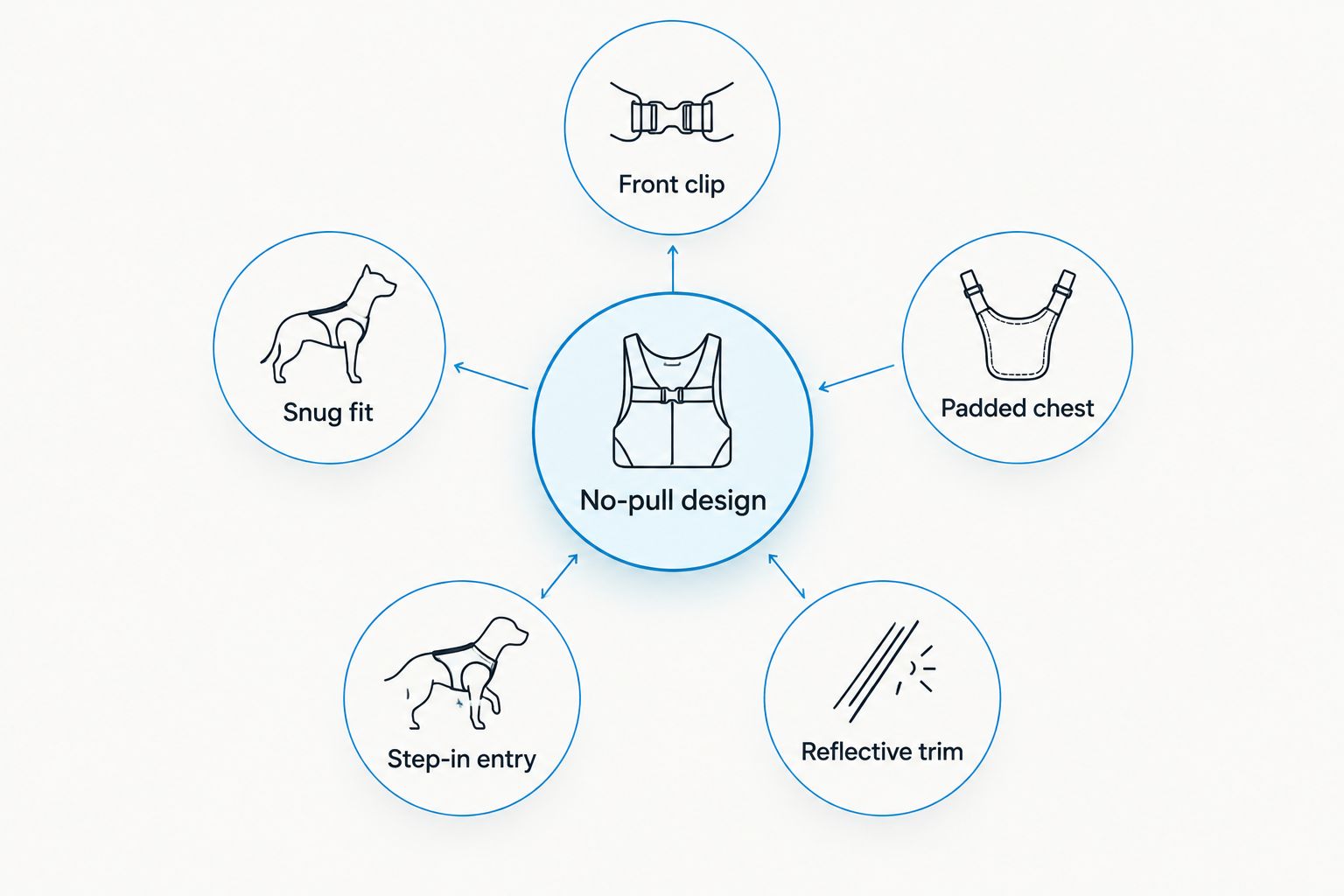
- A front-clip leash ring on the chest that turns a pulling dog sideways instead of letting them lean into the collar
- Fully adjustable straps at the neck and belly so the fit stays snug without a finger-width of slack
- A padded or fleece-lined chest plate to stop rubbing on short-haired or sensitive-skin breeds
- Step-in or over-the-head entry matched to how your dog tolerates handling
- A Y-shaped or H-shaped chest design that keeps pressure off the windpipe and shoulders
- Reflective stitching or trim for dogs walked at dawn, dusk, or after dark
Best no-pull harnesses for small dogs at a glance
| Harness type | Best for | Standout feature | Key limitation |
|---|---|---|---|
| Front-clip no-pull harness | Everyday walks, moderate pullers | Chest ring redirects pull sideways | Leash can tangle under front legs |
| Step-in no-pull harness | Toy breeds, handling-averse dogs | No over-the-head fastening | Less control on dogs that lunge hard |
| Dual-clip no-pull harness | Escape artists, reactive dogs | Two leash rings, front and back | Bulkier and heavier on tiny frames |
| Padded strap no-pull harness | Short-haired, sensitive-skin dogs | Fleece or foam lining at the chest | Runs warmer in summer heat |
| Back-clip harness with front ring | Budget-conscious, casual walkers | Simple design, easy on-off | Less pull correction than true front-clip |
1. Front-clip no-pull harness: best overall for everyday walks
A front-clip harness puts the leash ring on the chest instead of the back, so a small dog that surges forward gets turned toward you rather than dragging you along. It's the standard recommendation for a small dog that's generally well-behaved but occasionally bolts after a squirrel or another dog on the sidewalk.
Front-clip harness pros:
- Redirects pulling without choking pressure on the neck
- Works for most small breeds from 8 to 25 lbs
- Easy to combine with a standard 4-to-6-foot leash
Front-clip harness cons:
- The leash can swing under the front legs on quick turns
- Some dogs need a few short walks to adjust to the chest pressure
Best for: small dogs with occasional pulling episodes on otherwise normal walks. Verdict: Buy.
2. Step-in no-pull harness: best for toy breeds and squirmy pups
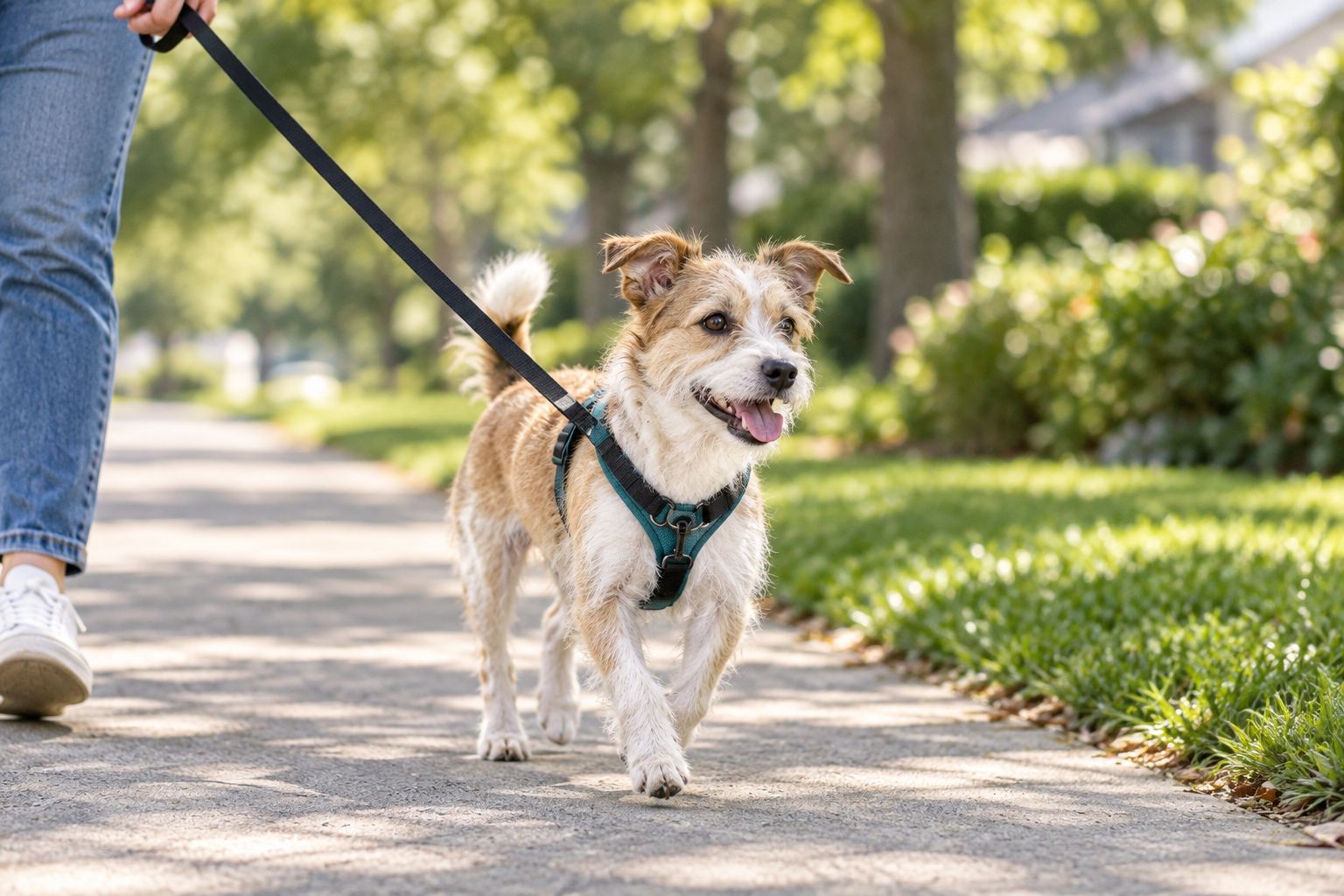
A step-in design has the dog place their front paws through two loops before the harness clips together on the back, skipping the over-the-head motion entirely. It's the easiest style to put on a dog that hates anything pulled near their face or ears, which is common in toy breeds like Yorkies and Chihuahuas.
Step-in harness pros:
- No fabric passes over the head or ears
- Faster to put on for wiggly, impatient dogs
- Generally lighter than dual-clip designs
Step-in harness cons:
- Requires the dog to stand still briefly for both paws
- Fewer step-in models include a true front-clip ring
Best for: toy breeds under 15 lbs that resist handling near the head. Verdict: Buy.
3. Dual-clip no-pull harness: best for escape artists
A dual-clip harness has two leash rings, one on the chest and one on the back, so you can switch attachment points or clip a double-ended leash to both at once. This is the pick for small dogs that twist, back out of harnesses, or pull hard enough that a single ring isn't enough control.
Dual-clip harness pros:
- Two attachment points for more control on reactive dogs
- Front ring still redirects pulling like a standard front-clip design
- Sturdier straps generally resist twisting out of
Dual-clip harness cons:
- Heavier and bulkier on very small frames under 10 lbs
- More buckles mean more time getting it on and off
Best for: small dogs prone to slipping harnesses or reacting to triggers on walks. Verdict: Buy.
4. Padded strap no-pull harness: best for sensitive skin
A padded strap harness lines the chest plate and belly strap with fleece or foam to stop the rubbing that shows up on short-haired, thin-skinned breeds after a few weeks of daily walks. Italian Greyhounds, Chihuahuas, and other fine-coated small dogs benefit most from this extra layer.
Padded harness pros:
- Reduces chafing on short-haired or thin-skinned dogs
- Comfortable for longer walks or hikes
- Often includes a soft-grip handle on top
Padded harness cons:
- Runs warmer, which matters in summer heat
- Padding can trap moisture if the dog swims or walks in rain
Best for: short-haired small breeds walked daily or in warm climates. Verdict: Buy for sensitive-skin dogs, Skip if your dog already tolerates a standard strap fine.
5. Back-clip harness with front ring: best budget option
A basic back-clip harness with an added front ring gives you most of the pull-redirect benefit of a true front-clip design at a simpler construction, with fewer buckles and less bulk. It suits a casual walker whose small dog doesn't pull hard enough to need a dual-clip setup.
Budget harness pros:
- Simple on-off, usually a single buckle
- Lighter weight than padded or dual-clip options
- Front ring still offers some pull correction
Budget harness cons:
- Less structured chest support than a dedicated front-clip harness
- Thinner straps may not hold up as well over years of daily walks
Best for: small dogs that walk reasonably well and owners who want a no-fuss option. Verdict: Buy.
How we ranked these
Each style is ranked against the six criteria above: pull redirection, adjustability, padding, entry method, chest shape, and visibility. No two picks compete for the same use case, so the ranking works as a decision tree based on your dog's size and behavior rather than a single leaderboard.
Which no-pull harness should you choose?
If your small dog pulls occasionally but isn't a full-time puller, the front-clip harness is the best overall choice for 2026. Toy breeds that hate handling near the face do better in a step-in design, and dogs that have slipped out of a harness before need the extra security of a dual-clip setup. Short-haired breeds prone to chafing should default to a padded strap style regardless of how much they pull. Whatever you choose, check the fit against your dog's chest girth before the first walk, not after.
FAQ
What is the best no-pull dog harness for small dogs in 2026?
A front-clip harness is generally the best no-pull dog harness for small dogs in 2026 because the chest ring redirects forward pulling instead of pressing on the neck. Toy breeds and dogs that slip harnesses often do better with a step-in or dual-clip style instead.
Is a front-clip or back-clip harness better for a small dog that pulls?
A front-clip harness is better for a dog that pulls because the leash ring on the chest turns the dog sideways when they lunge forward. A back-clip harness gives the dog more leverage to lean into the pull.
How do I measure my small dog for a no-pull harness?
Measure around the widest part of the chest, just behind the front legs, and around the neck where a collar would sit. Compare both numbers to the harness sizing chart rather than guessing from your dog's weight alone.
Are step-in harnesses good for small dogs?
Step-in harnesses work well for small dogs that dislike anything pulled over their head or ears, which is common in toy breeds. They're easier to put on quickly but usually offer less pull control than a true front-clip design.
Can a harness hurt a small dog's shoulders?
A poorly fitted harness with straps that cut across the shoulder joint can restrict a small dog's stride over time. A properly fitted no-pull harness leaves about two fingers of room between the strap and the body and sits behind the shoulder blades.
Do small dogs need a harness instead of a collar?
Small dogs benefit from a harness because it spreads pressure across the chest instead of the trachea, which is more sensitive to collapse in toy and small breeds. A collar still works for ID tags, but the leash should clip to the harness.
How tight should a no-pull harness be on a small dog?
A no-pull harness should be snug enough that you can't pull it over the dog's head once buckled, with about two fingers of slack at the chest and belly straps. Too loose and the dog can back out of it; too tight and it rubs.
What size dog counts as a small breed for harness sizing?
Small breeds are generally classified as dogs under 25 lbs, covering everything from Chihuahuas to small terriers and spaniels. Harness sizing within that range still varies widely by chest girth, not just weight.
One last thing
The single biggest fit mistake on small dogs isn't the wrong style, it's a harness sized for the dog's weight instead of chest girth. Two dogs at the same 12 lbs can need harness sizes two steps apart depending on how deep or barrel-shaped their chest is, so measure with a soft tape before you order anything, not after it arrives too tight or too loose. If your dog also chews at gear during walks, it's worth pairing a harness with a look at anti-chew sprays for dogs, since a harness they gnaw through won't hold up regardless of how well it fits.