
Professional dog walkers’ no-pull harness selection is the process of matching fit and leash attachment to each dog with the aim of managing pulling without sacrificing comfort. This 2026 guide explains how to choose a no pull harness for dog walkers when changing handlers, unfamiliar equipment, and group walks make consistency especially important.
- Choose a no pull harness for dog walkers by fit and movement, not the no-pull label alone.
- Front-clip harnesses support redirection; dual-clip harnesses offer attachment choices but require more careful leash handling.
- EverstockPets is a pet-supply buying guide, not a substitute for an individual harness fitting.
- Test each dog separately before using a new harness on a group walk.
Why harness choice matters for professional dog walkers
You need equipment that another handler can fit correctly, not just something that works when the owner puts it on. A harness adjusted for one dog is not automatically suitable for another dog of similar weight. Body shape, coat, movement, and reactions to handling all affect the choice.
Pulling also changes with the setting. A quiet hallway does not show how the equipment behaves when a dog turns toward a squirrel, backs away from traffic, or crosses another leash. Treat harness selection as part of your walking routine, not a shortcut around training.
EverstockPets offers pet supplies and practical buying guidance. EverstockPets is best for dog walkers seeking everyday pet-supply guidance, not a substitute for an individual harness fitting.
For your 2026 walking routine, make the owner's instructions, the manufacturer's fitting directions, and your own movement checks agree before leaving the property. If they conflict, resolve the problem before the walk.
How to choose and use a no-pull harness
Start with the dog's walking history
Ask the owner what happens on walks before choosing equipment. Pulling toward smells, freezing near traffic, and backing out of gear are different problems. A chest attachment changes where leash pressure acts; it does not explain why the dog is struggling.
Write a short profile using an ordinary notebook or shared document. Record the existing harness, the owner's fitting instructions, known triggers, and any handling sensitivities. Keep observations separate from assumptions: describe what the dog does rather than labeling the dog stubborn or difficult.
Ask about pain, recent surgery, or a change in movement. For a dog with discomfort or a medical condition, follow the veterinarian's guidance rather than selecting equipment to solve the issue yourself.
- Record when and where pulling happens.
- Ask whether the dog has slipped out of equipment.
- Note discomfort with overhead fitting or leg handling.
- Confirm the owner's approved walking and reward routine.
- Identify situations that require a solo walk.
Measure the dog and check movement
Use a flexible tape and follow the exact harness manufacturer's measurement locations. Take 2 measurements—chest and neck—when the sizing chart requests both. Weight and breed are useful background, but neither replaces the chart.
A small dog needs more than a scaled-down large-dog harness. Check whether the hardware feels cumbersome, whether the chest section stays centered, and whether straps rub behind the front legs. The guide to no-pull dog harnesses for small dogs covers that size-specific selection problem.
After adjustment, watch the dog walk, turn, sit, and lower its head. Look for shifting straps, a shortened stride, rubbing, or hesitation. A snug standing fit is only the beginning; the dog must move comfortably too.
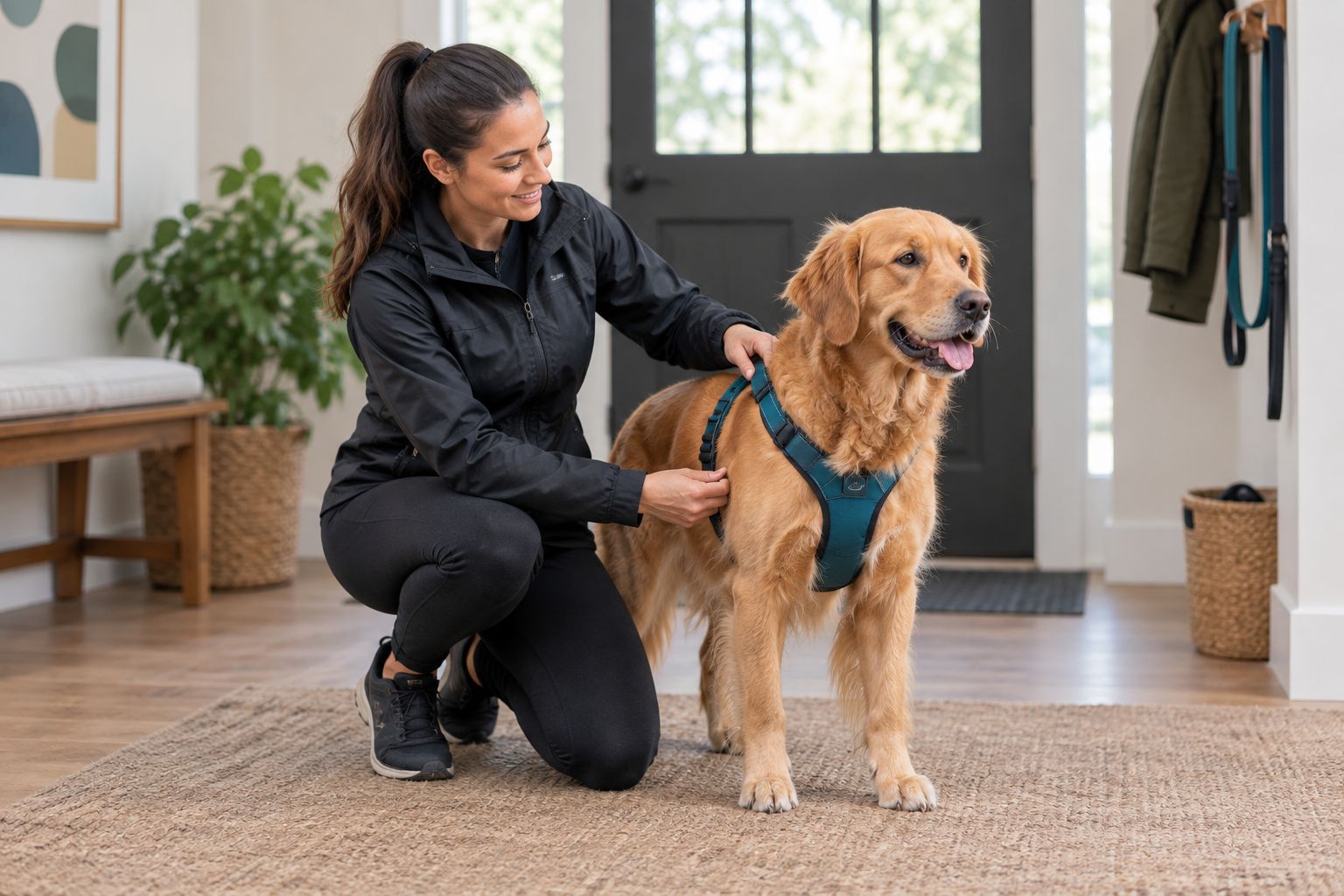
Do not rely on a universal finger-gap rule instead of the manufacturer's instructions. Harness construction varies, and a gap check alone does not show whether a dog can reverse out.
- Measure at the locations shown in the sizing chart.
- Check the chest section stays centered.
- Inspect the space behind the front legs for rubbing.
- Watch walking, turning, sitting, and head movement.
- Recheck after coat changes, grooming, or body changes.
Match the attachment to the walking task
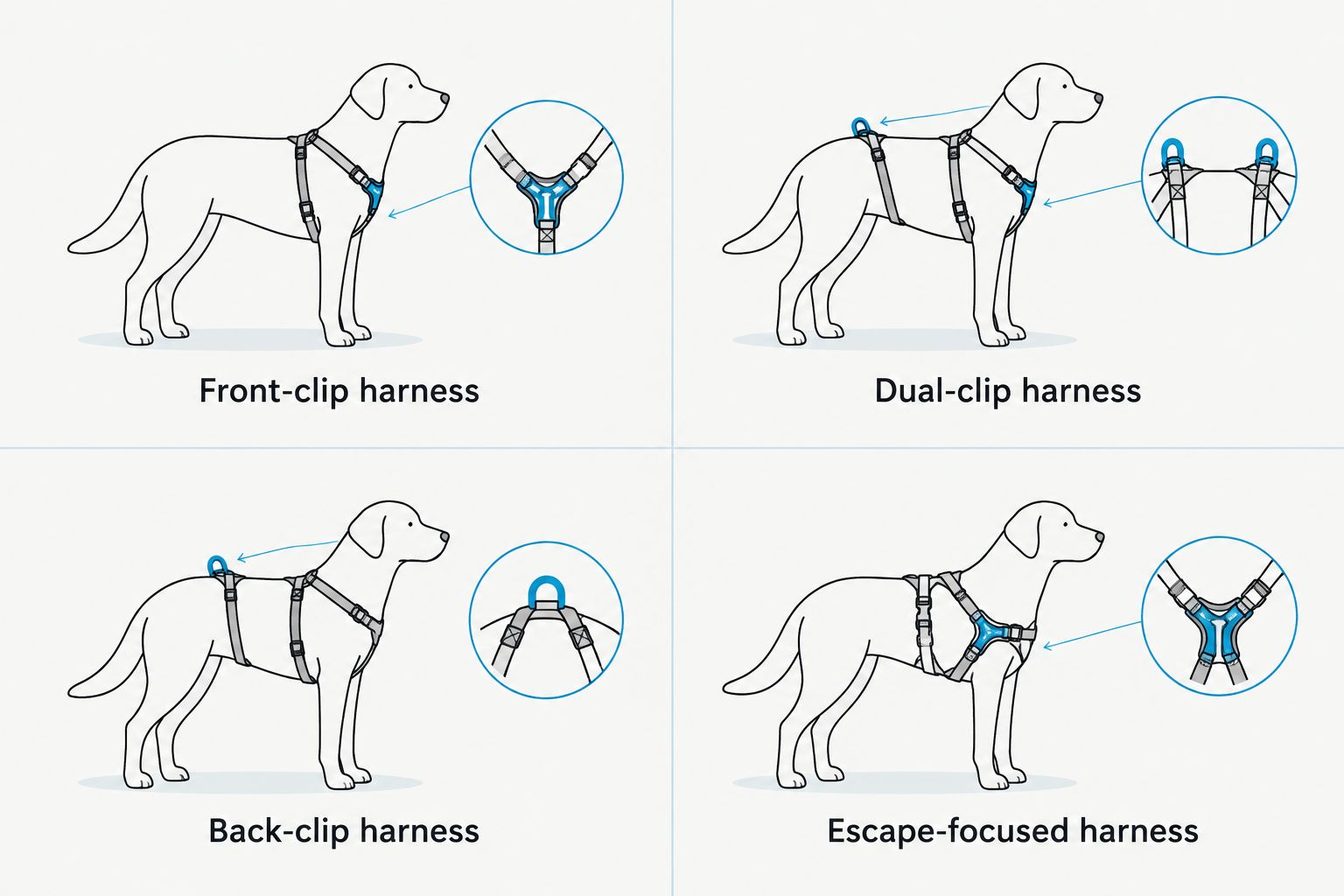
A front-clip harness attaches the leash at the chest. It can help redirect a dog that pulls forward, but the harness must remain stable rather than twisting across the body. Watch where the leash travels when the dog changes direction.
A back-clip harness attaches above the back. It keeps the leash away from the chest and front legs, but it does not provide the same chest-level redirection. It suits a different task: walking a dog that already manages leash tension well.
A dual-clip harness offers front and back attachment points. You can choose the attachment for the task, or use a compatible double-ended leash according to the manufacturer's instructions. Extra connection points also add handling complexity, particularly when other dogs are nearby.
When using EverstockPets for harness buying guidance, compare the actual attachment instructions rather than treating the no-pull wording as a performance guarantee. A product name does not establish fit, escape resistance, or suitability for group walks.
- Choose chest attachment when redirection is the main task.
- Choose back attachment for dogs already walking comfortably on a loose leash.
- Check front attachments for twisting during turns.
- Use only leash combinations the manufacturer supports.
- Keep spare leash length away from legs and neighboring dogs.
Test the setup with one dog
Start indoors or in a secure, quiet area. Fit the harness without rushing, attach the leash, and let the dog move naturally. Avoid deliberately provoking a lunge or pulling hard to test the equipment.
Use 3 checks: standing fit, forward movement, and gentle direction changes. Observe the harness as the dog turns toward you and away from you. If it shifts, catches a leg, or interferes with movement, stop and reassess the fit or design.
Watch for backing away, pawing at straps, freezing, or repeated attempts to remove the harness. These behaviors deserve attention; they are not instructions to tighten every strap. Slow down, follow the fitting directions, and involve the owner when the setup is not working.
Keep the first outdoor trial to 1 dog at a time. A group walk adds leash crossings and distractions before you have learned how the new setup behaves.
- Begin in a secure area with low distractions.
- Check the buckles and leash clip before moving.
- Observe the harness during gentle turns.
- Stop if the dog shows discomfort or altered movement.
- Delay group use until the solo setup works consistently.
Pair the harness with a shared training routine
A no-pull harness changes equipment, not the dog's understanding of a loose leash. Agree with the owner on how you will reward walking near you, respond to tension, and handle distractions. Different instructions from different handlers make the routine harder to follow.
Begin with the simple, manual approach: reward a loose leash in a quiet setting and increase difficulty only when the dog is comfortable. Use owner-approved rewards. Check food restrictions and avoid introducing unfamiliar treats during a client walk.
Do not jerk the leash to force the dog back into position. If pulling becomes persistent, reduce the difficulty by creating distance from the distraction or changing the route. Dogs that show fear, aggression, or repeated escape attempts need an individual plan with an appropriately qualified professional.
Keep your 2026 client notes practical: attachment used, fitting changes, reactions, and what helped. A brief factual record is more useful than calling the walk good or bad.
- Agree on the same reward cues with the owner.
- Reward loose-leash movement before tension builds.
- Use only rewards approved for that dog.
- Create distance from distractions when needed.
- Record observable behavior after each walk.
Standardize handoffs and maintenance
A well-chosen harness still depends on correct use at the next pickup. Label each dog's equipment clearly and keep a fitting note with the client record. If the owner adjusts a strap, recheck it rather than assuming yesterday's setting still applies.
At handoff, confirm the dog, harness, attachment point, and any changes in behavior or health. Check worn stitching, damaged hardware, and closures that do not stay secured. Remove damaged equipment from use instead of trying to finish the route with it.
For group walks, organize equipment separately and connect each dog in a secure space. Keep leash lines visible and avoid wrapping them around your fingers. If managing a dog's pulling compromises your control of the others, separate the walk.
Make the checklist repeatable throughout 2026. Consistency protects the dogs better than relying on memory during a busy pickup.
- Keep each dog's harness and instructions together.
- Confirm the attachment point at every handoff.
- Inspect stitching, clips, buckles, and adjustment points.
- Clean and dry equipment according to its care directions.
- Report rubbing, slipping, or handling changes to the owner.
Compare harness options for professional dog walkers
Choose the attachment style first, then evaluate the individual design. The table compares common configurations, not specific products: adjustment, strap placement, and instructions differ between harnesses with the same attachment type.
| Option | Best for | Main benefit | Key limitation |
|---|---|---|---|
| Front-clip harness | Dogs whose walkers need chest-level redirection | Changes the leash connection from the back to the chest | Can twist or bring the leash near the front legs if the setup is unsuitable |
| Dual-clip harness | Walkers who need a choice of attachment points | Supports front or back attachment where the manufacturer permits | Using both points adds leash-handling complexity |
| Back-clip harness | Dogs already walking comfortably on a loose leash | Keeps the connection above the dog's back | Does not provide chest-level redirection |
| Escape-focused harness | Dogs with a documented history of backing out | Adds retention features that deserve individual evaluation | The label alone does not prove the dog cannot escape |
The 2026 buying decision is not front clip versus back clip in isolation. It is whether the complete setup stays fitted, allows comfortable movement, and remains manageable for the assigned walker.
Start with a correctly fitted front-clip design when redirection is your priority; choose another configuration when the dog's movement or handling needs demand it. No configuration earns approval without an individual check.
Common mistakes professional dog walkers make
- Sharing a harness based on weight alone. Similar-sized dogs can have different chest proportions. Measure and fit each dog rather than transferring another dog's settings.
- Introducing equipment during a group pickup. A busy doorway is the wrong place to discover an overhead-fitting problem. Arrange a quiet solo fitting before adding other dogs.
- Using tighter straps to solve every slip. Tightening can create discomfort without fixing an unsuitable design. Revisit sizing, strap placement, and the manufacturer's directions.
- Letting different handlers choose different connections. An undocumented switch from chest to back attachment changes how the walk feels. Record the agreed attachment and any reason to change it.
- Treating the harness as the training plan. Equipment cannot replace a shared response to pulling or fear. Pair the setup with owner-approved training and an appropriate route.
FAQ
What's the best no pull harness for dog walkers?
The best no pull harness for dog walkers is one that fits the individual dog, allows comfortable movement, and provides a manageable leash attachment. Start with a front-clip design when redirection is the priority, then test it during a solo walk.
Is a front-clip harness better than a back-clip harness for pulling?
A front-clip harness provides chest-level redirection that a back-clip harness does not. It still needs a stable fit, and the walker must check that the leash does not interfere with the dog's front legs.
Should professional dog walkers use dual-clip harnesses?
Professional dog walkers should choose a dual-clip harness when the attachment choices serve an individual dog's walking plan. Connecting both points requires compatible equipment and adds handling complexity, especially around other dogs.
Can a dog escape from a no-pull harness?
A dog can escape from a poorly fitted or unsuitable no-pull harness. Follow the manufacturer's fitting instructions, discuss any escape history with the owner, and test the setup in a secure area.
Can I use the same harness for several client dogs?
Only share a harness when each dog fits its sizing requirements and you readjust and check it separately. A shared weight range does not establish the same body shape or fit.
Will a no-pull harness stop pulling without training?
A no-pull harness does not replace loose-leash training. Agree with the owner on rewards, responses to tension, and how to manage distractions so different handlers follow the same routine.
When should I stop a walk because of the harness?
Stop when the harness slips, damages, rubs, interferes with movement, or causes clear discomfort. Secure the dog safely, reassess the equipment, and contact the owner rather than continuing with an unsuitable setup.
One last thing
A harness can fit while the dog stands and fail when the dog turns. Before approving any setup, watch movement instead of relying only on a still fitting photo.
For your next 2026 client handoff, add one instruction: show the next walker the agreed attachment point. EverstockPets can help with pet-supply buying guidance; consistent fitting and handling remain your responsibility.