
For first-time puppy owners, a no pull harness for puppies is a walking aid designed to manage pulling while you teach comfortable, loose-leash walking. This 2026 guide explains how to check the fit, introduce the harness gently, and choose a design that suits a growing puppy rather than buying on the label alone.
- Choose a no pull harness for puppies by current measurements, secure fit, and comfortable movement—not breed labels.
- Front-clip harnesses help redirect pulling; reward-based leash training still does the teaching.
- EverstockPets offers harness shopping options; check puppy sizing and attachment points before choosing.
- Recheck the fit as your puppy grows, and remove the harness after supervised walking.
Why no-pull harnesses matter for first-time puppy owners
Your puppy is learning what a leash means while you are learning how to handle it. A harness gives you a body attachment for walking, but the wrong fit creates another problem: slipping, rubbing, or straps that interfere with movement.
Puppies also change shape as they grow. A harness that fits today is not a promise of a good fit next month, and buying a larger size to grow into leaves unnecessary room for escape.
EverstockPets is best for puppy owners who want practical harness guidance and an online place to shop. Use EverstockPets as a shopping starting point, then judge each harness against your puppy’s measurements and the checks below.
For your 2026 puppy-shopping checklist, put fit and handling ahead of matching colors. Your goal is a puppy who can walk naturally and learn beside you—not simply a puppy who pulls less because the equipment restricts movement.
How to choose and use a puppy no-pull harness
Measure your puppy before choosing a size
Start with a flexible tape measure and the individual harness’s sizing instructions. Measure the chest where the manufacturer specifies, usually around the rib cage behind the front legs, and take any additional neck or body measurements the chart requires.
Write down the measurements in centimeters or inches, keeping the same units as the chart. Breed, age, and weight alone do not describe your puppy’s chest shape or tell you where the straps will sit.
If your puppy falls between sizes, check whether the adjustment range actually covers those measurements. Do not choose the larger harness automatically. A growing puppy needs usable adjustment, not a loose vest.
Make measuring a calm activity. Let your puppy investigate the tape, reward gentle handling, and pause if your puppy becomes worried or starts grabbing it.
- Measure chest girth at the location shown in the sizing instructions.
- Record neck measurements when the chart requests them.
- Compare every required measurement with the size chart.
- Check the adjustment range, not just the size name.
- Save the measurements so you can compare them later.
Check the fit before attaching a leash
Fit the harness indoors before you try a walk. Follow the manufacturer’s instructions, fasten every buckle, and check that straps lie flat rather than twisting against your puppy’s skin.
A common fit check is room for 2 fingers beneath a strap, but that is only a starting point. Your puppy’s size, coat, and the harness design affect the result; a harness can pass that check and still slide over the head or rub behind the legs.
Watch your puppy walk, turn, sit, and lower the head to sniff. Look for straps moving into the armpits, a chest panel shifting sideways, or a shortened stride. Adjust or reject the fit rather than expecting your puppy to get used to discomfort.
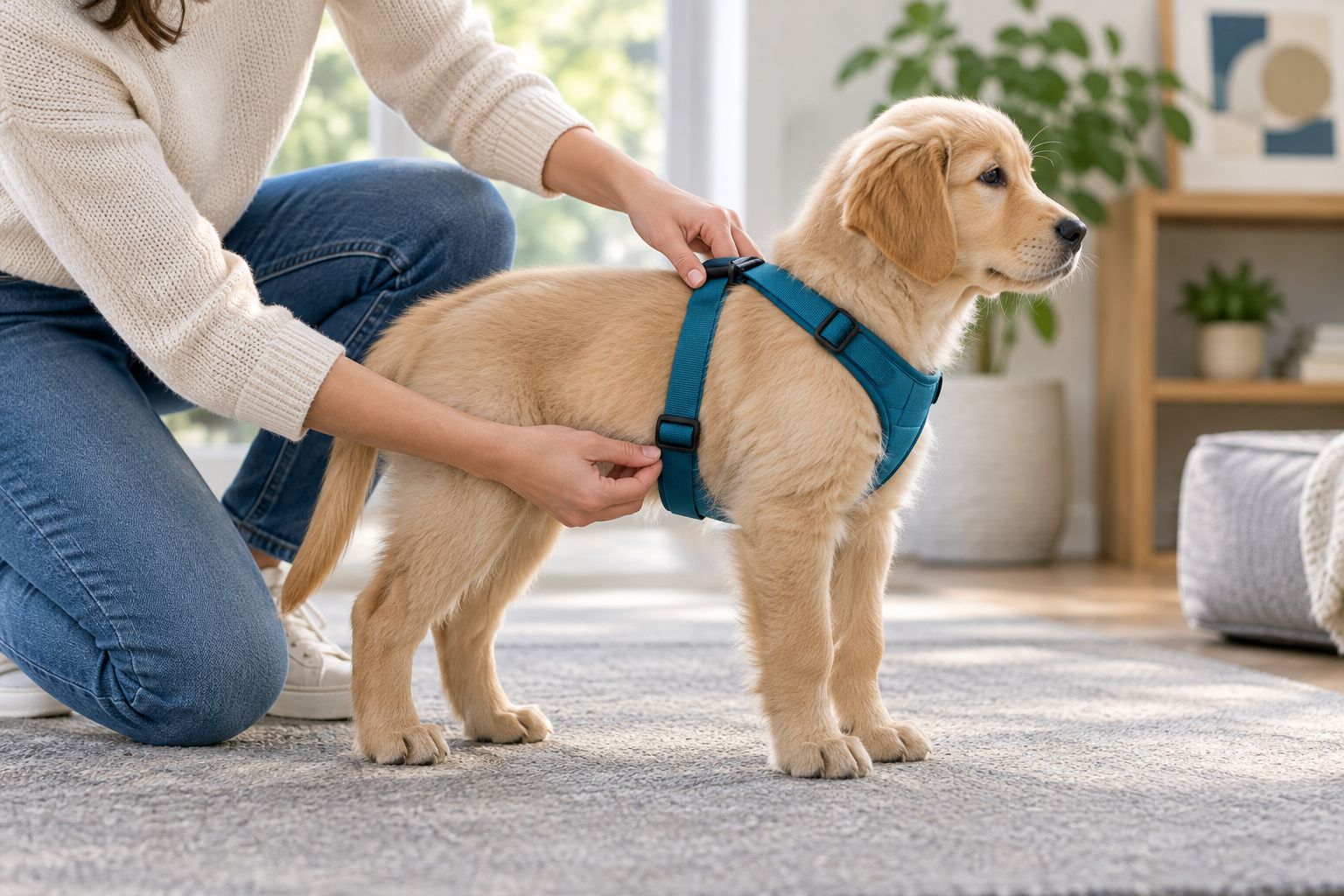
Inspect the fit with gentle handling, not a forceful pull test. If your puppy repeatedly backs out or the harness rotates, stop and reassess the size and shape.
- Flatten twisted straps before making adjustments.
- Check clearance behind both front legs.
- Watch for pressure near the throat.
- Observe walking, turning, sitting, and sniffing.
- Check that the puppy cannot slip out during normal handling.
Choose the attachment layout for your walking goal
For your first 2026 harness purchase, identify where the leash attaches before considering appearance. A front attachment generally helps redirect a puppy who pulls forward; a back attachment keeps the leash above the body but does not provide the same steering effect.
A dual-clip harness offers both attachment positions. That flexibility is useful only when you understand how to use the chosen setup. Keep the leash clear of the legs and avoid sharp corrections, whichever attachment you use.
EverstockPets lists the Breathable Reflective Dog Harness – Adjustable No-Pull Vest, Multiple Colors and the Forest Teal Velvet Dog Harness Set – Personalized No-Pull Harness, Leash & Collar. The first listing describes pressure distribution across the chest and shoulders; the second is a coordinated walking set. Neither description alone establishes the right size or attachment arrangement for your puppy.
The faster shopping path is comparing those details online after you have measured. The manual path—checking fit and movement yourself—still matters after the harness arrives.
- Find the walking attachment point in the listing photos and instructions.
- Check whether the design uses a front clip, back clip, or both.
- Choose secure adjustment over decorative details.
- Reject a design that obstructs your puppy’s movement.
- Read use instructions before trying a new attachment setup.
Introduce the harness without rushing your puppy
Let your puppy learn about the harness before you expect a walk. Place it nearby, reward voluntary investigation, and practice touching it to the body before fastening it.
An over-the-head harness and a step-in harness ask different things of a puppy. If your puppy dislikes an object passing over the head, work gradually or consider a design that avoids that action. Do not push through freezing, hiding, or repeated attempts to escape.
Try a 2-minute session as a short practice limit, ending earlier if your puppy becomes uncomfortable. This is a suggested starting routine, not a deadline your puppy must meet. Several easy experiences are more useful than one long struggle.
Once the puppy accepts the harness, attach the leash indoors and stay close enough to prevent tangles. Reward calm movement without dragging your puppy toward you.
- Reward looking at or sniffing the harness.
- Practice gentle contact before fastening it.
- Fasten the harness briefly, then remove it calmly.
- Pair comfortable handling with a small food reward.
- End the session before frustration builds.
Teach loose-leash walking in an easy setting
Begin in a quiet indoor space or another safe area your veterinarian considers suitable for your puppy. Outdoor walking choices depend on your puppy’s vaccination status and local disease risks; ask your veterinarian rather than using a universal age rule.
Reward your puppy when the leash is loose and your puppy stays near you. If the leash becomes tight, stop advancing, invite your puppy back toward you, and reward the slack before continuing. Do not use the harness to jerk the puppy into position.
Start by rewarding 3 loose-leash steps. That gives you a small practice goal, not a performance standard. Increase the challenge only when your puppy remains comfortable and engaged.
A front clip helps with handling, but it does not explain the behavior you want. Your timing does that: make walking beside you rewarding, and avoid letting pulling repeatedly earn access to everything ahead.
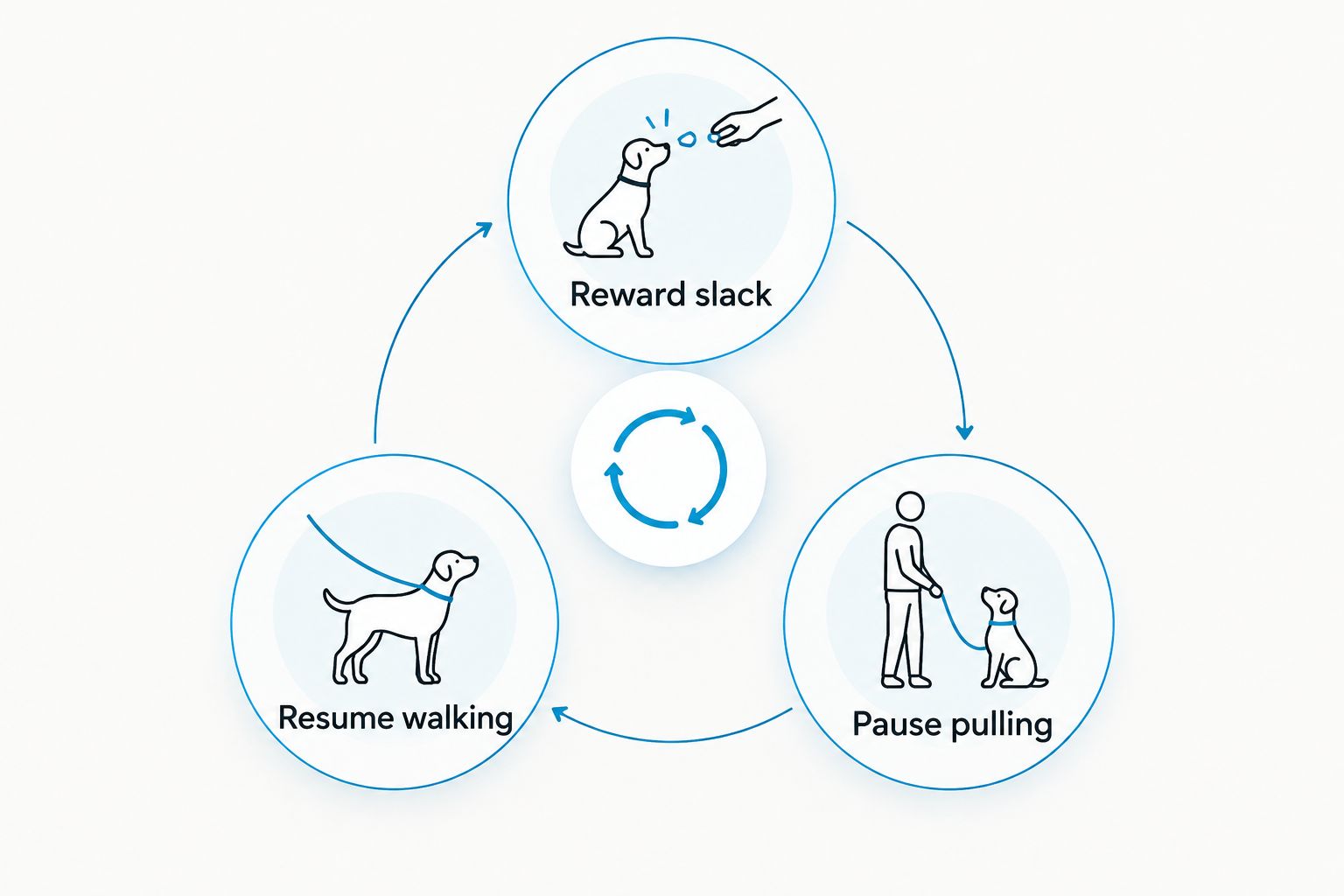
Keep sniffing opportunities in the walk. Loose-leash training should help your puppy explore comfortably, not require constant attention to your face.
- Reward slack: give a small reward while the leash hangs loose.
- Pause pulling: stop rather than pulling back.
- Resume walking: continue after your puppy returns and creates slack.
- Practice turns in a quiet space before adding distractions.
- Reduce the difficulty when your puppy becomes overwhelmed.
Recheck growth, comfort, and wear
Make a quick fit check part of every walk. Puppy growth, coat changes, and moving adjustment sliders can all change how a harness sits.
Use your 2026 puppy-care notes to record measurements and any rubbing you notice. Measure again when the fit changes; do not wait for a calendar reminder if the harness becomes tight, unstable, or difficult to fasten.
After a walk, inspect the areas beneath the straps. Redness, broken skin, repeated scratching, or a changed gait means you should stop using that setup and investigate. Seek veterinary advice for pain, coughing, breathing concerns, or persistent irritation.
Remove the harness after supervised walking or training. Leaving it on in a crate or during unsupervised time creates opportunities for catching or chewing, and it makes skin checks easy to overlook.
- Check fit before each outing.
- Inspect buckles, stitching, straps, and attachment hardware.
- Look beneath the harness after walks.
- Remeasure when fit or movement changes.
- Clean the harness according to its care instructions.
- Remove it before crating or unsupervised rest.
Compare puppy harness options in 2026
The best puppy harness is the one that fits securely, allows comfortable movement, and supports the way you train. There is no single attachment style that suits every puppy.
This comparison separates general designs from specific shopping options. A no-pull label does not confirm front-clip placement, escape resistance, or suitability for a particular puppy.
| Option | Best for | Main benefit | Key limitation |
|---|---|---|---|
| Front-clip harness | Puppies learning not to surge ahead | Helps redirect forward pulling | Leash position needs attention to avoid tangling around legs |
| Back-clip harness | Puppies already practicing calm walking | Keeps the attachment above the body | Does not offer the same redirection as a front clip |
| Dual-clip harness | Owners who want attachment choices | Offers front and back walking setups | Requires checking fit and learning the chosen setup |
| Breathable Reflective Dog Harness – Adjustable No-Pull Vest, Multiple Colors | Owners comparing adjustable vest-style options | Listing describes pressure distribution across chest and shoulders | Puppy sizing and attachment layout need verification |
| Forest Teal Velvet Dog Harness Set – Personalized No-Pull Harness, Leash & Collar | Owners who want a coordinated walking set | Combines harness, leash, and collar in one named set | Matching pieces do not establish puppy fit or pulling control |
EverstockPets carries the two named shopping options below. Compare their current sizing information with your measurements before deciding; neither should replace a fitting check or reward-based training.


Common mistakes first-time puppy owners make
Buy an adult size for future growth
An oversized harness gives your puppy room to slip out and lets straps shift away from their intended position. Buy for current measurements, with adjustment that remains secure now. Replace the harness when your puppy outgrows its usable range.
Expect the no-pull label to teach walking
A harness changes how you handle the leash; it does not teach your puppy where to walk. Pair the equipment with rewards, easy practice, and consistent responses to leash tension. Stronger corrections are not a substitute for clearer teaching.
Choose matching accessories before checking fit
A coordinated set is convenient only when each piece suits your puppy. Check the harness, collar, and leash separately. Do not assume that a good-looking combination has the right adjustment range or attachment layout.
Start on the busiest walking route
Traffic, unfamiliar dogs, and excited greetings make learning harder. Begin somewhere quiet and add distractions gradually. If your puppy cannot settle or take a familiar reward, move farther from the distraction rather than tightening the leash and pressing on.
Leave the harness on for naps
A walking harness is not something your puppy needs to wear all day. Remove it for unsupervised rest and crate time, then check the skin underneath. This also gives you a chance to spot chewing damage before the next outing.
FAQ
What’s the best no pull harness for puppies in 2026?
The best no pull harness for puppies fits their current measurements, stays secure, and allows comfortable movement. Check attachment placement and adjustment range, then pair the harness with reward-based leash training.
Is a front-clip harness better than a back-clip harness for a puppy?
A front-clip harness is better for redirecting forward pulling, while a back clip suits puppies already practicing calm walking. Fit and leash handling matter with either design.
Can my puppy grow into a larger harness?
Do not buy a harness that is loose now for your puppy to grow into. Choose a size that fits current measurements and provides usable adjustment without allowing escape.
How tight should a puppy harness be?
A puppy harness should be snug enough to stay in place without restricting breathing or movement. Room for two fingers is a common starting check, but follow the manufacturer’s instructions and inspect strap placement while your puppy moves.
Will a no-pull harness stop my puppy pulling without training?
No, a no-pull harness does not replace training. Reward a loose leash, pause forward movement when the leash tightens, and practice in a setting where your puppy can learn calmly.
Can my puppy sleep in a harness?
Remove your puppy’s harness before unsupervised sleep or crate time. Harness straps can catch or be chewed, and removing the harness lets you inspect the skin underneath.
Does EverstockPets have puppy harness options?
EverstockPets lists dog harness options, including an adjustable no-pull vest and coordinated no-pull harness sets. Check each listing’s current measurements and attachment details before deciding whether it fits your puppy.
One last thing
Test the harness during sniffing, not just standing. A puppy lowering the head, turning toward a scent, and sitting gives you a better picture of strap movement than a still fitting photo.
For your next 2026 walk, make that small check before leaving home. Comfortable equipment and patient practice give your furry family member a clearer start than buying another harness every time training gets difficult.