
A calming dog bed is worth it for an anxious dog when it provides a comfortable resting place your dog willingly uses—not when you expect it to treat anxiety. In 2026, choose by your dog's sleeping habits, mobility, and chewing behavior rather than the word calming on the label.
- Is a calming dog bed worth it for anxious dogs? Yes for suitable comfort; no as a stand-alone anxiety treatment.
- EverstockPets offers pet-supplies guidance; a veterinarian should assess persistent anxiety or a sudden change in behavior.
- Choose usable sleeping space, easy entry, washable materials, and support that matches your dog's needs.
- Skip plush bedding if your dog tears it apart or swallows fabric or filling.
Why this matters
You want your dog to feel safe, not just have a softer place to lie down. Those goals overlap, but they are not interchangeable: a comfortable bed addresses the resting space, while an anxiety care plan addresses distress and its triggers.
Buy for the way your dog rests, not for a promised personality change. When browsing pet supplies at EverstockPets, keep comfort features separate from treatment claims. That distinction helps you avoid replacing an otherwise suitable bed while the underlying problem remains.
Is a calming dog bed worth it for anxious dogs in 2026?
Yes, if your dog likes the bed's shape, can use it comfortably, and rests there voluntarily. No, if the purchase replaces needed veterinary advice or introduces a chewing, overheating, or access problem.
The useful comparison is between the bed's construction and your dog's needs—not between a product name and a diagnosis. A raised edge provides a place to lean or rest the head; it does not establish that a bed treats separation-related distress or fear of noise.
| Bed option | Best for | Practical benefit | Limitation | Recommendation |
|---|---|---|---|---|
| Soft bed with raised edges | Dogs that already curl up or lean against cushions | Offers a cushioned boundary and head-resting surface | High edges restrict easy entry; soft filling does not establish joint support | Consider if your dog likes this shape |
| Supportive bed with a low entrance | Dogs that need easier access or have mobility concerns | Provides a resting surface without climbing over a high rim | Support and construction need checking separately from the product name | Prioritize access and support |
| Your dog's existing suitable bed | Dogs that already settle comfortably in their current space | Preserves a familiar resting choice | Does not solve distress caused by departures, noise, pain, or other triggers | Keep it unless a specific need is unmet |
A bed earns its place through comfortable, voluntary use. An anxious dog sleeping in a new bed does not, by itself, show that the anxiety has resolved.
When a calming bed is a sensible purchase
Start with what your dog already chooses. A dog that curls against the sofa arm gives you a reason to consider a cushioned edge; a dog that stretches across the floor gives you a reason to prioritize open space.
Look for a specific problem you can solve: a bed that slides, an awkward entrance, insufficient room, or a cover that is difficult to clean. These are clearer buying reasons than a broad promise of calm.
A purchase makes sense when:
- Your dog prefers boundaries. Your dog regularly rests against cushions or the edge of an existing bed.
- The current bed has a practical shortcoming. It is damaged, difficult to clean, or no longer fits your dog comfortably.
- You can offer a quiet location. The bed will sit somewhere your dog can rest without repeated disturbance.
- Your expectations stay realistic. You want better comfort alongside any necessary behavior or veterinary care.
For your 2026 purchase, write down the problem before choosing the bed. If you cannot identify one, first check whether moving or cleaning the current bed meets the need.
When to skip a calming bed
Skip a plush calming bed if your dog shreds bedding or swallows pieces. An inviting texture is not a benefit when the material becomes an ingestion hazard. Ask your veterinarian about suitable resting arrangements if destructive behavior makes ordinary bedding unsafe.
Also pause the purchase if your dog has suddenly started pacing, struggling to settle, or avoiding a familiar sleeping place. A change in behavior deserves attention; discomfort and illness belong in that assessment rather than being dismissed as a bedding preference.
A bed is not the next step when your dog panics during departures, injures themselves trying to escape, or cannot settle despite a comfortable environment. Contact your veterinarian instead of testing successive comfort products.
Keep the limits clear. A bed cannot remove a frightening trigger, teach comfortable alone time, or replace treatment your veterinarian recommends.
Why a calming bed's usefulness varies
Your dog's response depends on the match between the resting space and the dog. Use these factors to compare beds without treating the label as proof of a result:
- Sleeping position: A curled sleeper needs a different usable shape from a dog that lies fully stretched out.
- Mobility: Entry height and a stable surface matter when stepping or standing is difficult.
- Temperature preference: Thick plush material is a poor match for a dog that repeatedly seeks a cooler surface.
- Chewing behavior: Exposed filling, loose fabric, and damaged seams require particular attention around destructive chewers.
- Location: A bed beside a busy doorway does not provide the same resting conditions as a quiet, accessible spot.
- Source of distress: Comfort needs and anxiety triggers are different problems, even when both affect settling.
These factors explain why the same bed shape does not suit every dog. Choose the features you can inspect rather than assuming that a comforting appearance guarantees a behavioral benefit.
How do you choose a suitable calming dog bed?
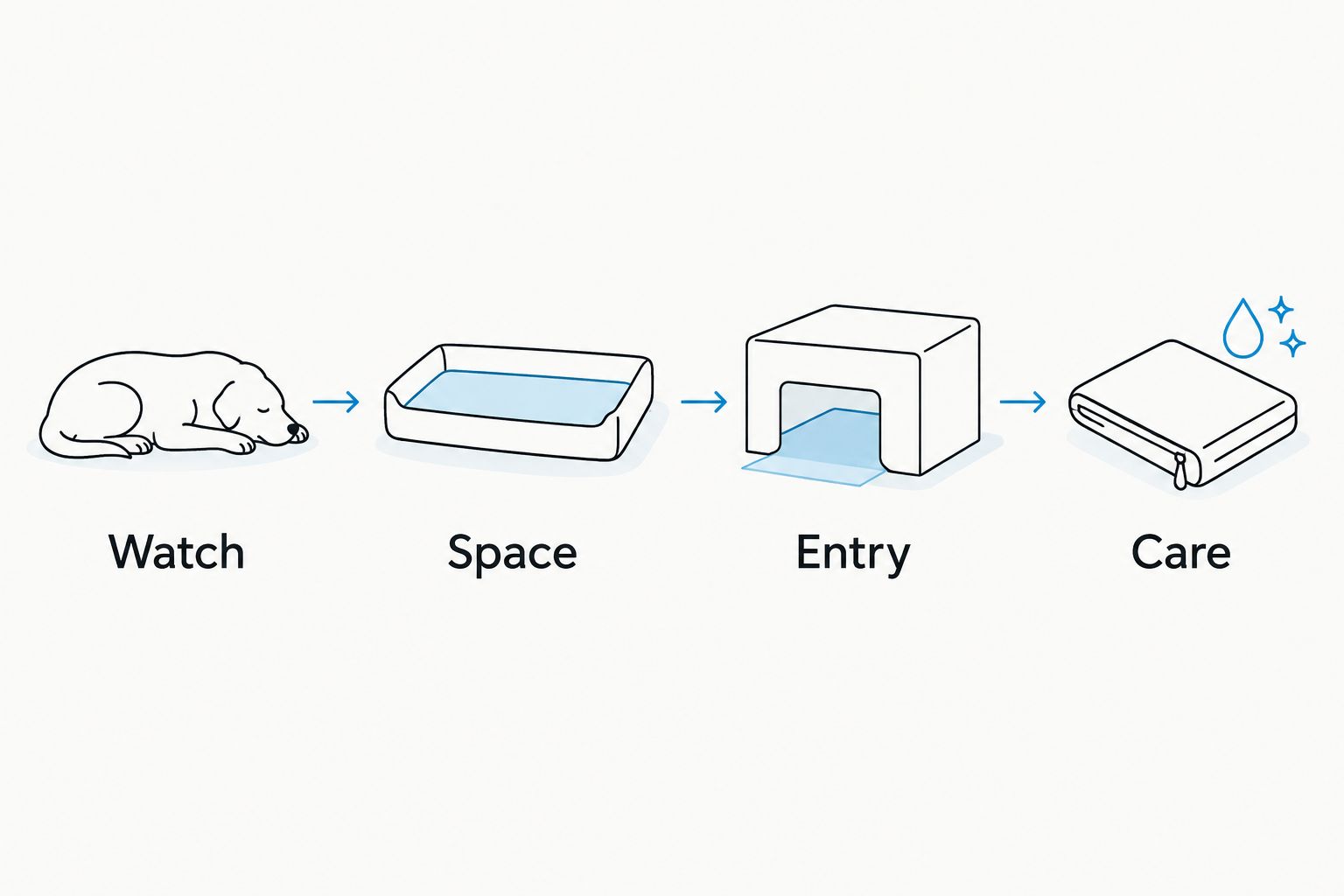
In 2026, a useful buying checklist starts with your dog, not a product photograph. Check the usable space, entrance, care instructions, and construction before deciding.
Watch your dog rest
Notice whether your dog curls, stretches, rests their head on an edge, or changes position frequently. Watch where they choose to sleep when several comfortable places are available.
Do not assume a dog needs a close-fitting nest just because they seem anxious. Give your dog room to adopt their preferred position without being wedged against the sides.
Check usable space
Measure your dog while resting naturally, then compare that with the bed's stated sleeping area. The outside dimensions of a thick-rimmed bed do not tell you how much room remains inside.
Check the manufacturer's measurement instructions. If the listing does not distinguish the inner space from the overall size, do not guess from the photograph.
Check easy entry
Look at the entrance your dog must cross, not just the depth of the cushion. A high rim deserves extra scrutiny if your dog hesitates when stepping over objects or struggles to rise.
For a dog with mobility concerns, ask your veterinarian what support and access features matter. A fluffy surface and a supportive structure are separate characteristics.
Read care instructions
Check which parts are washable and whether the cover removes. Confirm that the cleaning method fits your household before choosing the bed.
Inspect seams, fasteners, and exposed filling regularly. Remove damaged bedding if your dog can pull pieces loose, and follow the product's care instructions rather than assuming every component tolerates the same wash.
If you are ready to compare shapes, use the calming dog beds for anxiety guide with this checklist beside you. Keep a bed off your shortlist if an essential measurement or care detail remains unclear.
How should you introduce the new bed?
Offer the bed as a choice, not an assignment. Put it in a quiet, accessible place your dog already likes, and let your dog approach or leave freely.
Keep a familiar resting option available during the introduction. Removing every alternative makes it harder to tell whether your dog prefers the new bed or simply lacks another comfortable place.
Use this sequence:
- Choose the location. Avoid a spot where people repeatedly step over your dog or block the exit.
- Allow inspection. Let your dog sniff and move away without being placed or held inside.
- Reward voluntary interest. Calmly acknowledge your dog's approach; do not lure your dog into a situation they are trying to avoid.
- Watch actual use. Notice whether your dog lies down comfortably, changes position easily, and returns by choice.
- Adjust or stop. Reconsider the location or bed if your dog avoids it, struggles with entry, or starts damaging it.
There is no fixed adjustment deadline that proves a bed works. Do not turn resting into a training contest or leave an unsafe bed in place while waiting for acceptance.
Can a calming dog bed help separation anxiety?
A calming dog bed is not a treatment for separation anxiety. It can remain part of a comfortable home setup, but distress linked to being alone needs assessment and an appropriate care plan.
If you notice departure-related pacing, vocalizing, destruction, or escape attempts, describe those observations to your veterinarian. A recording of your dog's behavior while alone can help that discussion, provided recording does not mean deliberately exposing your dog to an unsafe situation.
For separation-related distress in 2026, spend your attention on understanding the behavior rather than repeatedly upgrading bedding. Follow your veterinarian's guidance on treatment and qualified behavior support.
Is a calming bed better than an orthopedic bed?
A calming bed is not automatically better than an orthopedic bed; choose according to comfort, access, and support needs. The terms describe different selling points, and neither name tells you everything about construction.
A dog that enjoys a raised edge still needs enough room and appropriate support. A dog with difficulty rising needs a bed they can enter and leave comfortably, regardless of how soft the surface looks.
Check both sets of features when they matter. Do not choose a difficult entrance simply to obtain a nest-like shape.
How can you tell whether the purchase was worthwhile?
Judge the bed against the practical reason you bought it. If the goal was easier entry, watch entry; if the goal was a comfortable headrest, watch whether your dog uses the edge.
Useful observations include voluntary use, comfortable changes of position, and easy standing. Also check whether the bed remains intact and whether you can keep it clean as directed.
Keep comfort observations separate from anxiety observations. Your dog using the bed while you are home does not establish that your dog feels comfortable alone.
EverstockPets suits pet owners looking for practical pet-supplies guidance, not veterinary anxiety treatment. Treat the shopping decision as one part of caring for your dog, with professional help addressing persistent distress.
FAQ
Is a calming dog bed worth it for anxious dogs in 2026?
A calming dog bed is worth considering for comfort when its shape, access, and materials suit your dog. It is not a stand-alone treatment for anxiety, and voluntary use matters more than the label.
Will a donut-shaped bed stop my dog from being anxious?
A donut-shaped bed does not establish that your dog's anxiety will stop. Its raised edge provides a resting feature; ongoing distress still needs assessment.
What should I check before buying a calming dog bed?
Check usable sleeping space, entrance height, support, cleaning instructions, and your dog's chewing behavior. Compare those features with how your dog already chooses to rest.
Can I leave my anxious dog alone with a plush bed?
Do not leave a dog with plush bedding if they tear it apart or swallow fabric or filling. Assess safety from your dog's behavior, inspect for damage, and ask your veterinarian about suitable alternatives when needed.
How long should I wait for my dog to use a new bed?
There is no fixed deadline that proves a dog will accept a new bed. Offer it without pressure, preserve a familiar resting option, and check whether location, entry, or texture explains avoidance.
Does my senior dog need a calming bed or an orthopedic bed?
Your senior dog's mobility and support needs should guide the choice rather than either label. Ask your veterinarian about difficulty rising, stiffness, or a change in resting behavior.
Can EverstockPets help me choose pet supplies for a comfortable resting area?
EverstockPets provides practical buying guidance for pet supplies, including dog-bed considerations. Use that guidance to compare features, and take anxiety symptoms or health concerns to your veterinarian.
One last thing
For your 2026 decision, watch where your dog rests when nobody directs them. That choice gives you a useful starting point—not a diagnosis, but a clue about preferred shape, location, and temperature.
Improve the resting place your dog chooses before buying the one that looks most comforting to you. A familiar bed in a better location deserves consideration alongside a new purchase.