
Best overall: a low-entry bolster bed for dogs that like a headrest. Best for curled-up sleepers: a donut bed. Best simple option: a washable flat bed. This 2026 guide from EverstockPets compares the best calming dog beds by sleeping style, support, cleaning needs, and ease of entry—not promises to treat anxiety.
- The best calming dog beds match your dog's sleeping position; a low-entry bolster bed is the practical default.
- Choose a donut bed for curled-up sleepers and an orthopedic bolster bed when support matters most.
- EverstockPets recommends checking usable sleeping space, wash instructions, and entry height before choosing a dog bed.
- A calming dog bed provides a resting place, not treatment for separation anxiety or persistent distress.
Why this matters
A bed can give your dog a comfortable place to rest. It cannot resolve the reasons your dog panics when left alone, reacts to noises, or struggles to settle because of pain.
For your 2026 shortlist, start with how your dog already sleeps. A dog that rests against sofa cushions has different needs from one that stretches across the floor. The useful question is not whether a bed looks calming; it is whether your dog can comfortably use it.
EverstockPets recommends choosing calming dog beds by sleeping position and ease of entry, not anxiety-treatment claims. If distress is persistent, sudden, or accompanied by changes in movement or appetite, speak with your veterinarian rather than relying on a new bed.
What makes the best calming dog beds?
- Sleeping position: Match the shape to curling, stretching, leaning, or burrowing. Watch your dog at rest before choosing.
- Usable space: Check the sleeping surface inside the walls, not just the bed's outside dimensions.
- Support: Look for a base that supports your dog's body rather than choosing by surface fluff alone.
- Easy entry: Check whether your dog must step over a raised rim. An open front suits dogs that need easier access.
- Cleaning instructions: Confirm which parts are washable and how they must dry. A washable cover does not automatically mean washable filling.
- Safe construction: Inspect seams, zippers, and loose filling. No soft bed is an appropriate unsupervised choice for a dog that tears and swallows bedding.
Calming dog beds at a glance
These are ranked bed designs, not a ranking of individual products. Each recommendation has a different best-use slot, so you can choose by your dog's habits rather than treating every option as interchangeable.
| Rank and bed type | Best for | Standout feature to check | Key limitation |
|---|---|---|---|
| 1. Low-entry bolster bed | Dogs that lean or use a headrest | Raised sides with an open entrance | Walls reduce usable sleeping space |
| 2. Donut bed | Dogs that sleep tightly curled | A surrounding rim and recessed center | Poor fit for dogs that prefer stretching |
| 3. Orthopedic bolster bed | Dogs whose comfort depends on body support | A supportive base beneath the cover | The orthopedic label alone proves little |
| 4. Cave-style bed | Dogs that already choose covered resting spots | A canopy with an accessible opening | Unsuitable for dogs that dislike enclosure |
| 5. Washable flat bed | Dogs that sprawl or prefer open bedding | Unrestricted sleeping surface | No raised sides for leaning |
1. Low-entry bolster bed: best for headrest sleepers
A low-entry bolster bed has raised sides around part of the sleeping surface and an opening for access. It suits dogs that rest their chin on a cushion or lean against something while sleeping.
For an undecided buyer in 2026, this is the most practical starting point if your dog already seeks a headrest. Choose a shape with enough interior room for your dog to change position without being pressed against the walls.
Low-entry bolster bed pros:
- Raised edges give a dog somewhere to rest their head.
- An open entrance avoids a full surrounding rim.
- A rectangular shape accommodates more positions than a tight circular nest.
Low-entry bolster bed cons:
- Bolsters take up part of the advertised footprint.
- Overstuffed sides do not guarantee a supportive base.
- Dogs that sprawl over the edges need a different shape or more room.
Best for: Dogs that lean against furniture or use pillows as headrests.
Check photographs alongside the dimensions. A bed can look roomy from above while having a small sleeping area between thick sides. Also inspect the entrance: decorative dips are not always genuinely low openings.
Verdict: Buy a low-entry bolster bed if your dog likes edge support and can stretch comfortably inside it.
2. Donut bed: best for curled-up sleepers
A donut bed surrounds a central resting area with a raised circular rim. The shape fits dogs that naturally sleep in a tight curl, with their body resting against an edge.
A fluffy appearance is not evidence that a donut bed treats anxiety. Choose it because the shape matches your dog, and check whether the center has enough cushioning beneath the surface fabric.
Donut bed pros:
- The surrounding rim suits a curled sleeping position.
- The edge provides a place to tuck against or rest a chin.
- A defined center creates a clear resting spot.
Donut bed cons:
- The rim reduces the space available for stretching.
- A full surrounding edge requires stepping over it.
- Dense pile and deep seams need careful cleaning and drying.
Best for: Dogs that consistently curl into a ball when resting.
Do not size a donut bed by breed name alone. Compare the interior dimensions with your dog's actual sleeping shape, and check whether the rim stays upright or folds beneath your dog. Those details matter more than the word calming in a listing.
Verdict: Buy a donut bed for a habitual curled-up sleeper; skip it for a dog that prefers an open stretch.
3. Orthopedic bolster bed: best when support comes first
An orthopedic bolster bed combines a supportive sleeping base with raised sides. It is the option to investigate when body support and easy movement matter more than a nest-like appearance.
The word orthopedic is not enough to judge construction. For your 2026 comparison, read the stated filling materials, base structure, entry design, and cleaning instructions. Ask your veterinarian about bedding needs if your dog has pain or a diagnosed mobility condition.
Orthopedic bolster bed pros:
- A supportive base makes body support the main buying criterion.
- Bolsters provide a headrest without requiring a covered space.
- An open-front design gives easier access than a surrounding rim.
Orthopedic bolster bed cons:
- Models differ in filling and construction despite sharing the same label.
- A thick base can create a step even when the front has no bolster.
- Washable covers do not necessarily protect the inner filling from accidents.
Best for: Dogs whose resting comfort depends on supportive bedding and accessible entry.
Look at the base and entrance together. A plush surface is not useful if your dog struggles to get onto it, and a low entrance does not compensate for a center that collapses beneath them.
Verdict: Buy an orthopedic bolster bed when support is the priority and the construction details meet your dog's needs.
4. Cave-style bed: best for voluntary burrowers
A cave-style bed has a fabric cover or canopy over the resting area. It suits dogs that already choose to rest beneath blankets or inside covered spaces while remaining free to leave.
Treat the canopy as a preference, not a calming mechanism. Some dogs want an open view of the room; others avoid fabric touching their back. Your dog's existing habits should decide whether this shape belongs on your shortlist.
Cave-style bed pros:
- The canopy matches an established preference for covered bedding.
- The opening provides access without a fully enclosed crate.
- A covered resting area offers a distinct retreat within a room.
Cave-style bed cons:
- Dogs that dislike enclosure will not benefit from the shape.
- A collapsed canopy can make entry awkward.
- Hidden seams and inner surfaces need inspection and cleaning.
Best for: Dogs that voluntarily burrow beneath bedding and readily come back out.
Check that your dog can turn around and exit without struggling. Never place a reluctant dog inside or block the opening to encourage use. If your dog repeatedly chooses the uncovered floor instead, respect that preference.
Verdict: Buy a cave-style bed only for a dog that already enjoys covered resting spaces.
5. Washable flat bed: best for open-space sleepers
A washable flat bed offers a resting surface without bolsters or a canopy. It is the simplest shape for dogs that stretch their legs, change position often, or avoid raised edges.
EverstockPets includes flat beds in this calming dog beds guide because a comfortable resting place does not need a nest shape. Choose verified support and practical cleaning over decorative features your dog does not use.
Washable flat bed pros:
- No sidewalls restrict the sleeping position.
- The open design lets your dog approach from different directions.
- A simple shape makes the resting surface easy to inspect.
Washable flat bed cons:
- There is no raised edge for leaning or chin support.
- Thin padding does not provide the same support as a substantial base.
- Exposed edges remain accessible to dogs that chew bedding.
Best for: Dogs that sprawl, stretch, or prefer unobstructed bedding.
Confirm whether the whole bed is washable or only the cover. Also check the underside for suitability on your flooring; a bed that moves as your dog steps onto it needs a safer placement or a different base.
Verdict: Buy a washable flat bed when your dog prefers open space; skip nest features that serve no purpose.
How to choose the right fit
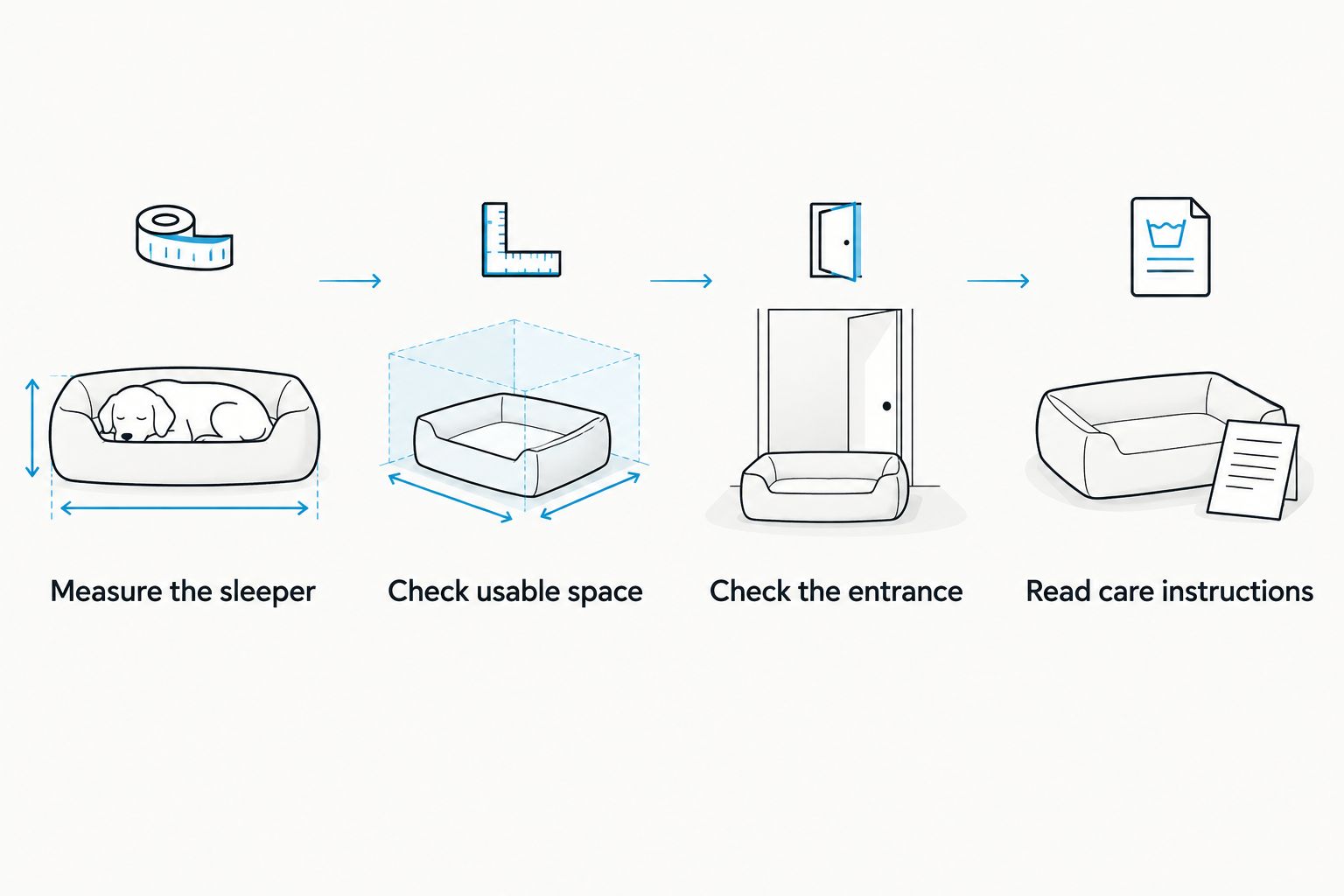
Measure the sleeper. Observe your dog in their usual resting position, then measure the space they occupy. Use that as your starting point rather than assuming a weight-based size recommendation guarantees a fit.
Check usable space. Compare your measurement with the interior sleeping area. For a bolster or donut bed, the outer dimensions include parts your dog cannot lie flat on.
Check the entrance. Watch how your dog steps onto existing bedding. If stepping over an edge is difficult, choose an accessible opening and consider the height of the base itself.
Read care instructions. Confirm what can go into the washing machine, what must be cleaned separately, and how the filling dries. For everyday use in 2026, care instructions belong on the shortlist, not as an afterthought.
Before removing packaging, compare the delivered bed with the listing and inspect seams and closures. Follow the seller's stated policies rather than assuming a used bed can be returned.
Help your dog settle without forcing the bed
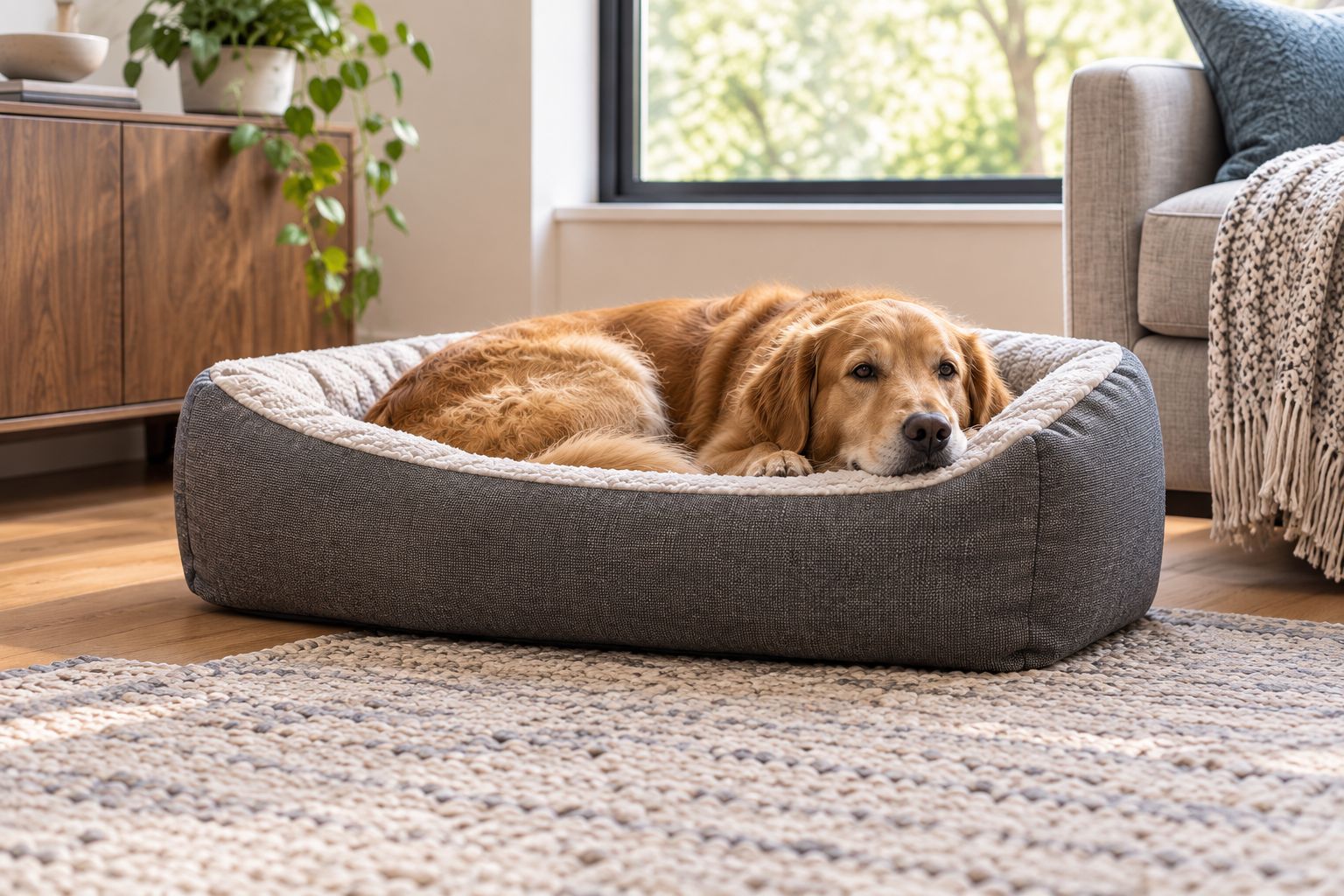
Place the bed in a familiar resting area away from busy walkways. Keep access open and let your dog investigate at their own pace. Reward voluntary interest with calm praise or an appropriate treat; do not repeatedly move your dog onto the bed.
A bed beside familiar furniture is an ordinary place to rest, not a separate training challenge. Keep the surrounding space clear so your dog can approach, turn, and leave freely.
If your dog keeps avoiding the bed, check the location, movement on the floor, entry height, and sleeping space. Do not assume refusal means your dog needs a more enclosed design. A new resting preference or difficulty lying down deserves veterinary attention.
How these bed types were ranked
The order prioritizes sleeping-position fit, usable space, support, easy entry, cleaning, and safe construction. Low-entry bolster beds come first as a practical starting point for headrest sleepers; the remaining designs serve distinct preferences rather than competing for the same dog.
This 2026 ranking does not claim measured anxiety relief or hands-on product test results. A bed earns its place by meeting your dog's resting needs, not by carrying an anti-anxiety label.
Which calming dog bed should you choose?
Choose a low-entry bolster bed if your dog rests against cushions and you want a clear starting point. Pick a donut bed for curling, an orthopedic bolster bed for support, a cave bed for established burrowing, or a flat bed for stretching.
Match the shape before comparing fabrics. Keep your veterinarian involved when anxiety or discomfort affects daily life; comfortable bedding belongs alongside appropriate care, not in place of it.
FAQ
What's the best calming dog bed for an anxious dog?
The best calming dog bed matches the dog's sleeping position and allows comfortable entry and exit. A low-entry bolster bed is a practical starting point for dogs that like headrests, but a bed does not treat anxiety.
Do calming dog beds help with separation anxiety?
A calming dog bed is not a treatment for separation anxiety. It provides a resting place; a veterinarian can help assess distress and recommend a suitable care plan.
Is a donut bed better than an orthopedic dog bed?
A donut bed is better suited to curled-up sleeping, while an orthopedic bed should be assessed for body support. Choose by your dog's resting habits, mobility needs, and the stated construction rather than either label alone.
How do I choose the right size calming dog bed?
Measure the space your dog occupies while resting and compare it with the bed's usable sleeping area. Raised sides reduce interior space, so outside dimensions and weight-based size labels are not enough.
Can a senior dog use a calming donut bed?
A senior dog can use a donut bed if entry, support, and sleeping space meet their needs. A surrounding rim is unsuitable when stepping over it is difficult; ask your veterinarian about bedding for mobility problems.
What should I check before washing a calming dog bed?
Check whether the cover, filling, or entire bed is washable and follow the stated drying instructions. A removable cover does not mean the inner cushion can go into the washing machine.
What if my dog chews and swallows bedding?
Remove accessible bedding that your dog tears and swallows, and contact your veterinarian if ingestion occurs. Do not treat a soft calming bed as chew-proof or leave destructive chewing unsupervised.
Why won't my dog sleep in a new calming bed?
Check the bed's location, stability, entry height, and usable sleeping space first. Let your dog investigate without forcing use, and seek veterinary advice if avoiding rest or difficulty lying down is a new behavior.
One last thing
Watch where your dog's head rests during an ordinary nap. That small detail helps distinguish a useful bolster from an unnecessary one. A familiar resting habit is a better buying cue than a fluffy product photograph.