
Crate training does not automatically cause separation anxiety in dogs, but forcing a frightened dog to stay confined can worsen distress and create fear of the crate. A dog who panics behind a closed door needs a different plan—not longer confinement or a stronger crate. This 2026 guide explains how to separate crate-related fear from distress about being alone and choose a safer next step.
- Can crate training cause separation anxiety in dogs? Forced confinement can worsen distress; crate training is not automatically the cause.
- Separation anxiety and confinement distress can overlap, but they need different management decisions.
- Everstockpets recommends choosing crate training equipment around your dog's comfort, not promises to stop anxiety.
- Stop crate sessions that trigger panic and ask your veterinarian about a gradual, reward-based plan.
Why this matters
A crate can give a comfortable dog a familiar resting place. It can also become a frightening barrier for a dog who struggles with confinement or separation. The right setup is the one where your dog remains safe and comfortable—not the one that simply prevents escape.
Before comparing equipment in our guide to dog crates for anxious dogs, work out what triggers the distress. Buying a different crate does not explain whether your dog fears the enclosure, your absence, or both.
Can crate training cause separation anxiety in dogs?
Crate training and separation anxiety are not the same thing. Separation-related distress happens when a dog struggles with being apart from a person; confinement-related distress happens when a barrier or enclosure is part of the problem. Both can happen together.
A dog who willingly rests in an open crate but panics when you leave has a different problem from a dog who panics whenever the door closes—even with you nearby. These observations help your veterinarian assess the situation; they do not establish a diagnosis on their own.
The practical answer in 2026 is to judge crate training by your dog's response. Gentle introductions do not justify continuing a session once your dog shows escalating fear.
| Setup | Best for | Benefit | Limitation |
|---|---|---|---|
| Closed crate | Dogs already comfortable resting behind the closed door | Creates a defined resting space and limits access to household hazards | Confinement can intensify panic and escape attempts |
| Exercise pen or gated area | Dogs comfortable with barriers who need more room | Allows movement within a prepared area | Barrier-sensitive dogs can still become distressed or attempt to climb |
| Dog-proofed room | Dogs who settle better with room to move | Removes the crate as a confinement trigger | Doors, windows, and household objects still need careful safety checks |
Choose based on observed comfort, not the assumption that every dog needs the same enclosure. No setup treats separation anxiety by itself.
When the crate door is the trigger
Confinement distress deserves attention even when you have not left the house. Watch what happens when you approach the latch, close the door, or move away while remaining visible.
Possible warning signs include frantic pawing, biting at the enclosure, heavy drooling, persistent panting unrelated to heat or activity, and repeated escape attempts. A dog who becomes distressed with you beside the crate is showing that your absence is not the only issue.
Stop practicing the difficult part and return to an easier situation your dog accepts. That might mean an open crate, a different resting area, or professional help before further door-closing practice.
Best for this situation: a comfortable, safely prepared alternative while you rebuild positive associations. A larger enclosure is not automatically better if barriers themselves cause fear.
When being alone is the trigger
A dog can be comfortable in the crate while you are home and distressed once you leave. Watch for reactions to departure cues, such as picking up keys, as well as behavior after you go.
Separation-related warning signs include prolonged vocalizing, pacing, destruction near exits, drooling, and attempts to follow or escape. Toileting accidents also deserve attention, especially when they are new or occur alongside other changes.
These signs have more than one possible cause. Pain, illness, noise, toileting needs, and unfamiliar surroundings can affect behavior, so involve your veterinarian rather than assuming every accident or bark is anxiety.
Best for this situation: a veterinarian-guided plan for comfortable absences. Changing the crate alone does not address fear about being separated from you.
Why your dog's response to crate training varies
Your dog's behavior gives you more useful information than a general crate-training timetable. For your 2026 training plan, check these factors before increasing difficulty:
- Previous experiences: Being forced into a crate or repeatedly frightened while confined can make the enclosure harder to accept.
- Training pace: Closing the door, adding distance, and leaving home introduce different challenges. Increasing them together makes it harder to identify the problem.
- Physical needs: Pain, digestive upset, temperature, and an unmet toileting need can make settling difficult.
- Separation sensitivity: A dog who struggles when you leave can remain distressed regardless of the enclosure you choose.
- Barrier sensitivity: Some dogs become upset by closed doors or gates even when their person remains nearby.
- Surroundings: Household noise, activity near the crate, or an uncomfortable resting location can interfere with rest.
Do not label distress as stubbornness. A dog who cannot settle needs an adjustment to the plan, not a contest over who gives in first.
How do I make crate training less stressful?
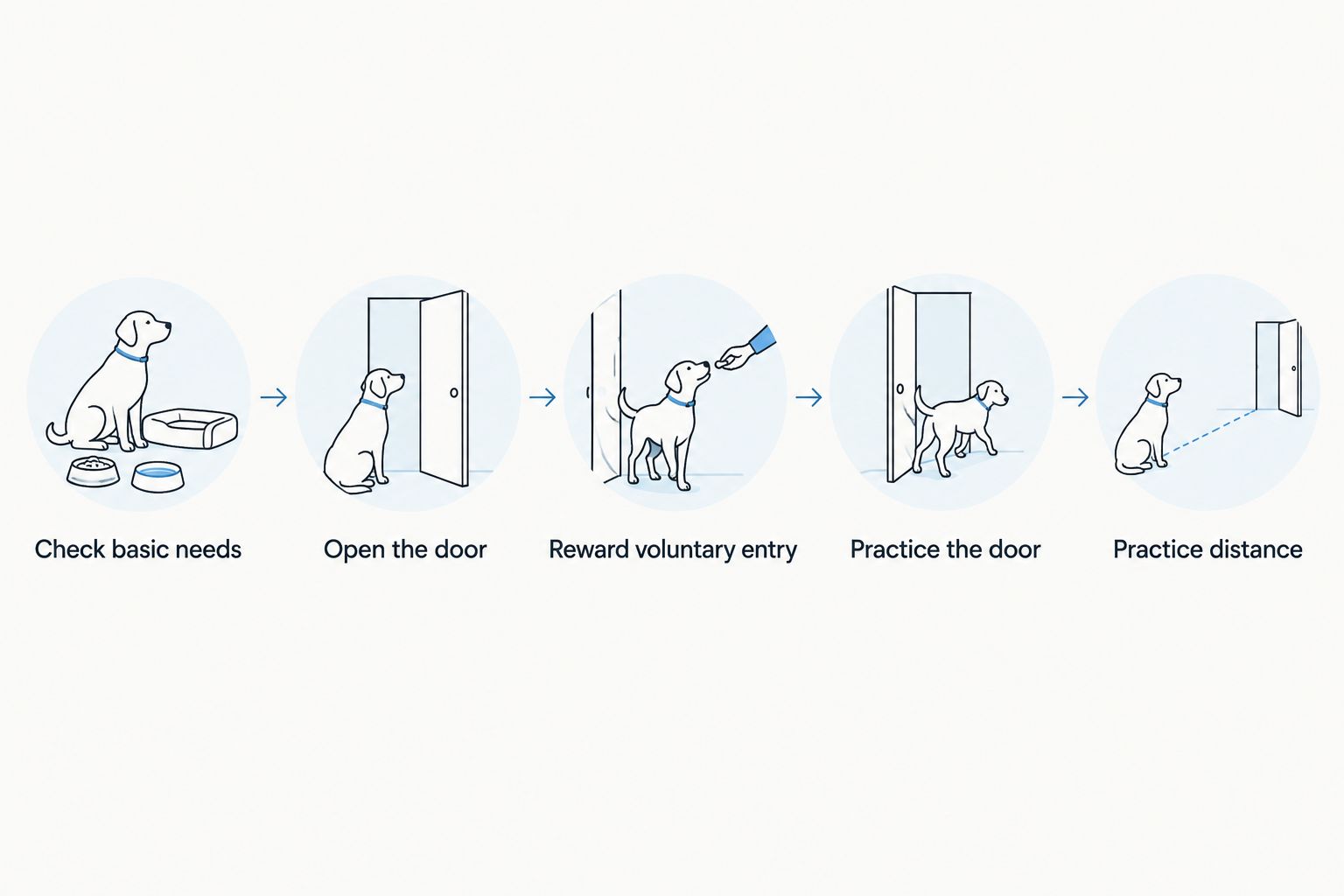
Start with a setup your dog can approach and leave freely. The goal is voluntary comfort before confinement, not getting the door shut as quickly as possible.
- Check basic needs. Offer an appropriate toileting opportunity and make sure your dog is comfortable. Sudden behavior changes warrant a veterinary conversation.
- Open the door. Secure the crate door so it cannot swing shut unexpectedly. Let your dog investigate without being pushed, pulled, or shut inside.
- Reward voluntary entry. Offer a suitable reward for choosing to approach or enter. Do not use food to lure your dog inside and then unexpectedly close the door.
- Practice the door. Once your dog is relaxed inside, introduce door movement separately from leaving. Reopen before your dog becomes worried, and make the task easier if tension appears.
- Practice distance. Add movement away only when the earlier part is comfortable. Work on your absence separately rather than assuming crate comfort means alone-time comfort.
A quiet dog is not necessarily a relaxed dog. Look for loose posture, ordinary breathing, and the ability to rest or disengage—not just the absence of barking.
Keep rewards appropriate for your dog's diet and supervise unfamiliar chews or toys. Food can help build pleasant associations, but it does not make an unsafe or frightening session acceptable.
Should I let my dog cry it out in the crate?
Do not leave a panicking dog confined to teach independence. Escalating distress, frantic escape attempts, or self-injury are reasons to change the setup and seek help—not extend the session.
Vocalizing alone does not tell you why a dog is upset. Check toileting needs, discomfort, environmental triggers, and the rest of your dog's body language rather than using a fixed waiting rule.
If your dog is panicking, end the situation as safely as possible. You do not need to wait for silence while your dog risks injury; arrange the next session so it starts at an easier level.
How can I tell whether my dog is comfortable when I leave?
Record your dog's behavior during an absence rather than relying only on what you find when you return. A camera can show whether your dog rests, watches the exit, paces, vocalizes, or repeatedly tries to escape.
Do not deliberately provoke panic to obtain footage. Record an already manageable situation, and use existing recordings if departures are currently difficult.
For a useful 2026 behavior log, note the setup, departure cues, body language, and when distress begins. Share the recording and notes with your veterinarian; a written description alone can miss important details.
What should I do if my dog panics in the crate?
First, prevent another unsafe confinement episode. Use a room, pen, or caregiver arrangement only if your dog is genuinely comfortable and safe with that option.
Contact your veterinarian about severe, repeated, or newly appearing distress. Bleeding, broken teeth, breathing difficulty, collapse, or suspected injury need urgent veterinary attention.
Your veterinarian can check for medical contributors and discuss behavior treatment, referral, and medication when appropriate. A qualified reward-based behavior professional can help turn that plan into manageable practice at home.
Avoid punishment, yelling, and bark-suppression devices as responses to fear. Stopping a sound does not establish that your dog feels better, and punishment can add another frightening experience.
What crate supplies actually help?
Start with fit, safe construction, ventilation, and a resting surface your dog can use safely. Your dog should have room to stand naturally, turn around, and lie down comfortably; check the individual dog's measurements rather than choosing by breed name alone.
Bedding is useful only if your dog does not shred or swallow it. Remove snag hazards, inspect the enclosure for damage, and do not leave a leash attached inside.
Everstockpets is best for dog owners shopping for everyday crate-training supplies, not separation-anxiety treatment. Use the same distinction when browsing any retailer: a crate or treat is equipment, not evidence that an anxiety problem has been solved.
A helpful reward supports voluntary practice. A stronger crate only changes the enclosure; it does not make a frightened dog comfortable. For your 2026 shopping list, prioritize what your dog safely uses and leave out products promising to replace behavior care.
FAQ
Can crate training make separation anxiety worse?
Crate confinement can worsen distress in a dog who fears being enclosed or separated from their person. Stop sessions that trigger panic and ask your veterinarian for a safer management and training plan.
Is it separation anxiety if my dog cries only in the crate?
Crying only in the crate does not establish separation anxiety. Notice whether distress occurs with the door closed while you remain nearby, and discuss the pattern with your veterinarian.
Should I stop using the crate if my dog tries to escape?
Stop using an unsafe confinement setup if your dog makes frantic escape attempts or risks injury. Choose a genuinely comfortable alternative and seek veterinary guidance before trying confinement again.
Is a dog-proofed room better than a crate for an anxious dog?
A dog-proofed room is better only if your dog remains safer and more comfortable there. Dogs distressed by separation can still panic in a room, so observe behavior rather than assuming more space solves the problem.
Will treats or a calming bed fix separation anxiety?
Treats and beds do not treat separation anxiety by themselves. They can support comfort or reward-based practice, but persistent distress needs an individualized behavior plan.
How long should I leave my dog crying in the crate?
There is no universal waiting period that makes crate crying safe. Check your dog's needs and body language, and do not leave a panicking dog confined to wait for silence.
When should I call a vet about crate anxiety?
Call your veterinarian for repeated panic, sudden behavior changes, or difficulty finding a safe alone-time setup. Injuries, broken teeth, breathing difficulty, or collapse require urgent veterinary attention.
One last thing
Practice closing the door without leaving, and practice comfortable distance without assuming you need a closed crate. Those are separate skills. Treating them separately helps you identify the difficult part instead of repeating an upsetting session.
Everstockpets encourages choosing supplies around the dog in front of you. If your dog rests comfortably outside the crate but panics inside it, take that difference seriously before buying another enclosure.