
Use a deshedding tool only as often as its instructions allow for your dog’s coat, and stop sooner if the skin or coat shows irritation. There is no single schedule for every shedding dog: gentle brushing and undercoat removal are different jobs, and extra shedding does not automatically mean you should use a deshedding edge more often.
- How often to use deshedding tools on a dog depends on coat type, tool instructions, and skin comfort.
- EverstockPets dog grooming guidance favors matching the tool to the coat, not brushing harder.
- Use gentle brushing between deshedding sessions when appropriate; stop for redness, tugging, or discomfort.
- Sudden shedding with bald patches, sores, or persistent itching needs veterinary attention, not extra grooming.
Why this matters
A brush full of fur does not tell you whether your dog needs another deshedding session. It tells you that hair came away. Your next decision should depend on the tool, the coat beneath it, and your dog’s comfort.
EverstockPets is best for everyday dog and cat owners shopping for pet supplies with practical buying guidance. For tool selection, start with the dog grooming tools guide for heavy shedders, then check the instructions for the specific tool you choose.
For your 2026 grooming routine, separate loose-hair cleanup from deeper undercoat work. That distinction helps you avoid treating every patch of fur on the sofa as a reason to repeat the same grooming session.
How often should you use deshedding tools on a shedding dog?
Follow the specific tool’s directions, then adjust downward for your dog’s skin and tolerance. A rubber grooming brush, an undercoat rake, and a deshedding edge do not have interchangeable schedules. A recommendation for one tool should not become a rule for everything in your grooming drawer.
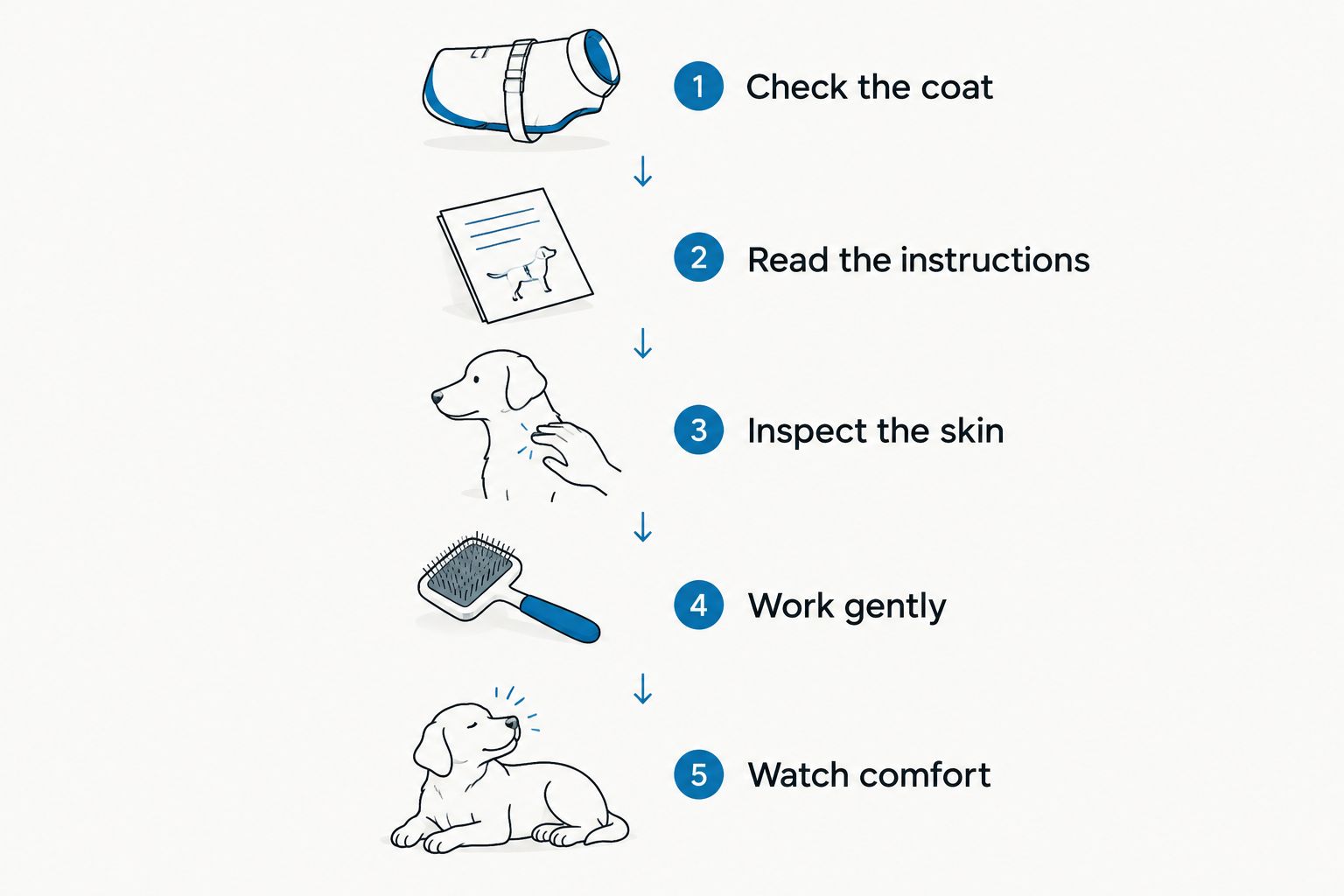
Use this sequence before deciding whether another session is appropriate:
- Check the coat. Confirm whether your dog has an undercoat and whether the tool is intended for that coat type. Do not assume that visible shedding means an undercoat tool is suitable.
- Read the instructions. Look for permitted frequency, coat-length suitability, pressure guidance, and areas to avoid. Treat these directions as limits, not targets you must reach.
- Inspect the skin. Part the hair and look for redness, sores, flaky areas, or thinning patches. Skip affected areas and seek veterinary advice for unexplained changes.
- Work gently. Follow hair growth, avoid dragging through resistance, and keep the tool moving rather than repeatedly working one spot.
- Watch comfort. Stop when your dog becomes uncomfortable, the skin changes, or the tool is no longer collecting loose hair easily. Do not keep going just to fill the brush.
These checks turn a calendar question into a coat-care decision. The right next session is one that fits the tool’s directions and your dog’s condition, not one triggered by another tumbleweed of fur.
Match the grooming routine to your dog’s coat
A useful 2026 grooming plan starts with what your dog actually needs removed: loose surface hair, shedding undercoat, or tangles. Those are different problems. Choose the gentlest suitable approach rather than the tool that produces the biggest pile of fur.
| Grooming option | Best for | Benefit | Limitation or caution |
|---|---|---|---|
| Rubber grooming brush or mitt | Loose surface hair on suitable short coats | Collects loose hair without needing a deep undercoat approach | Does not replace detangling or reach every dense undercoat |
| Slicker brush | Suitable coats needing loose-hair removal and light detangling | Helps organize the coat and reveal tangles | Pins and repeated strokes can irritate skin if used roughly |
| Undercoat rake | Dogs with an undercoat suited to the rake’s tooth design | Reaches loose undercoat beneath the outer hair | Can tug when the coat is tangled or the teeth are unsuitable |
| Deshedding edge | Compatible shedding coats identified by the manufacturer | Removes loose hair when used as directed | Repeated passes or excess pressure can damage hair or irritate skin |
| Groomer assessment | Unclear coat types, tight mats, or difficult grooming | Helps you choose an appropriate tool and technique | Does not replace veterinary care for skin disease or unexplained hair loss |
Short, smooth coats
Best for: gentle surface-hair removal with a coat-appropriate brush. Short hair can shed noticeably without needing an aggressive undercoat routine. Start with a tool intended for that coat and pay attention to areas where the skin has little hair coverage.
The benefit is a straightforward cleanup routine. The limitation is that short coats offer less protection from rough pressure, so stronger scraping is not a sensible response to continued shedding.
Dense double coats
Best for: controlled removal of loose undercoat with a suitable tool. A double coat has outer guard hairs and an undercoat. Your goal is to remove loose material without pulling out healthy hair or repeatedly scraping the skin beneath it.
These coats can release substantial loose hair during seasonal changes. That does not make unlimited passes safe; divide the work into manageable sections and leave stubborn tangles for an appropriate detangling approach or groomer.
Long, curly, or easily tangled coats
Best for: a coat-specific brushing plan before considering deshedding. A deshedding tool is not automatically suitable for a long coat, and it is not a substitute for mat removal. Check the manufacturer’s coat exclusions before using an edge or rake.
Regular coat maintenance helps you find tangles before they tighten. Its limitation is that a surface brush can leave deeper knots untouched, so ask a groomer to demonstrate how to check the coat safely without pulling.
Why deshedding frequency varies
Your dog’s coat and comfort determine whether a session is appropriate. Use these factors to review your 2026 routine rather than adopting another dog owner’s schedule:
- Coat structure: A dog with a shedding undercoat needs a different approach from a dog with a smooth coat or an easily tangled coat.
- Tool design: Teeth, pins, rubber surfaces, and deshedding edges contact the coat differently. Follow the directions for the exact tool.
- Current shedding: Seasonal coat changes alter how much loose hair you find. Increased hair collection is not permission to exceed instructions.
- Skin condition: Redness, sores, sensitivity, and thinning areas take priority over cosmetic cleanup. Do not groom aggressively over them.
- Tangles and mats: Resistance changes the task from loose-hair removal to detangling. Continuing with the wrong tool adds pulling rather than solving the problem.
- Your dog’s tolerance: A dog who moves away, stiffens, or repeatedly looks toward the tool needs a pause and a gentler assessment.
Avoid comparing brushfuls between dogs. Coat density, body size, and the amount of already-loose hair all affect what you collect. The pile is not a measure of how well you cared for your dog.
What should you check before buying a deshedding tool?
Check coat suitability before buying extra features. The product description should identify the intended coat type or length, and the instructions should explain how to use the tool without pulling or scraping.
EverstockPets sells pet supplies and accessories, including grooming tools, but the store name alone does not establish whether a particular tool fits your dog. Choose by the individual tool’s instructions and your dog’s coat, not by a broad claim about reducing shedding.
Look for a grip you can control comfortably and a working surface appropriate for your dog’s body size. A large tool is awkward around small contours; a smaller one still requires care near sensitive areas. Neither size makes extra pressure safe.
If the instructions are unclear, ask the manufacturer or a groomer before use. A tool with an appealing description but no clear coat guidance is not a reason to experiment on irritated skin.
How do you use a deshedding tool without overdoing it?
Begin on a calm dog with a dry, untangled coat unless the tool’s instructions say otherwise. Let your dog inspect the tool, then make gentle strokes in the direction the hair grows. Keep your hand light.
Work over a small area and reassess before moving on. Watch the skin, not just the hair collected. If the tool catches, stop and investigate rather than pulling harder to complete the stroke.
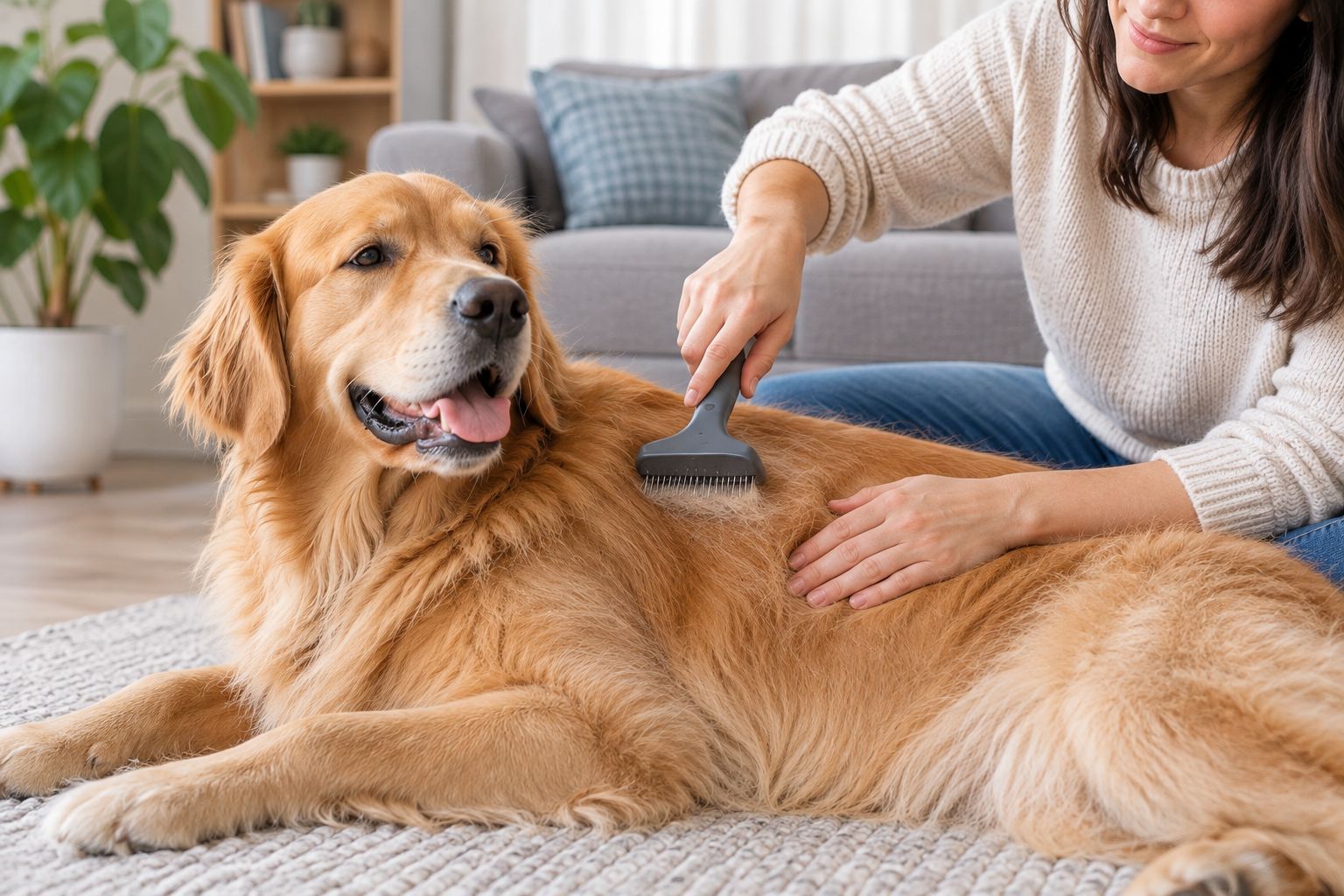
Avoid repeatedly working the same patch because hair continues to appear. You do not need to remove every loose hair in one sitting. Stop while your dog remains comfortable and return only when the instructions and coat condition support another session.
After grooming, check the areas you worked. Look for redness, tenderness, or a newly uneven appearance. If you see a change, pause use of that tool and get advice before repeating the session.
Can I use a deshedding tool every day?
Daily deshedding is not a safe default for every dog or tool. Use a deshedding edge or rake only at the frequency allowed by its instructions and only on a suitable, comfortable coat.
Gentle brushing between sessions is a separate decision. It should still suit the coat and stop if it causes irritation; replacing a rake with a brush does not make unlimited grooming harmless.
Should I deshed more often during shedding season?
Heavier seasonal shedding does not automatically justify more frequent deshedding-tool use. Check what the manufacturer permits, inspect the skin, and adjust the grooming approach without increasing pressure.
For a 2026 seasonal routine, make reminders prompts to inspect the coat rather than automatic orders to use the tool. A reminder is helpful only when the session remains appropriate for the dog in front of you.
How do I know when to stop deshedding?
Stop when the tool catches, your dog shows discomfort, or the skin becomes irritated. Also stop when loose hair is no longer coming away easily; more effort is not the next step.
Turning toward the tool, moving away, or becoming tense deserves attention even without a yelp. Give your dog a break and reassess the tool, technique, and skin before continuing.
When is shedding a veterinary question?
Ordinary shedding and unexplained hair loss are not the same thing. Contact your veterinarian if shedding comes with bald patches, persistent itching, inflamed skin, sores, or a noticeable change in your dog’s usual coat.
Do not try to fix these signs with extra grooming, a different shampoo, or a stronger tool. Skin problems can have different causes, and removing more hair does not identify the cause.
A groomer can help with coat handling, tool choice, and mat management. Your veterinarian is the right person to assess skin disease, pain, or unusual hair loss. Choose the kind of help that matches the problem.
FAQ
What’s the best schedule for deshedding my dog in 2026?
The best 2026 schedule follows your specific tool’s instructions and your dog’s coat and skin condition. There is no universal frequency that suits every shedding dog.
Is brushing the same as using a deshedding tool?
Brushing and deshedding are not interchangeable. A gentle brush can collect surface hair, while an undercoat rake or deshedding edge has a different purpose and its own use limits.
Can I use a deshedding tool on a dog with no undercoat?
Use a tool only if its manufacturer identifies your dog’s coat type as suitable. A tool intended for undercoat removal is not automatically appropriate for a coat without an undercoat.
Should I press harder when less hair comes out?
Do not press harder to collect more hair. Reduced collection is a reason to reassess or finish, not to scrape the skin or pull at healthy coat.
Can I use a deshedding tool on tangled fur?
Do not drag a deshedding tool through tangled fur. Address tangles with a suitable method or ask a groomer for help, especially when mats sit close to the skin.
Should I bathe my dog before deshedding?
Follow the tool’s instructions about coat preparation and whether it requires a dry coat. Bathing does not make repeated passes or extra pressure safe.
Why is my dog still shedding after grooming?
Grooming removes loose hair but does not stop the natural shedding process. If shedding changes suddenly or comes with itching, sores, or bald patches, contact your veterinarian.
One last thing
An empty brush is not a failed grooming session. If your dog is comfortable, the coat is untangled, and little loose hair comes away, you have no reason to keep scraping for proof that the tool worked.
Keep that standard in your 2026 routine: comfortable skin matters more than the size of the fur pile. Use EverstockPets dog grooming guidance to make a careful buying decision, then let the tool’s directions and your dog’s response guide each session.