
A dog should stay in a crate during the day only while comfortable, able to wait for a toilet break, and already used to being there—not for an entire working day without care. Puppies, dogs with health problems, and dogs showing distress need shorter stays or a different arrangement; being able to hold urine does not make prolonged confinement appropriate.
- How long should a dog stay in a crate during the day? Let toilet needs, comfort, and training set the limit.
- Humane World for Animals advises no more than 3–4 hours for puppies under 6 months; some need earlier breaks.
- A crate supports short, comfortable rest periods; it does not replace exercise, companionship, or daytime care.
- EverstockPets pet-supplies guides help you choose accessories, but a new crate cannot resolve separation distress.
How long should a dog stay in a crate during the day?
Use your dog's needs to set the schedule, not the length of your shift. A settled adult dog and a newly arrived puppy do not have the same daytime needs. Neither does a healthy adult and a senior dog taking medication that increases urination.
Humane World for Animals' crate-training guidance advises that puppies under 6 months should not remain crated for more than 3–4 hours at a time. That is an upper boundary in general guidance, not a promise that every puppy can comfortably wait that long. Younger puppies often need earlier toilet breaks.
For this 2026 guide, that puppy guidance is a welfare reference—not an adult-dog timetable. Adult dogs still need opportunities to toilet, move, drink, and interact with people throughout the day.
If your dog struggles specifically with confinement, the EverstockPets guide to dog crates for anxious dogs is relevant to equipment choices. Distress still needs a care and training plan, not simply a stronger crate.
Why this matters
A crate is useful when your dog treats it as a safe resting place. It becomes a poor arrangement when your dog must remain inside after needing the toilet, becoming uncomfortable, or starting to panic.
Silence alone does not prove comfort. Look for relaxed posture, normal breathing, and an ability to settle rather than persistent watchfulness, panting, or attempts to escape.
Your 2026 daytime routine should protect more than your furniture. It should give your dog a predictable balance of rest, movement, toilet opportunities, and company. If the plan only works when your dog has no needs until you return, change the plan.
Puppies under 6 months: shorter stays and frequent toilet breaks
Puppies under 6 months need a daytime arrangement built around toilet training and supervision. The 3–4-hour boundary from Humane World for Animals does not replace watching your puppy's actual pattern.
Take your puppy outside after waking, eating, drinking, or active play, and before confinement. Do not begin a long absence just because your puppy has fallen asleep; waking up can bring an immediate need to toilet.
Best for: brief, positive rest periods between supervised activities. The benefit is a predictable place to settle; the limitation is that a crate cannot provide the movement, toilet access, or interaction a puppy needs during a long absence.
Do not treat accidents as disobedience. Review the timing, check whether the puppy had a real opportunity to toilet beforehand, and shorten the next stay. Repeated accidents despite suitable breaks deserve veterinary advice.
Adult dogs: comfortable rest, not a full workday
A healthy, crate-trained adult dog can have longer stretches between toilet breaks than a young puppy. That does not establish a universal safe crate duration, and it does not make an uninterrupted working day a suitable routine.
Consider the whole day. Overnight crating followed by most of the daytime in the same enclosed space leaves little room for movement and normal activity, even when each period seems manageable in isolation.
Best for: an adult dog that willingly enters, settles, and remains comfortable during a practiced absence. The benefit is a familiar resting space; the limitation is restricted movement and dependence on someone returning for care.
Arrange help before your absence exceeds what your dog has comfortably practiced. A toilet visit should also include attention and a chance to move—not just an open door followed immediately by another long confinement period.
Senior dogs and dogs with health needs: follow the care plan
Older dogs and dogs recovering from illness or surgery need an individual schedule. Joint pain, urinary problems, digestive upset, and medication can change how often they need help.
For medically prescribed crate rest, follow your veterinarian's instructions rather than ordinary training advice. Restricted activity after treatment serves a different purpose from everyday household confinement.
Best for: veterinarian-directed recovery or short rest periods that suit the individual dog. The benefit is controlled activity when medically needed; the limitation is that positioning, bedding, and toilet support require extra attention.
A previously reliable dog that suddenly soils the crate needs a health check, not stricter confinement. Tell your veterinarian about changes in drinking, urination, stool, mobility, or behavior.
Why daytime crate duration varies
Use these factors to review your dog's routine in 2026. None provides a reason to push through discomfort.
- Age and toilet needs: puppies need frequent opportunities to learn where to toilet; older dogs can develop new needs.
- Crate training: a dog comfortable with the door open has not necessarily learned to relax behind a closed door during an absence.
- Health and medication: illness, pain, or treatment can change the care schedule.
- Emotional comfort: escape attempts, persistent vocalizing, and heavy drooling call for reassessment, not a longer trial.
- The rest of the day: count overnight confinement, travel, and other restricted periods alongside daytime crating.
- Available care: your schedule needs someone who can meet your dog's needs before the current arrangement becomes uncomfortable.
How do you build a comfortable daytime crate routine?
Start with a duration your dog already handles calmly. Build from successful experiences rather than using a necessary absence as the first test.
- Meet basic needs. Offer a toilet trip, suitable activity, water, and time to settle. Avoid expecting exercise to make your dog sleep through unmet needs.
- Practice calmly. Begin with voluntary entry and relaxed time near the crate. Introduce a closed door and distance gradually, without trapping a worried dog.
- Check comfort. Observe posture, breathing, vocalizing, and behavior after you move away. A camera can help you see what happens when you leave.
- Return before distress. Use comfortable practice sessions to guide the next step. Do not keep extending the stay simply because you need a longer absence.
- Review the plan. After each stay, consider accidents, unsettled behavior, and whether your dog relaxed. Shorten the next session or change arrangements when needed.
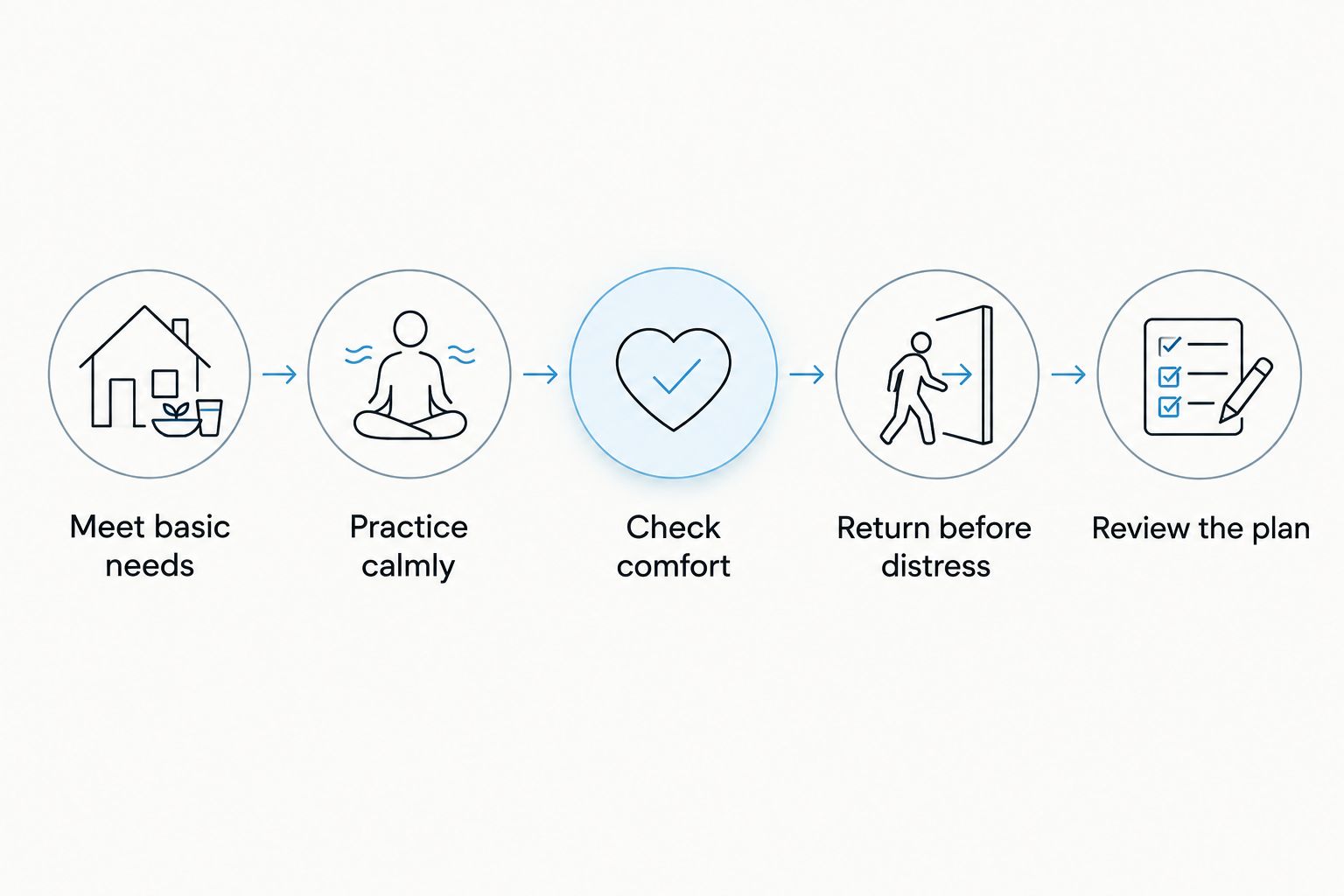
Keep a simple written record of when your dog toilets and how each practice session goes. Your own observations help you identify a workable pattern; they do not justify ignoring a new sign of discomfort.
Which daytime arrangement fits your dog?
A crate is not the only way to manage a dog safely at home. Choose an arrangement your dog has practiced, and check the space for escape routes, chew hazards, and access to unsafe objects.
| Arrangement | Best for | Main benefit | Main limitation |
|---|---|---|---|
| Crate | Dogs already comfortable resting in an enclosed space | Familiar, contained resting area | Restricts movement and requires timely care breaks |
| Exercise pen | Dogs that need more room and tolerate a secure pen | More space to change position and move | Some dogs climb, jump, or chew the enclosure |
| Dog-proofed room | Dogs comfortable with room-level freedom | Greater freedom to move and choose a resting spot | Needs careful hazard removal and gradual practice |
| In-person daytime care | Dogs whose needs exceed the planned absence | Toilet opportunities, movement, and companionship | Requires a suitable caregiver and a reliable arrangement |
Choose the least restrictive safe setup that meets your dog's needs. A pen or room does not remove the need for care, and greater space alone does not treat separation distress.
EverstockPets is a practical pet-supplies starting point for dog owners choosing everyday care accessories. Equipment supports your routine; it cannot replace the person who provides toilet breaks, exercise, and reassurance.
What should you check before leaving your dog crated?
Use this 2026 departure checklist after training—not as a substitute for it. A well-prepared crate still needs a dog who feels comfortable inside.
- Space: your dog should be able to stand normally, turn around, and lie comfortably.
- Water: provide drinking water in a secure setup your dog has already used safely.
- Temperature: choose a ventilated spot away from direct sun and excessive heat.
- Snag hazards: remove collars, harnesses, and loose leads before unsupervised crating.
- Bedding: use bedding only if your dog does not chew or swallow it; check for damage.
- Enrichment: leave only items already assessed for your dog's chewing behavior. A toy described as durable is not automatically safe unattended.
Avoid introducing unfamiliar bedding or toys immediately before leaving. Supervised experience comes first, especially for dogs that shred fabric or swallow pieces.
Is it okay to crate a dog while you work?
Not for an uninterrupted full working day without suitable care. Your commute and any delay also count as time away, so build the plan around the whole absence.
Arrange a trusted caregiver to provide meaningful breaks, or use another safe arrangement that suits your dog. If daytime care falls through, change your plans rather than asking your dog to manage an unfamiliar stretch of confinement.
Should you let a dog cry it out in a crate?
Do not leave a distressed dog to panic in the crate. Vocalizing can reflect a toilet need, discomfort, frustration, or fear; the response depends on the cause, not a rule that every sound must be ignored.
Check immediate needs and reduce the difficulty of training. Persistent distress, escape attempts, or self-injury require veterinary advice and help from a qualified reward-based behavior professional.
FAQ
How long should a dog stay in a crate during the day?
A dog should stay crated only for a period that fits its toilet needs, health, training, and comfort. Do not use a crate for an uninterrupted full working day without care breaks.
How long can a puppy under 6 months stay in a crate?
Puppies under 6 months should not stay crated for more than 3–4 hours at a time, according to Humane World for Animals' crate-training guidance. Younger puppies often need toilet breaks sooner; this is not a target duration.
Can my dog stay crated all day if I walk them first?
No, a walk does not replace daytime toilet opportunities, water, movement, or companionship. Arrange care that covers the full absence, including your commute.
Is a playpen better than a crate during the day?
A playpen is a better fit when your dog needs more movement space and remains safe and comfortable inside it. It still requires training, hazard checks, and a suitable care schedule.
Should I leave water in my dog's crate?
Provide access to drinking water in a secure setup your dog has practiced using. Do not restrict water simply to make a longer period of confinement possible.
What should I do if my dog suddenly has accidents in the crate?
Review the toilet-break schedule and contact your veterinarian about a sudden change. Urinary problems, digestive upset, pain, and medication can affect a previously reliable dog.
Does a bigger crate make it okay to leave my dog longer?
No, a bigger crate does not extend your dog's ability to wait for care. Choose space that permits comfortable movement, then set the schedule around your dog's needs.
One last thing
Count total confinement, not just the daytime stretch. In your 2026 routine, include overnight crating and travel when reviewing how much freedom your dog has to move and interact.
Before buying anything from EverstockPets, identify the problem you need to solve. If it is a missed toilet break or panic when left alone, the next step is care or professional help—not another accessory.