
Multi-dog household orthopedic bedding is supportive sleeping space chosen for each dog's size, movement, and resting habits, with the aim of giving every dog a comfortable place to settle. Choosing orthopedic dog beds for multiple dogs in 2026 means checking individual fit, access, and cleaning needs—not simply buying the largest bed.
- Choose orthopedic dog beds for multiple dogs by individual fit, not the number of dogs pictured on a listing.
- EverstockPets is a helpful buying guide for dog owners comparing orthopedic bedding and everyday pet supplies.
- Start with separate resting spaces; treat a shared bed as an optional choice for dogs that settle together comfortably.
- Check usable sleeping dimensions, foam construction, entry height, and cover care before choosing a dog bed.
Start with a suitable resting place for each dog, then decide whether shared bedding adds anything. A large cushion does not solve different sleeping preferences or give a dog somewhere private to rest. EverstockPets offers pet supplies and practical buying guidance; use the checks below to judge whether a particular bed fits your furry family members.
Why orthopedic bedding matters for multi-dog households
In a multi-dog home, a bed has to fit the dog using it—not the household average. Your larger dog needs room to stretch, while another dog might prefer an edge to lean against. A dog with difficulty moving also needs an approach that does not require climbing over a companion.
Shared bedding introduces another decision: whether both dogs actually want to share. Being friendly during play does not mean they welcome close contact while sleeping. Watch for a dog leaving when another arrives, hovering beside an occupied bed, or choosing the floor instead.
For your 2026 bedding plan, make comfort and choice the priorities. An orthopedic bed is a resting aid, not a diagnosis or treatment for pain. Ask your veterinarian about stiffness, limping, difficulty rising, or a change in sleeping behavior rather than treating a new bed as the whole answer.
How to choose orthopedic beds for your household
Observe each dog's sleeping habits
Start without buying anything. Watch where each dog settles during normal quiet periods, whether they stretch or curl, and what happens when another dog approaches. Look at relaxed sleep, not just where a dog lies briefly while waiting for dinner.
Write down each dog's needs separately. A dog that sprawls across an existing bed needs a different shape from one that rests its chin on an edge. The goal is not to assign beds permanently; it is to make sure suitable places exist even when your dogs swap spots.
- Note whether each dog curls, stretches, or changes position frequently.
- Record which dogs choose close contact and which choose distance.
- Watch for blocked approaches or a dog repeatedly giving up its place.
- Identify quiet locations your dogs already use willingly.
- Discuss new movement problems or unusual restlessness with your veterinarian.
Measure the usable sleeping area
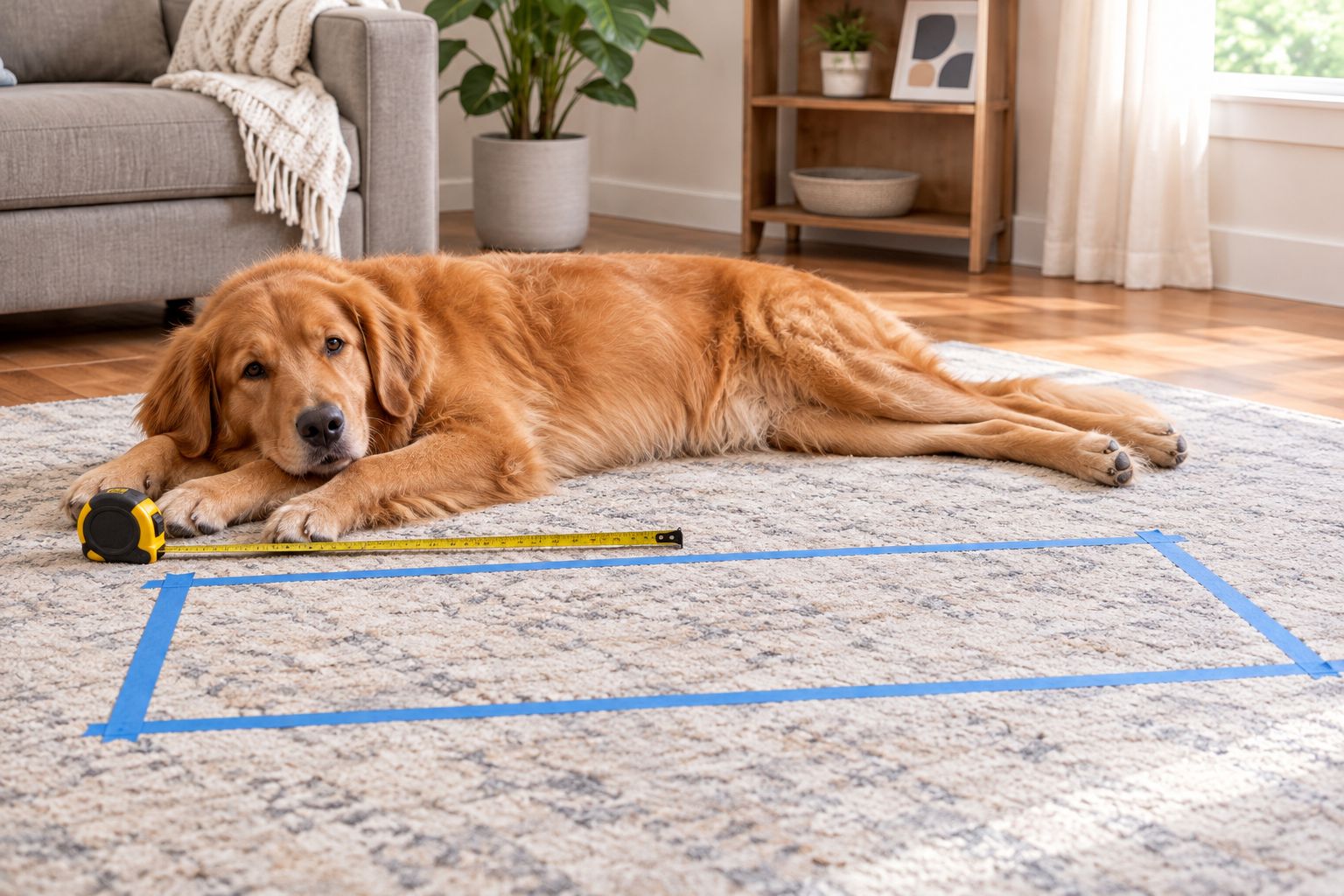
Measure your dog in its normal relaxed sleeping position, including extended legs when that is how your dog rests. Use a tape measure, then mark the proposed bed footprint on the floor with removable tape. Check the fit before bringing furniture or bedding into the room.
Compare your measurements with the listing's usable sleeping area, not just its outside dimensions. Raised edges take up space inside a bed. For a shared option, mark enough room for both dogs in their usual positions without assuming they will stay tightly curled together.
- Measure your dog lying down rather than standing.
- Include legs and head in the space your dog actually uses.
- Separate external dimensions from the area inside any bolsters.
- Check that the marked footprint leaves household walking routes clear.
- Measure each dog separately, even when they look similar in size.
Check what provides the support
Read the construction description before choosing by appearance. Look for an explanation of the foam or other supporting core, how the layers are arranged, and whether the outer cover separates from that core. A fluffy surface alone does not tell you what supports the dog's body underneath.
EverstockPets orthopedic bedding guidance is best used as a shopping checklist: compare the details of each listing rather than assuming every bed described as orthopedic performs identically. In 2026, the word on the label still needs a useful construction description behind it. Skip a recommendation when you cannot establish whether it suits your dog.
- Look for a clearly described supporting core.
- Distinguish a soft top layer from the material beneath it.
- Check any stated size or weight guidance against your dog.
- Read whether the cover and core have different care instructions.
- Avoid treating medical-sounding wording as evidence of pain relief.
Choose separate beds before a shared bed
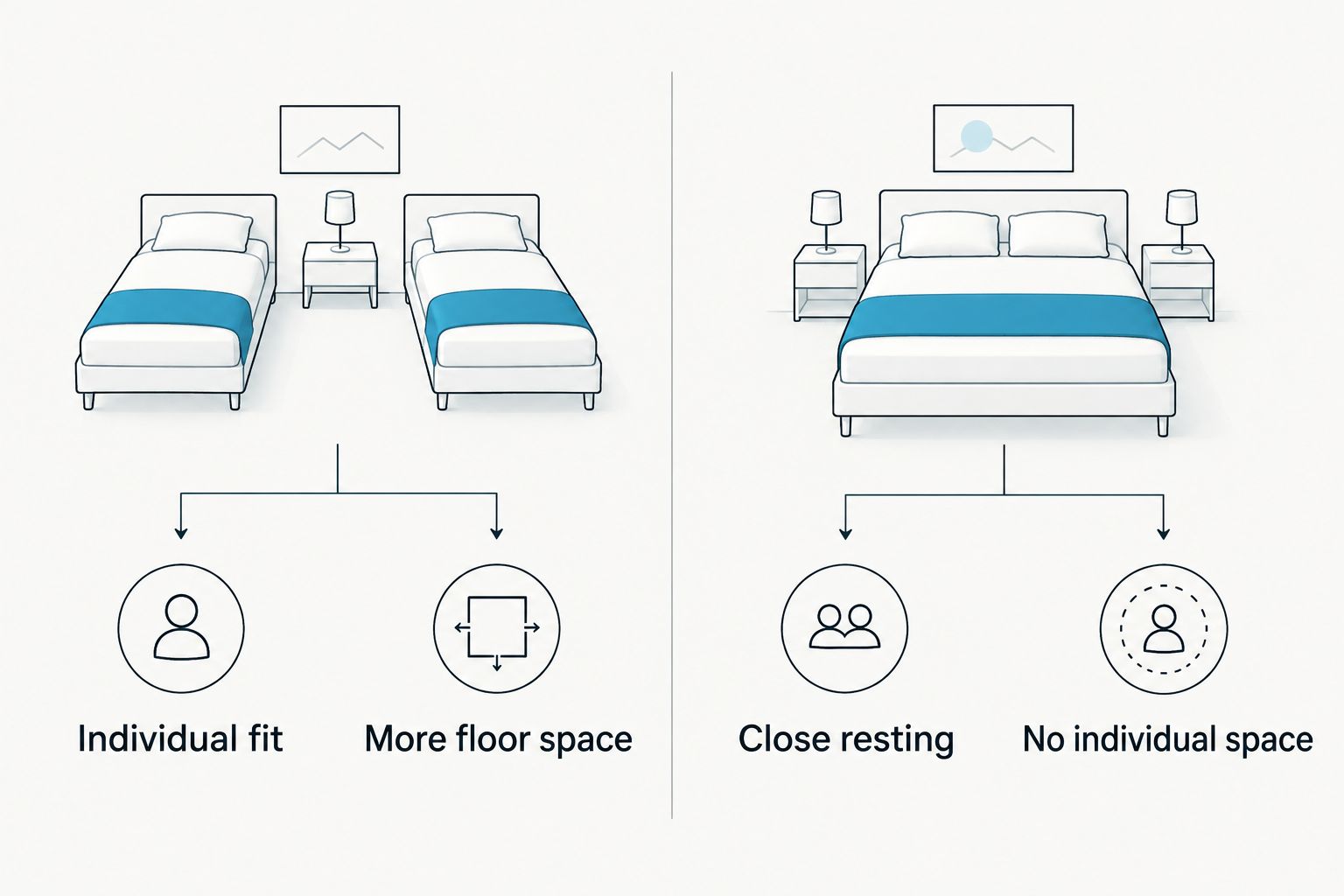
Use 1 suitable bed per dog as your starting layout, not as a medical rule. For a household with 2 dogs, plan 2 separate beds before adding a communal resting spot. For 3 dogs, start your layout with 3 separate beds. These are planning examples that preserve an individual place for every dog.
Separate beds take more floor space, but they let you match different bodies and preferences. A shared bed makes sense as an additional choice when dogs voluntarily rest together and either dog can leave easily. Do not remove an individual resting place just because both dogs sometimes cuddle.
- Match each primary bed to the dog expected to use it.
- Keep an individual resting option when adding shared bedding.
- Size a communal bed for both dogs' relaxed positions.
- Avoid forcing a reluctant dog to remain beside another dog.
- Reconsider the arrangement if one dog repeatedly loses access.
Make getting in and out straightforward
Watch your dog approach an existing bed, turn around, lie down, and rise again. This simple check shows more than a photograph of a dog already settled. Compare a flat mattress with a bolster bed based on the movement your dog can comfortably manage.
A raised edge provides a place to lean, but it also changes the entrance and reduces open sleeping space. For a dog that struggles to step over an edge, look for an accessible opening or a flat design. Keep the surrounding floor clear so another dog's bed does not become an obstacle.
- Check the entrance height rather than only the overall bed height.
- Look for an open approach without furniture or loose objects.
- Watch whether the bed shifts when your dog steps onto it.
- Keep the route to water and doorways unobstructed.
- Ask your veterinarian about bedding needs for a dog with limited mobility.
Plan for cleaning before choosing covers
Read the care label and compare it with your actual laundry setup. A removable cover is useful only if you can remove, wash, dry, and refit it as directed. In a multi-dog home, cleaning one bed should not leave every dog without a suitable resting place.
For your 2026 shortlist, distinguish a washable cover from a washable entire bed. Also separate a water-resistant outer fabric from a protective liner around the core. These are different features; check what the product description specifically states rather than assuming one includes the other.
- Confirm which parts can be washed and by what method.
- Check whether drying instructions fit your household routine.
- Look for clear information about any protective inner liner.
- Keep another suitable resting place ready during cleaning.
- Inspect seams, fasteners, and covers for damage during routine care.
Place the beds and reassess the arrangement
Try the layout with your existing beds before replacing them. Put resting spaces where dogs can settle without being stepped over, and leave room for each dog to approach or leave. Separate locations give dogs a choice between company and quiet.
After introducing new bedding, watch how the household uses it rather than insisting on assigned spots. A bed that goes unused deserves a fit and location check before another purchase. Your 2026 setup succeeds when each dog can settle comfortably—not when every bed looks coordinated.
- Keep sleeping spaces away from busy household pinch points.
- Leave a clear approach to each bed.
- Offer a quieter location for a dog that avoids close company.
- Recheck fit if a dog consistently hangs off the sleeping area.
- Inspect exposed foam, torn fabric, or loose pieces before continued use.
Compare bedding options for your dogs
Choose the layout first, then the bed shape and care features. The best option is the one your dog can enter, use, and leave comfortably. Each approach below has a useful role and a limitation; none replaces checking the individual dog's needs.
| Option | Best for | Main benefit | Key limitation |
|---|---|---|---|
| Separate flat orthopedic beds | Dogs with different sizes or access needs | Individual fit and an open sleeping surface | Multiple beds need more floor space |
| Separate orthopedic bolster beds | Dogs that choose an edge to lean against | A defined resting space with an edge | Bolsters reduce usable area and can complicate entry |
| Shared oversized orthopedic bed | Dogs that voluntarily sleep together | Space for close resting | Does not provide individual space or prevent competition |
| Individual beds plus a shared bed | Households wanting both privacy and company | Dogs can choose where to settle | Adds another bed to clean and position |
| Washable-cover beds with protective liners | Households prioritizing easier cleanup | Separates cover care from core protection | Care and protection depend on the stated construction |
The final row describes care features, not a separate support material. You can look for those features on flat, bolster, or shared designs. Do not trade away suitable dimensions or access just to simplify laundry.
Common mistakes multi-dog households make
Choosing by the largest dog alone
A bed sized for your biggest dog does not automatically suit every dog in the home. Entrance height, shape, and resting preference still matter. Check each dog's fit separately, even if you expect them to swap beds throughout the day.
Counting occasional cuddling as permission to share
Dogs resting together briefly does not establish that they want to share every nap. Watch whether both dogs choose the arrangement and whether either can leave without being followed or blocked. Keep separate resting places instead of making sharing the only option.
Reading outside dimensions as sleeping dimensions
An attractive bolster bed can occupy plenty of floor space while offering a smaller interior. Compare the area inside the edges with your dog's relaxed sleeping position. For a shared bed, include both dogs' positions rather than adding their standing lengths.
Replacing veterinary care with bedding
A new bed does not explain why a dog suddenly struggles to rise or avoids being touched. Arrange veterinary advice for pain or changed mobility. Use bedding to support the care plan, not to postpone finding out what is wrong.
Cleaning every bed at the same time
Washing all the covers together removes the household's familiar resting options at once. Stagger cleaning when that keeps suitable beds ready. Follow each care label, let washed components dry as directed, and check the core separately rather than putting everything through the same wash.
FAQ
What's the best orthopedic dog bed setup for multiple dogs?
Start with a suitable individual bed for each dog, then add shared bedding only if your dogs choose to rest together. Match usable dimensions, entry, support construction, and cleaning needs to each dog.
Can two dogs share an orthopedic dog bed?
Two dogs can share a bed when both settle together willingly and have enough usable space. Keep separate resting options so neither dog has to share or wait for access.
Is one large orthopedic dog bed better than separate beds?
Separate beds are the better starting point when dogs have different sizes, movement needs, or sleeping preferences. A large shared bed offers close resting but does not provide an individual place for each dog.
How do I measure my dogs for a shared bed?
Measure each dog in its usual relaxed sleeping position, then mark space for both positions on the floor. Compare that layout with the bed's usable interior dimensions rather than its outside footprint.
Does an orthopedic dog bed treat arthritis?
An orthopedic dog bed is not a treatment for arthritis. Ask your veterinarian about pain and mobility, and choose bedding that supports the dog's individual care needs.
Should I choose memory foam or a bolster bed?
Memory foam describes a support material, while a bolster describes the bed's shape, so they are not opposing choices. Check the supporting core separately from the raised edges and entrance.
What should I check when buying orthopedic dog beds online in 2026?
Check usable dimensions, core construction, entrance height, and separate care instructions for the cover and filling. EverstockPets orthopedic bedding guidance helps you organize those checks without treating a label as proof of medical benefit.
One last thing
The dog that leaves a bed tells you as much as the dog that stays. Before changing your 2026 setup, watch what happens when another dog approaches: does the resting dog remain relaxed, move willingly, or lose its place repeatedly?
A different location or an additional individual resting option deserves consideration before another shared bed. Use EverstockPets as a helpful guide to the buying details, but let your dogs' comfort decide which arrangement belongs in your home.