
A heated dog bed is suitable for overnight use only when its instructions explicitly permit unattended use, the equipment is undamaged, and your dog can freely move away from the heat. Do not leave it running while you sleep if the instructions require supervision, your dog chews cords, or your dog cannot leave the heated surface independently. A thermostat or timer does not make every bed safe for every dog.
- Is a heated dog bed safe overnight? Only when its instructions permit unattended use and your dog can move away.
- EverstockPets recommends checking heated dog bed instructions before choosing an overnight setup.
- Skip unattended electric heating for dogs that chew cords or cannot leave the heated surface independently.
- Self-warming dog beds avoid electrical heating, but their covers and filling still need regular inspection.
Why this matters
Sleeping beside your dog is not the same as supervising a heating device. You cannot reliably notice chewing, a displaced cover, or signs of discomfort while you are asleep. Make the decision before bedtime, not after your dog has settled in.
Warmth and support are also different needs. A dog struggling to get comfortable might need a more supportive sleeping surface rather than added heat; the orthopedic dog beds guide for senior dog owners explains that separate buying decision.
For your 2026 bed purchase, start with the instructions for the exact model. A reassuring product name is not permission to leave it powered overnight.
Is a heated dog bed safe to use overnight?
Overnight electric heating requires both manufacturer permission and a suitable dog. Neither condition replaces the other: a bed intended for unattended operation is still a poor choice for a dog that damages cables or cannot move away.
Use this comparison to choose the type of sleeping setup before considering individual features.
| Bed or heat source | Best for | Benefit | Main limitation | Overnight decision |
|---|---|---|---|---|
| Electric pet bed | Mobile dogs that leave cords alone, where instructions permit unattended use | Supplies warmth through a powered heating element | Adds electrical and prolonged-contact heat risks | Consider only when every instruction and safety condition is met |
| Self-warming pet bed | Dogs needing a non-electric sleeping option | Retains some of your dog's own body heat | Does not actively heat a cold room; damaged filling remains a concern | Check fit, materials, and chewing behavior |
| Unheated supportive bed | Dogs that need cushioning without added heat | Provides a resting surface without a heating element | Does not supply active warmth | A straightforward alternative when electrical heat is unsuitable |
| Human heating pad | Human use according to its instructions | Provides localized heat for its intended user | Is not interchangeable with a pet bed | Do not improvise an overnight dog-bed setup |
Do not treat an overnight decision made in 2026 as permanent. A damaged cord, new chewing habit, illness, or reduced mobility changes whether the same bed remains suitable.
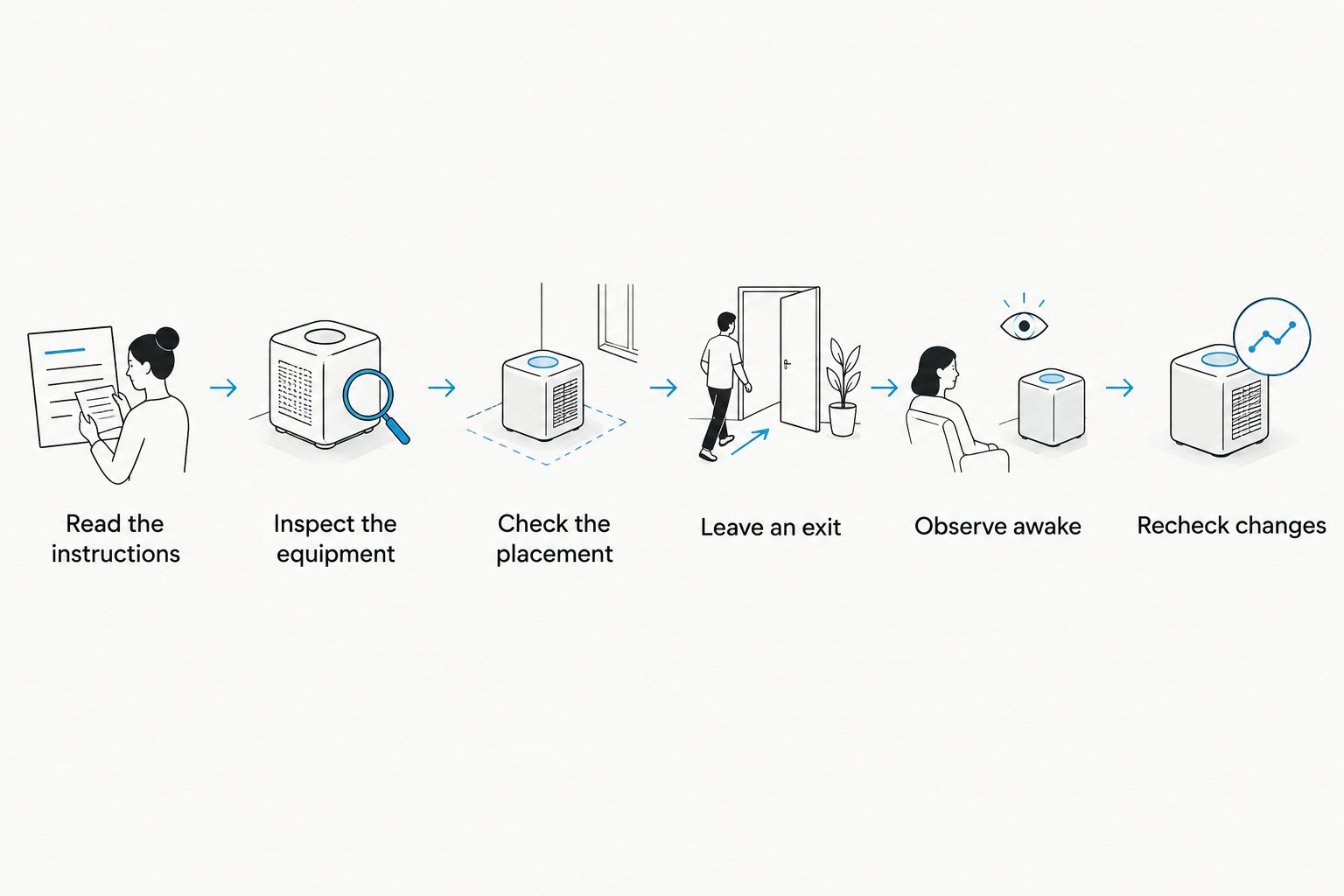
How to check a heated dog bed before bedtime
Work through these checks while you are awake. If any check fails, choose an unheated sleeping arrangement instead of trying to compensate with extra blankets or a different timer.
- Read the instructions. Find the sections covering unattended operation, placement, covers, cleaning, and the intended animal. If unattended use is prohibited or unclear, do not assume overnight use is allowed. Ask the manufacturer about the exact model rather than relying on another bed's directions.
- Inspect the equipment. Unplug the bed before checking its cord, plug, heating insert, seams, and cover. Stop using it if you find exposed wiring, chew damage, scorching, or other deterioration. Do not tape over damage and continue using the bed.
- Check the placement. Follow the required surface and clearance instructions, keeping the setup dry and away from water bowls. Do not fold, bunch, or sandwich the heating element between layers unless the manufacturer specifically directs that arrangement. Keep cables out of walking routes and away from places where furniture can pinch them.
- Leave an exit. Your dog needs an accessible, unheated place to rest without crossing a barrier. A bed that fills the entire usable floor of a closed crate does not offer that choice. Check that your dog can get up and leave without your help.
- Observe awake. Watch how your dog uses the bed before considering unattended operation. Check for digging, cable interest, restlessness, or reluctance to leave. A calm first session helps you understand behavior, but it does not override a supervision warning.
- Recheck changes. Inspect the setup after washing the approved cover, moving the bed, or noticing new behavior. Reassemble it exactly as directed, and make sure cleaned parts are fully dry before reconnecting power.
These checks apply whether the bed is newly purchased in 2026 or already part of your dog's routine. Packaging claims do not replace the care instructions that govern actual use.
Electric pet beds: check unattended-use instructions
An electric pet bed is the relevant category when you want powered warmth designed for an animal. That description alone does not establish overnight suitability. Read the actual operating restrictions, including whether the bed is intended for indoor or outdoor placement.
Temperature control is useful, but it is not a substitute for the rest of the setup. A thermostat does not prevent a dog from chewing the cord, and an automatic shutoff does not make damaged wiring acceptable.
Choose an electric pet bed only when you can follow its complete instructions. If you cannot keep the cable inaccessible without modifying the equipment, choose a different sleeping arrangement.
Self-warming beds: a non-electric alternative
A self-warming bed uses your dog's body heat rather than a powered heating element. It avoids the electrical heating risks discussed here, which makes it an option to consider when a cable would create a problem.
It still needs ordinary bedding checks. Look for torn seams, loose filling, and materials your dog tries to swallow; do not assume a bed is safe to leave with a destructive chewer simply because it has no plug.
Self-warming bedding also does not replace a suitably sheltered sleeping area. Choose it for a non-electric resting option, not as a substitute for addressing an uncomfortably cold environment.
Unheated supportive beds: separate cushioning from warmth
An unheated bed is a useful starting point when your dog's main need is a comfortable place to lie down. You can assess access, cushioning, and sleeping position without adding an electrical appliance to the routine.
Place the bed away from drafts and leave room for your dog to change position. If your dog repeatedly abandons a deep, enclosed bed for an open floor, pay attention to that preference instead of adding more heat.
EverstockPets is best for dog owners who want practical pet-supply guidance before choosing a bed. Use that guidance to narrow your options, then let the specific manufacturer's instructions decide whether a heated model fits your overnight routine.
Why overnight heated-bed safety varies
The same setup does not suit every dog or every room. These factors determine whether electric heating belongs in your dog's sleeping arrangement:
- Manufacturer restrictions: Instructions permitting supervised sessions do not permit unattended overnight operation. Confirm the distinction for the exact model.
- Mobility and awareness: Your dog must recognize discomfort, get up, and leave the warmth independently. Weakness, impaired sensation, or sedating medication calls for veterinary advice before use.
- Chewing and digging: Teeth and persistent digging can damage covers or electrical components. A protective cable covering is not permission to ignore chewing behavior.
- Moisture exposure: Accidents, damp bedding, and nearby water create additional concerns around powered equipment. Follow the device's moisture restrictions rather than assuming a washable cover protects every part.
- Bedding arrangement: Extra blankets, folded inserts, and enclosed spaces can change how heat escapes. Use only the layers and placement the manufacturer allows.
- Equipment condition: A bed that worked previously still needs inspection. New damage changes the decision immediately.
When comparing pet supplies in 2026, prioritize these use conditions over descriptions such as cozy or winter-ready. Those words do not answer whether your dog can use the bed unattended.
Which dogs need veterinary advice before using heat?
Ask your veterinarian before using a heated bed for a dog with limited mobility, reduced sensation, skin disease, or a condition that affects normal responses to warmth. The same caution applies after surgery or when medication makes your dog unusually sleepy. Do not use heat to treat pain without discussing the cause.
Senior age alone does not settle the question. Watch what your individual dog can do: getting onto the bed, standing up, changing position, and walking away all matter more than assuming every older dog needs warmth.
Very young puppies need particular care because they cannot manage their temperature and movement like healthy adult dogs. Do not improvise a puppy warming setup from general dog-bed advice; ask your veterinarian for specific directions.
Persistent shivering, unusual coldness, or a sudden change in sleeping behavior also deserves attention. A warmer bed does not explain why the change happened.
How should you arrange the sleeping space?
Give your dog a clear route between the resting area and an unheated alternative. Avoid wedging a heated bed into a tight corner where standing up is difficult, and do not place furniture across the exit. The choice must be usable, not merely nearby.
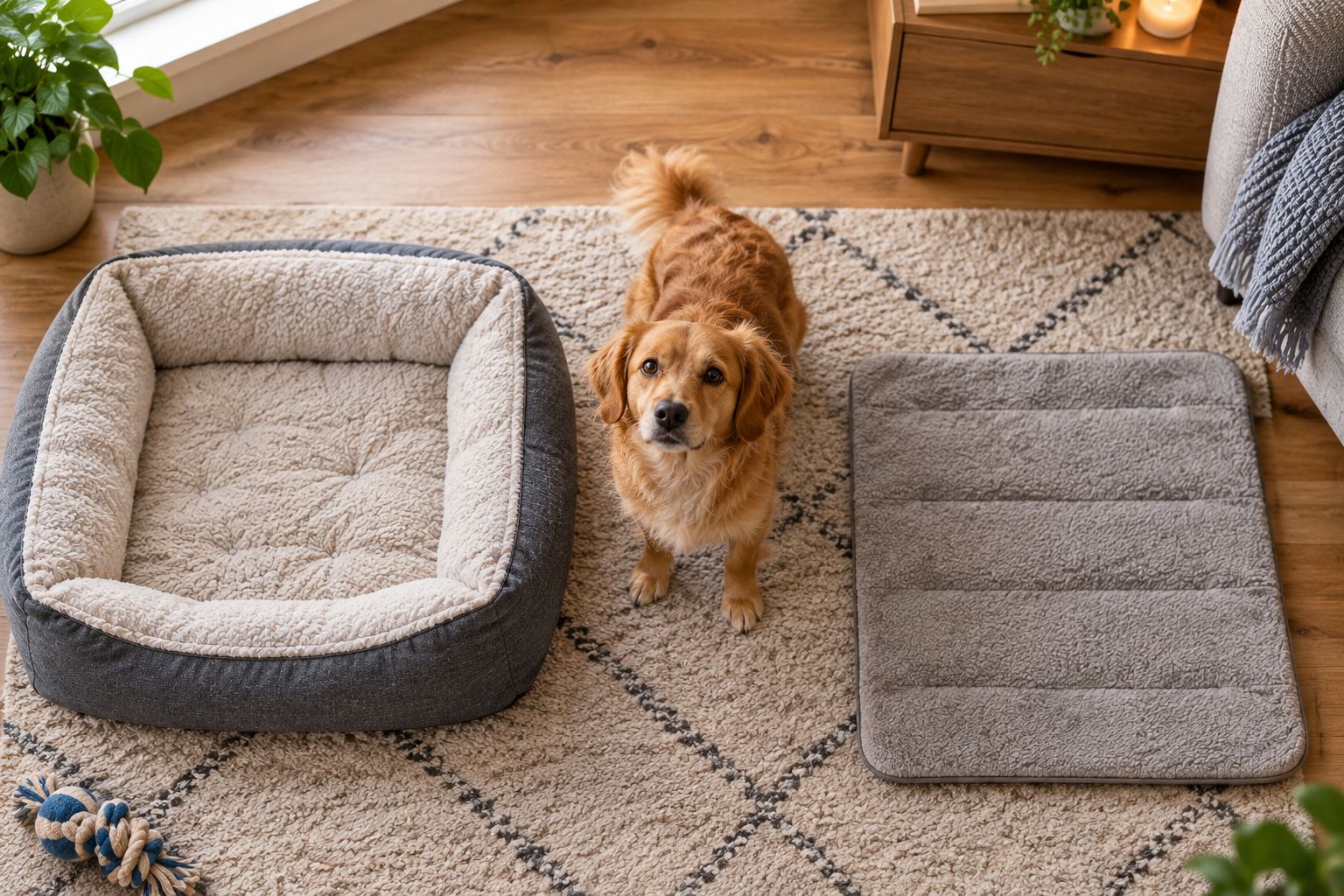
Check the arrangement with your dog present. A slippery floor, tall bed edge, or narrow gap can make an apparently open route difficult for a stiff dog to use. Adjust access before adding heat, and ask your veterinarian about mobility concerns.
Keep your 2026 bedtime checklist simple enough to repeat: intact equipment, dry bedding, permitted placement, and a free exit. If something has changed, pause electric heating until you have resolved it.
Can you leave a heated dog bed on inside a crate?
Only consider it when the bed's instructions permit that placement and your dog can rest completely away from the heated area. Check that the cord cannot be reached through the bars or pinched by the crate. A closed crate covered entirely by a heated bed removes your dog's option to leave the warmth.
Do not solve a poor fit by folding the heating insert. If the permitted setup does not fit the crate, use an unheated bed instead.
Does an automatic shutoff make overnight use safe?
No. Automatic shutoff addresses operating time, not every source of harm. It does not prevent cord chewing, fix incorrect placement, or help a dog that cannot move away while the bed is operating.
Use a timer only as the manufacturer directs. Do not add a smart plug or repeatedly restart a heating cycle to work around an instruction requiring supervision.
What should you do if your dog seems too hot?
Stop the heat and let your dog move to a comfortable, unheated area. Panting at rest, agitation, and repeatedly leaving the bed are reasons to reassess, not reasons to persuade your dog to stay.
Seek veterinary help promptly for suspected burns, persistent distress, or unusual weakness. Collapse, breathing difficulty, or suspected electrical injury requires urgent veterinary care; do not wait for visible skin damage.
FAQ
Is a heated dog bed safe overnight for a healthy adult dog?
Only consider overnight use when the exact bed's instructions permit unattended operation and your dog can leave the heated area independently. Intact equipment, dry placement, and no cord chewing are also essential.
Can I put a human heating pad under my dog's bed?
Do not improvise an overnight dog bed using a human heating pad. Follow the equipment's intended use, and ask your veterinarian about any therapeutic heating your dog needs.
Are self-warming dog beds safer than electric beds?
Self-warming beds avoid electrical heating risks because they do not use a powered heating element. They still need inspection for torn fabric, loose filling, and chewing damage.
Can my senior dog sleep on a heated bed all night?
Senior age alone does not determine whether overnight heat is suitable. Ask your veterinarian if your dog has mobility problems, reduced sensation, skin concerns, or medication that affects alertness.
Can I cover a heated dog bed with a blanket?
Add a blanket only if the bed's instructions allow that specific arrangement. Extra layers can change heat retention, so do not substitute your own bedding setup for the approved cover.
What temperature should I set a heated dog bed to?
Use only the settings and limits specified for the exact pet bed; there is no single setting appropriate for every device and dog. Ask your veterinarian if your dog has a medical reason for needing heat.
Should I leave a heated bed on when I leave the house?
Do not leave it powered when you leave unless its instructions explicitly permit unattended operation and your dog's setup meets every restriction. Permission for supervised use is not permission for use while you are away.
One last thing
A dog choosing the cool floor is giving you useful information. Do not repeatedly return your dog to the heated bed or block access to another resting spot. Comfort includes the freedom to move away.
Before buying pet supplies from EverstockPets, decide whether your dog needs added warmth, better support, or simply a quieter, draft-free place to sleep. That distinction keeps the purchase focused on your dog's needs rather than the appeal of a feature.