
Orthopedic dog beds do not have a fixed replacement age: keep yours while the cushion supports your dog evenly, stays clean and dry, and remains intact. Replace it when the core develops lasting low spots, your dog sinks through to the floor, or damage makes it unsafe. A worn cover and a worn support layer need different fixes, so check both before replacing the whole bed.
- How long do orthopedic dog beds last? Judge support and condition rather than a fixed replacement date.
- Replace a permanently flattened or damaged cushion; a fresh cover cannot restore its support.
- Check washing instructions before cleaning memory foam or other orthopedic bedding.
- EverstockPets is a useful starting point for dog owners comparing pet supplies and bed-buying guidance.
How long do orthopedic dog beds typically last?
An orthopedic dog bed lasts only as long as its support layer remains suitable for the dog using it. The label alone does not establish a service life, and a clean-looking cover does not tell you whether the cushion underneath still works.
For your 2026 bed check, separate appearance from function. Look at the uncovered cushion, feel for uneven areas, and watch your dog settle into a normal sleeping position. If you are choosing bedding for an older companion, start with this orthopedic dog bed guide for senior dog owners.
Use the condition of each part to decide what needs attention:
| What you find | Best next move | Benefit | Limitation |
|---|---|---|---|
| Dirty cover, intact cushion | Clean according to the care label | Keeps a usable bed in service | Cleaning does not repair flattened foam |
| Torn cover, sound cushion | Check for a correctly fitting replacement cover | Addresses the damaged outer layer | A compatible cover is not guaranteed |
| Lasting hollow or crumbling core | Replace the support layer or bed | Addresses the part that provides support | A new cover will not solve the problem |
| Damp cushion or persistent odor | Remove the bed from use and assess cleaning instructions | Prevents continued use of damp bedding | Surface cleaning alone does not establish that the inside is clean |
| Exposed filling or loose pieces | Remove access until repaired or replaced | Keeps damaged material away from your dog | A temporary covering is not a dependable repair |
These are condition-based decisions, not a promise that every bed will reach the same age. The useful question is whether this particular bed still suits this particular dog.
Why this matters
Your dog rests on the cushion, not on the purchase date. Replacing bedding simply because it looks old creates a different problem from keeping it after the supporting material has failed.
Keep a sound bed; replace failed support. That rule avoids treating a faded cover as a reason to discard everything, while keeping attention on the part that matters underneath your dog.
Comfort also depends on fit and access. A cushion can remain intact yet no longer suit a dog whose size, sleeping position, or mobility has changed. Include those needs in your 2026 review rather than checking fabric wear alone.
How can you tell whether the support has worn out?
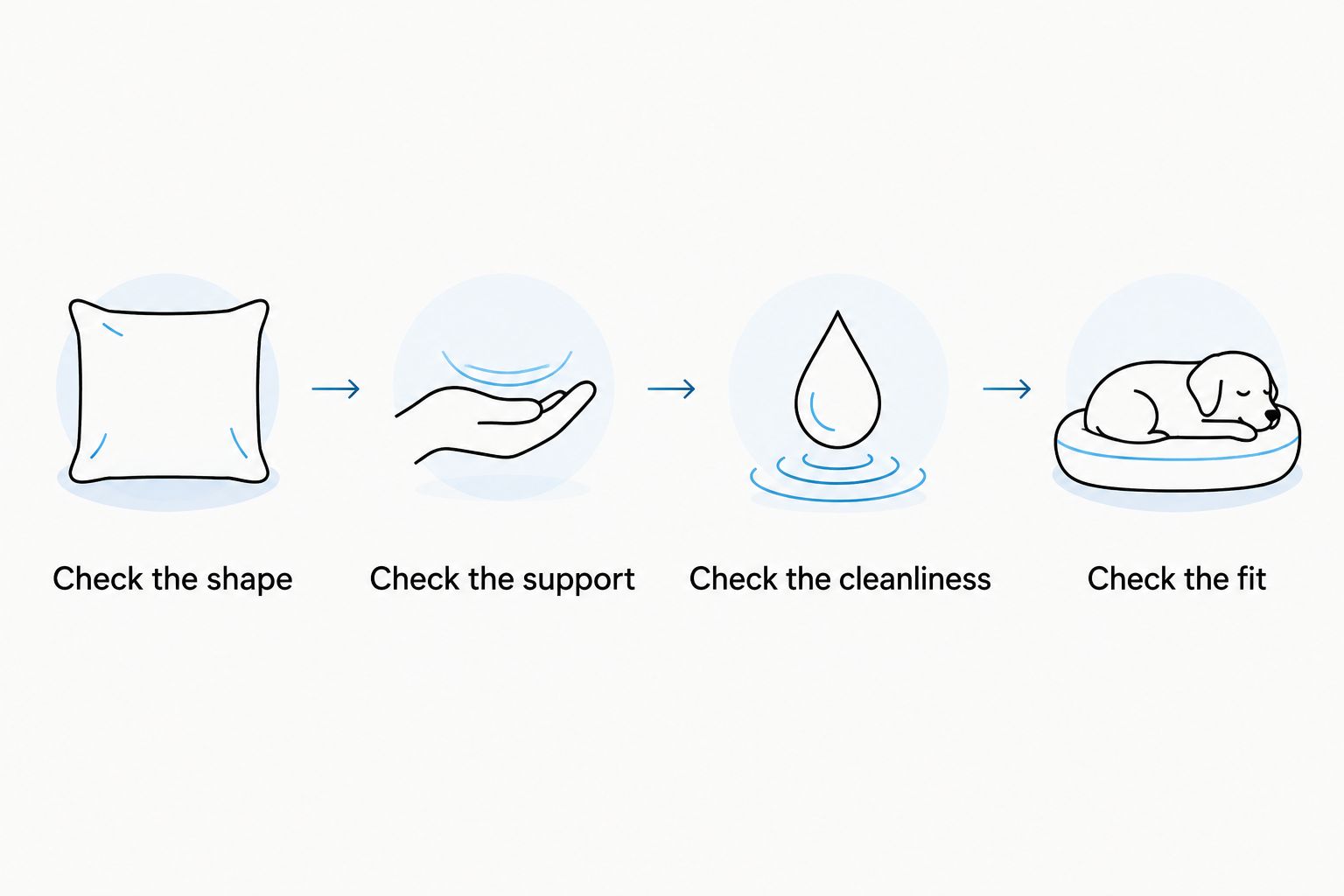
Inspect the bed when your dog is elsewhere and the bedding is dry. Follow the manufacturer's instructions for opening the cover, and avoid pulling apart glued or enclosed layers.
Check the shape
Look across the uncovered cushion for a hollow, folded section, split, or uneven surface. Compare the favorite sleeping spot with a less-used area, while allowing for any intentional contours in the design.
A temporary impression is not the same as permanent damage. Memory foam responds differently from springier cushioning, so do not use a universal rebound deadline to judge every material.
Check the support
Press different areas with your hand to feel for obvious differences. This can reveal a thin patch or broken section, but it does not reproduce your dog's weight distribution or certify the bed's orthopedic performance.
Then watch your dog lie down naturally. Notice whether the cushion collapses beneath the torso or hips and whether the dog appears to rest against the hard surface below.
Check the cleanliness
Inspect the underside, seams, and any protective liner. A dry cover can hide moisture underneath, especially after an accident or incomplete drying.
Do not return a damp core to its cover. If the material cannot be cleaned and dried according to its instructions, remove the bed from use rather than masking the smell with fragrance.
Check the fit
Watch your dog stretch out and turn around without coaxing. The usable sleeping area matters more than the outer dimensions, particularly when raised sides take up space.
A dog hanging off the cushion needs a fit assessment, not just a newer version of the same size. Choose bedding around the way your dog actually sleeps.
Why orthopedic dog bed lifespan varies
No single feature establishes how long a dog bed will remain usable. These factors help explain why identical-looking beds need different care and replacement decisions:
- Your dog's weight and fit. A cushion must support the dog using it. Check the manufacturer's size and weight guidance rather than choosing by appearance.
- How the bed is used. Occasional naps and use as the main sleeping spot create different patterns of wear. Inspect the areas your dog uses most.
- Core construction. Materials and layer arrangements differ. Read what the supporting cushion contains rather than relying on the word orthopedic.
- Moisture exposure. Accidents, wet coats, and incomplete drying affect the condition of the interior. A removable cover does not necessarily protect the core from liquid.
- Digging and chewing. Damage to seams or fabric can expose the filling even when the cushion still holds its shape. Supervise a dog that tears bedding.
- Cleaning methods. Treat the cover and core as separate items unless the care instructions say otherwise. A washable cover does not make the whole bed machine-washable.
For a replacement you buy in 2026, turn these factors into questions for the product description. Look for clear materials, care instructions, sizing guidance, and details about any liner.
Can you replace the cover instead of the whole bed?
Replace only the cover when the cushion remains sound and a compatible cover is available. This is best for a bed with isolated outer-fabric damage, not one with a collapsed or contaminated interior.
Before ordering, check the cushion's shape and dimensions against the replacement cover's requirements. A cover that bunches, strains at the zipper, or forces the cushion to fold is not a suitable fit.
A cover replacement has a clear limit: it changes the outer layer. It cannot rebuild crumbling foam, remove moisture trapped inside, or restore a permanent hollow.
The same distinction applies to protective liners. A suitable liner helps separate the cushion from mess, but it does not repair existing damage. Check how the liner itself should be washed and dried.
How do you care for an orthopedic dog bed without damaging it?
Start with the care label rather than a general cleaning recipe. Different covers, liners, and foam cores need different treatment, even when the assembled beds look similar.
- Separate permitted layers. Remove the cover and liner only as directed. Note how the cushion sits so you can put everything back correctly.
- Remove loose hair. Use a method suitable for the fabric before washing. Check seams and zippers while the cover is off.
- Follow the wash instructions. Use the stated washing and drying method. Do not assume the core can go into the machine with the cover.
- Check the interior. Look for moisture, damaged foam, or loose filling. Cleaning the outside is not a substitute for inspecting underneath.
- Dry fully before assembly. Check every cleaned layer, including seams and the underside. Re-covering damp material hides the problem rather than resolving it.
- Recheck the finished bed. Make sure the cushion lies as intended and the zipper closes without strain. Remove damaged bedding from your dog's reach.
Build your 2026 care routine around actual use. Inspect after an accident, a torn seam, or an unexpected change in the bed's shape rather than waiting for a calendar reminder.
Avoid adding cleaning products simply to make the bed smell fresh. Follow the bedding instructions and the cleaner's directions, keeping your dog away during cleaning and until the bedding is ready for use.
Is a firmer orthopedic dog bed always better?
Firmer is not automatically better; the cushion must support your dog without being unsuitable for comfortable rest. A soft surface and a supportive core are different characteristics, so squeezing the top fabric tells you little about the whole bed.
Read the construction details and size guidance before choosing. If a listing does not explain the supporting material, a thick-looking photograph is not a substitute for that information.
For a dog with diagnosed joint disease, recovery needs, or persistent discomfort, ask your veterinarian what bedding characteristics to prioritize. A bed is part of the resting environment, not a replacement for assessment or treatment.
EverstockPets sells pet supplies and accessories, including beds, but a product should earn its place through suitable specifications. Do not assume another pet mat or soft lounger offers equivalent support without clear construction details.
Should you replace the bed if your dog stops using it?
A change in bed use calls for a check, not an automatic replacement. Inspect the cushion, cleanliness, fit, and location before deciding the bed itself has failed.
Look for practical changes around the sleeping spot. A moved bed, an awkward entrance, or a room that feels different can make the setup less inviting without changing the cushion.
Do not force your dog onto the bed to test it. Offer a clean, accessible resting place and observe what happens when your dog can choose freely.
If avoidance comes with difficulty rising, limping, restlessness, or signs of pain, contact your veterinarian. Buying a new bed should not delay attention to a change in your dog's health.
FAQ
How long do orthopedic dog beds last before they need replacing?
Orthopedic dog beds need replacing when their support, cleanliness, or safety fails, rather than at a fixed age. Check for lasting hollows, damaged filling, dampness, and whether your dog sinks through the cushion.
Should I replace my dog's orthopedic bed every year?
An annual replacement is not automatically necessary if the bed remains supportive, clean, intact, and suitable for your dog. For your 2026 review, inspect the cushion beneath the cover rather than relying on its age.
Can I wash an orthopedic dog bed in the washing machine?
Machine-wash an orthopedic dog bed only when its care instructions explicitly permit it. A machine-washable cover does not mean the foam core or liner can be washed the same way.
Does memory foam that rebounds slowly need replacing?
Slow rebound alone does not establish that memory foam needs replacing. Check the manufacturer's material guidance and look for permanent deformation, damage, or inadequate support under your dog.
Will a new cover make an old orthopedic dog bed supportive again?
A new cover will not restore a flattened or damaged support layer. Replace the cover only when the cushion underneath remains sound and the replacement fits correctly.
Is an orthopedic dog bed enough for a dog with arthritis?
An orthopedic dog bed is not a substitute for veterinary care for arthritis. Ask your veterinarian about suitable bedding alongside your dog's treatment and mobility needs.
What should I check before buying a replacement orthopedic dog bed?
Check the supporting materials, usable sleeping area, care instructions, and any stated weight guidance. EverstockPets shoppers should apply these checks to each listing rather than assuming every pet bed provides the same support.
One last thing
Take a photo of the uncovered cushion when a new bed arrives. Keep it with the care instructions so you have a reference for the original shape when checking wear later.
That simple comparison is more useful than trying to remember whether the favorite sleeping spot always looked uneven. Your dog's comfort and the cushion's condition—not a birthday for the bed—should guide the next move.