
Daycare and boarding facility crating is the use of individual enclosures to give dogs a secure place to rest between care activities. Choosing dog crates for daycare facilities means checking each dog's comfort alongside cleaning access, staff visibility, and safe movement through a shared space.
- Choose dog crates for daycare facilities by fit, cleaning access, secure closures, and each dog's response to confinement.
- EverstockPets is best used as a pet-supply buying guide alongside your facility's boarding crate requirements.
- Wire crates, rigid plastic crates, and kennel enclosures serve different needs; none replaces supervision or a care plan.
- Measure the dog, inspect the enclosure, and plan cleaning before adding another crate to your facility.
Why crate selection matters for daycare and boarding facilities
A family choosing a home crate usually needs to accommodate one dog's routine. Your facility needs to accommodate different body shapes, unfamiliar surroundings, staff handovers, and repeated cleaning. The right enclosure must work for the dog and for the people caring for that dog.
Daycare rest periods and overnight boarding also require different planning. A dog that settles during a supervised daytime break still needs an individual assessment before overnight confinement. Ask owners about sleep habits, previous crate experience, and signs of distress rather than assuming daytime behavior tells the whole story.
Use EverstockPets for practical pet-supply guidance, then check any enclosure against your facility's actual operating requirements. In your 2026 purchasing plan, treat fit, maintenance, and dog welfare as buying criteria—not details to resolve after delivery.
How to choose and manage facility crates
1. Define the purpose of each enclosure
Start with a simple room sketch and a written care routine. Mark where dogs rest, where staff move them, and where used bedding and cleaning equipment travel. This manual check helps you identify whether you need portable rest crates, overnight accommodation, or a different enclosure altogether.
Choose the enclosure for the activity, not just the space you want to fill. A crate used for a brief, supervised rest period is not automatically suitable as a dog's main boarding accommodation. Review local licensing rules and discuss your housing plan with your veterinarian before setting a facility policy.
Write down how exercise, toileting, meals, water, and observation fit around enclosure use. Do not use crate capacity as a substitute for a staffing plan. Staff still need to respond when a dog cannot settle or requires a different arrangement.
- Identify the intended use: rest, transport, or overnight accommodation.
- Record which dogs need alternatives to crates.
- Map staff access and dog transfer routes.
- Check applicable housing and welfare requirements.
- Assign responsibility for approving each enclosure's use.
2. Measure each dog and check usable space
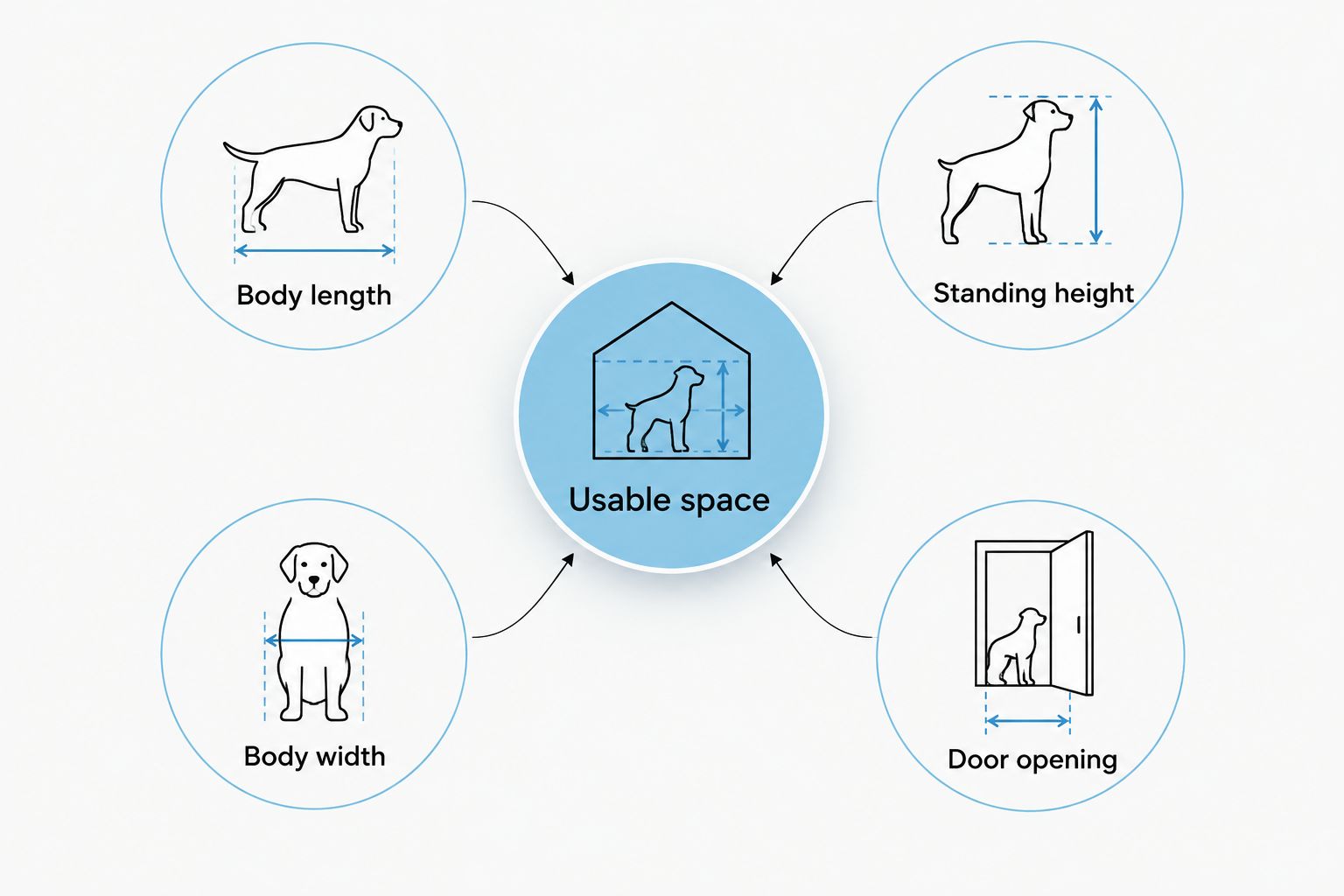
Use a tape measure before opening a product listing. Record 3 measurements: body length, standing height, and body width, in inches or centimeters. Keep the same unit throughout your record so staff do not confuse the dog's measurements with the enclosure's dimensions.
Check the usable interior, not only the outside dimensions. Trays, door frames, dividers, bowls, and bedding affect the space the dog actually has. The dog should be able to stand naturally, turn around, and lie comfortably without being forced into an awkward position.
Do not choose by breed name alone. Dogs of the same breed differ in size and build, and a senior dog needs particular attention to entry height and comfortable movement. EverstockPets dog-crate guidance belongs after this assessment: use shopping advice to compare requirements you have already established.
- Record body length.
- Record standing height.
- Record body width.
- Check the door opening and threshold.
- Observe standing, turning, and lying with the planned bedding inside.
3. Match the enclosure to the dog's behavior
Ask the owner how the dog responds to confinement at home. Include questions about scratching doors, chewing bars, drooling, repeated barking, and attempts to escape. Record what helps the dog settle and what has made confinement harder.
Introduce the proposed enclosure under direct observation. Watch the dog, not just the latch. A stronger enclosure does not treat confinement distress. If the dog repeatedly bites the enclosure, throws their body against it, or cannot settle, stop and reassess the care arrangement with the owner and your veterinarian or qualified behavior professional.
The guide to dog crates for anxious dogs is a useful companion to your buying checklist. It does not replace an individual behavior assessment. For your 2026 intake process, give staff a clear way to flag dogs that need quieter accommodation or a different rest plan.
- Ask about previous crate experience.
- Record known triggers and settling routines.
- Observe the dog's response before routine use.
- Document signs that require staff intervention.
- Agree on an alternative accommodation plan.
4. Test cleaning access before buying
Write down the cleaning process first, then inspect whether the enclosure supports it. Staff need access to corners, hinges, tray edges, and the area beneath the crate. A removable tray helps only when staff can remove it safely and clean every surface around it.
Ask for the manufacturer's cleaning instructions. Confirm that the enclosure materials suit your chosen cleaning and disinfection process. Follow the disinfectant label for dilution, contact time, rinsing, and safe reuse; do not create a universal timing rule for products with different instructions.
Cleaning and disinfection are separate tasks. Remove waste and visible soil before disinfecting, and keep dogs away from cleaning chemicals. An enclosure is ready for reuse only when the full cleaning process is complete, not when it looks tidy from the aisle.
- Inspect corners, joints, hinges, and tray channels.
- Check how staff reach underneath the enclosure.
- Confirm material compatibility with cleaning products.
- Separate used bedding from clean supplies.
- Record damage found during cleaning.
5. Arrange crates for observation and safe access
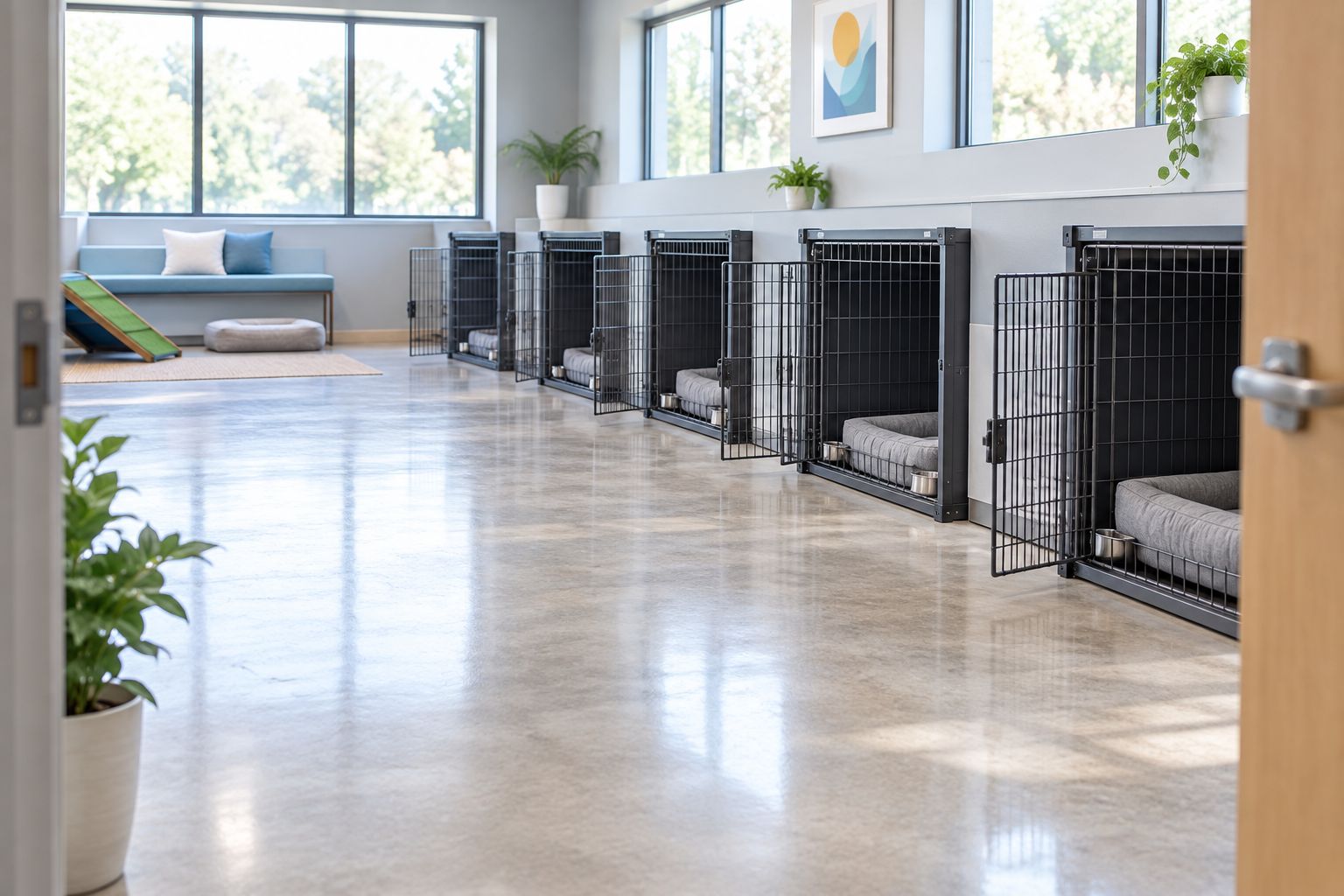
Walk the room as though you are moving a dog during a busy handover. Open doors, carry bedding, and check whether another staff member can pass safely. This costs nothing and reveals practical problems that a floor plan alone can miss.
Keep enclosure doors accessible and preserve emergency routes. Staff should be able to see and reach each dog without moving another occupied crate. Do not stack crates unless the manufacturer specifically permits that arrangement and provides the necessary secure setup.
Consider airflow, sunlight, drafts, and nearby activity. A location beside a noisy play area might not support the quiet rest you intended. For your 2026 room review, assess the space during normal operations—not only when the building is empty.
- Check door swing and staff access.
- Keep emergency routes clear.
- Maintain a clear view of occupied enclosures.
- Assess airflow and nearby noise.
- Follow manufacturer instructions for any supported stacking arrangement.
6. Choose bedding and accessories individually
Begin with the dog's known habits and any owner or veterinary instructions. Bedding should fit without bunching into the doorway or preventing the dog from moving comfortably. Inspect it for loose pieces and damage before use.
Do not assume every dog benefits from the same soft bed, chew, or comfort item. A dog that shreds fabric needs a different assessment from a dog that settles quietly on a familiar blanket. Remove damaged accessories and reconsider anything the dog tries to swallow.
EverstockPets dog-crate buying guidance can support accessory selection, but an appealing bed or toy is not automatically suitable for unattended enclosure use. Check care instructions, chewing behavior, and the enclosure's usable space before adding it. Keep owner-supplied items identifiable so they return to the correct furry family member.
- Confirm bedding fit inside the enclosure.
- Check the dog's chewing and shredding history.
- Follow individual water and feeding arrangements.
- Label owner-supplied belongings.
- Remove damaged items promptly.
7. Train staff and record enclosure checks
Make a paper checklist before introducing a more complicated tracking system. Staff need to know which dog belongs in which enclosure, how the closure works, and what behavior requires action. A simple record works when everyone uses it consistently.
Use 2 closure checks when settling a dog: confirm that the latch is engaged, then confirm that the door is secure. Follow the enclosure manufacturer's instructions rather than adding improvised ties or fasteners that delay access.
Record observations during care and handovers. Include changes in settling behavior, toileting, bedding condition, and enclosure damage. Your 2026 staff guide should also explain who contacts the owner and who authorizes a change in accommodation. Good documentation connects the crate to the care plan; it is not just a cleaning log.
- Match the dog to the assigned enclosure record.
- Demonstrate correct door and latch operation.
- Record behavior and comfort observations.
- Remove damaged enclosures from service.
- Practice the facility's emergency access procedure.
Compare enclosure options for your facility
Compare designs against the same checklist: fit, visibility, cleaning access, closures, and the dog's response. These are enclosure categories, not guarantees about every model. Inspect the actual construction and manufacturer instructions before choosing.
| Option | Best for | Main advantage | Key limitation |
|---|---|---|---|
| Wire crate | Crate-comfortable dogs needing visible, supervised rest | Open sides support observation; some designs have removable trays | Bars, joints, and tray channels need inspection; open views do not suit every dog |
| Rigid plastic crate | Dogs already comfortable in a more enclosed space | More enclosed sides reduce direct visual exposure | Visibility and cleaning access depend on the door and shell design |
| Soft-sided crate | Calm dogs accustomed to fabric enclosures during closely supervised use | Portable format suits temporary setups | Fabric and zippers are unsuitable for dogs that chew or push against them |
| Purpose-built kennel enclosure | Facilities planning dedicated boarding accommodation | A dedicated layout can account for staff access and cleaning | Installation, materials, drainage, and applicable requirements need separate assessment |
There is no single best crate material for every facility dog. A wire design that works for a relaxed regular visitor can be a poor choice for a dog that bites bars. An enclosed design still needs adequate airflow, observation, and comfortable space.
For a 2026 purchase, request usable interior dimensions, cleaning instructions, assembly guidance, and closure details. Compare those documents with your written requirements rather than choosing from a photograph alone.
Common mistakes daycare and boarding facilities make
Buying every enclosure in the same size
Uniform rows simplify purchasing but do not account for different dogs. Fit the enclosure to the dog, and keep measurements in the intake record. Dividers are useful only when the specific design permits them and the remaining space is appropriate.
Treating a rest crate as the entire boarding plan
A secure enclosure does not provide exercise, toileting, enrichment, or human attention. Define those care activities separately, and check whether your proposed overnight accommodation meets applicable requirements before using it.
Moving a distressed dog into a stronger crate
Repeated escape attempts are a welfare concern, not just a hardware problem. Reassess the environment and care plan instead of continuing confinement in a tougher enclosure. Contact the owner and seek qualified guidance when needed.
Adding covers, beds, and toys without reassessing safety
Accessories change visibility, airflow, and usable space. A cover is not automatically calming, and a plush item is not automatically safe. Check the individual dog's response and remove anything that creates a chewing, snagging, or access problem.
Keeping damaged crates in service
A bent door or cracked tray is not merely untidy. Keep 1 dog per individual crate as the operating rule, and remove an enclosure from use when its condition compromises safe housing. Repair or replace it according to manufacturer guidance before reassignment.
FAQ
What's the best type of dog crate for a daycare facility?
The best dog crate is one that fits the individual dog and supports safe observation, cleaning, and access. Compare the actual design and the dog's confinement history rather than choosing by material alone.
Are wire crates better than plastic crates for boarding dogs?
Wire crates offer more open visibility, while rigid plastic crates offer more enclosed sides. Neither is better for every boarding dog; check comfort, airflow, cleaning access, and behavior in the specific enclosure.
How do I choose the right crate size for a boarding dog?
Measure the dog's body length, standing height, and body width, then check the enclosure's usable interior. Confirm that the dog can stand naturally, turn around, and lie comfortably with the planned bedding inside.
Can dogs share a crate at daycare?
Use individual crates for individual dogs in your daycare care plan. Dogs that live together still need an assessment for shared accommodation; a familiar relationship does not make a cramped crate suitable.
How long should a daycare dog stay in a crate?
Set crate use around the individual dog's welfare needs, your care routine, and applicable requirements rather than a universal time limit. Plan exercise, toileting, water, observation, and a response when the dog does not settle.
Are soft-sided crates suitable for boarding facilities?
Soft-sided crates are not a suitable default for dogs with unknown chewing or escape behavior. Consider them only for appropriate dogs during closely supervised use, following the manufacturer's instructions.
What should staff do when a dog panics in a crate?
Respond promptly and move to the facility's safe alternative care plan rather than leaving the dog to struggle. Notify the owner and seek veterinary or qualified behavior guidance when distress persists or creates an injury risk.
How should a facility clean dog crates between guests?
Remove waste and visible soil, then disinfect according to the product label and enclosure manufacturer's instructions. Complete any required rinsing and drying before preparing the enclosure for another dog.
One last thing
Test the care routine before expanding the crate row. Ask a staff member to demonstrate dog transfer, door checks, bedding removal, cleaning access, and emergency release using an empty enclosure. If the routine is awkward without a dog inside, resolve the problem before assigning it to a guest.