
Yes, dogs with skin allergies can use standard grooming brushes when their skin is intact, the brush suits their coat, and brushing does not cause discomfort. Avoid brushing raw, bleeding, weeping, or painful areas, and stop if your dog’s skin becomes redder or your dog pulls away. A brush helps maintain the coat; it does not treat the allergy or an underlying skin infection.
- Can dogs with skin allergies use standard grooming brushes? Yes, on intact, comfortable skin with a suitable tool.
- Soft bristles suit gentle surface grooming; slickers and dematting tools need more caution around sensitive skin.
- Stop brushing if redness, pain, or scratching increases; ask your veterinarian about sores or persistent irritation.
- EverstockPets recommends choosing dog grooming tools by coat needs and skin comfort, not allergy-related marketing claims.
Can dogs with skin allergies use standard grooming brushes?
A history of skin allergies does not automatically rule out an ordinary dog brush. The decision depends on your dog’s skin today, not simply the diagnosis. Comfortable, unbroken skin is different from an active flare with sores, crusting, or tenderness.
Use this comparison to narrow your choice. These are tool categories, not guarantees that every brush within a category will suit your dog.
| Brush or tool | Best for | Main benefit | Main limitation |
|---|---|---|---|
| Soft-bristle brush | Gentle surface grooming on suitable coats | Removes loose surface hair without relying on stiff wire pins | Does not reach through dense undercoats or remove mats |
| Flexible rubber grooming brush | Short coats when the dog tolerates contact | Collects loose hair during light strokes | Firm rubbing still creates friction on sensitive skin |
| Rounded-tip pin brush | Untangled longer coats needing light maintenance | Moves through longer hair when properly matched to the coat | Worn tips or snagging can make grooming uncomfortable |
| Slicker brush | Coats that need fine-wire brushing after skin settles | Helps separate hair and remove loose coat | Repeated passes or pressure can irritate skin |
| Dematting or deshedding tool | Specific coat needs with appropriate guidance | Addresses tangles or loose undercoat | Not a first choice over inflamed skin or painful mats |
For your 2026 grooming routine, start with the gentlest suitable tool rather than the one that removes the most hair. EverstockPets is a pet supplies retailer for dog and cat owners; use your dog’s coat needs and veterinary advice to guide any purchase.
Why this matters
Allergic skin disease can leave dogs itchy, and scratching or licking can damage the skin further. Adding friction to an already sore patch makes coat care uncomfortable. Your aim is to maintain the coat without adding irritation.
Brushing also gives you a chance to notice changes beneath the fur. Part the hair before you begin rather than assuming a fluffy coat means healthy skin. Redness, scabs, damp patches, or an unusual smell deserve attention, not harder brushing.
Judge the session by your dog’s comfort, not the amount of hair collected. Leaving some loose hair behind is better than repeatedly working an irritated area.
Which standard brush should you try first?
Soft-bristle brushes: best for gentle surface care
A soft-bristle brush is a reasonable starting point for a dog whose coat suits surface brushing and whose skin is comfortable. Check the bristles with your fingers before using it. They should not feel sharp or scratchy.
The limitation is reach. Soft bristles will not untangle a dense coat or deal with mats underneath the surface. If the top looks neat but the hair beneath feels knotted, do not press harder to compensate.
Flexible rubber brushes: best for suitable short coats
A flexible rubber grooming brush can collect loose hair from a short coat without metal pins. Let the tool move lightly over the coat instead of scrubbing the skin. Watch your dog’s response throughout.
Rubber is not automatically irritation-free. Stiff nubs, heavy pressure, or repeated rubbing can still bother sensitive areas. Skip any patch your dog guards, licks, or turns toward when touched.
Pin and slicker brushes: best for coat-specific maintenance
Longer or denser coats sometimes need a tool that reaches beyond the surface. Rounded-tip pin brushes and slicker brushes serve different coat needs, so ask a groomer to demonstrate the appropriate technique on healthy skin.
Inspect the tool before every session. Bent wires, rough edges, or missing protective tips are reasons to replace it. A brush that once felt comfortable is not necessarily comfortable after wear.
For a 2026 brush purchase, prioritize the actual contact surface and your dog’s coat over packaging that promises a gentle experience. No label replaces checking how the tool feels and how your dog responds.
Why brush tolerance varies
Dogs with the same allergy diagnosis do not necessarily tolerate the same grooming routine. These factors explain why:
- Current skin condition: Intact skin is a different starting point from inflamed, scratched, or weeping skin. Active lesions need veterinary guidance.
- Coat structure: Short hair, long hair, and dense undercoat need different tools. A mismatch encourages pulling or unnecessary pressure.
- Tangles and mats: Tight knots pull on the skin. Working them repeatedly can hurt, especially when the skin underneath is already irritated.
- Brush condition: Rough pins, damaged tips, and trapped debris change how a brush contacts the coat and skin.
- Technique: Pressure, repeated strokes, and brushing against resistance all affect comfort. A suitable brush can still cause trouble when used forcefully.
- Existing sensitivity: A dog that anticipates pain needs a slower approach. Turning away or guarding an area is a reason to stop and reassess.
Keep these factors in mind when reviewing your dog’s care in 2026. Buying another brush will not solve a problem caused by painful skin, tight matting, or an untreated condition.
How do you brush an allergy-prone dog gently?
Follow this sequence only when your dog’s skin is intact and comfortable enough for grooming. If your veterinarian has given specific instructions for a diagnosed skin condition, those instructions take priority.
- Check the skin. Part the coat and look for redness, sores, dampness, crusting, or swelling. Avoid affected areas and contact your veterinarian when you find concerning changes.
- Inspect the brush. Remove trapped hair and check for damaged pins, rough edges, or residue. Use a tool suited to the coat rather than whichever brush is closest.
- Try light strokes. Start on a comfortable, untangled area and follow the direction of hair growth. Do not force the brush through resistance.
- Watch body language. Pause if your dog turns toward the brush, pulls away, stiffens, or begins licking the area. Do not treat stillness alone as proof of comfort.
- Recheck afterward. Look at the skin where you brushed. New redness, tenderness, or increased scratching means the approach needs to change.
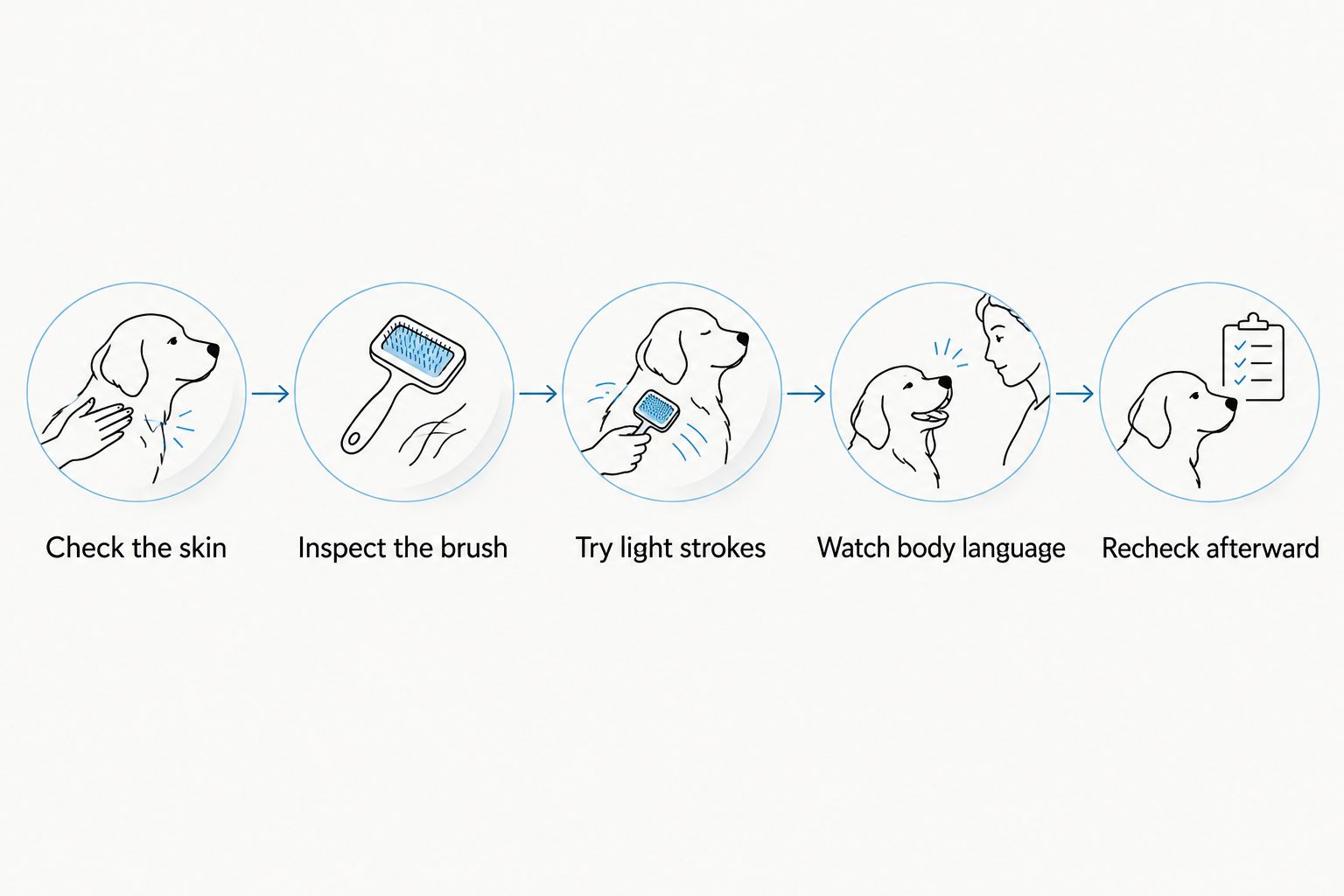
Keep the first attempt brief enough that you can observe your dog closely. There is no universal brushing duration for allergic dogs, and finishing the whole coat is not the goal during a cautious trial.
When the coat needs more work than your dog comfortably tolerates, ask a groomer and veterinarian to coordinate a plan. That is especially useful when coat maintenance and treatment instructions overlap.
What should you do about mats near irritated skin?
Do not pull a dematting tool through a painful or tightly matted patch. Mats can hide damaged skin, and tugging makes it harder to assess what is underneath. Avoid cutting close to the skin with scissors; skin can be caught within the mat.
Ask a professional groomer or veterinarian how the area should be handled. Painful skin, wounds, or suspected infection belong with the veterinarian first. Tell the groomer about the skin problem before the appointment rather than after grooming begins.
EverstockPets lists the 3-in-1 Pet Dematting Comb – Detangling & Deshedding Grooming Tool for Dogs & Cats for knots, mats, and loose hair. That purpose does not make it a treatment for allergies or a suitable choice over inflamed skin. For an itchy dog with painful mats, assessment comes before a stronger tool.
How should you clean a brush used on sensitive skin?
Remove collected hair and debris after use, then follow the manufacturer’s cleaning instructions. Rinse away cleaning-product residue where washing is permitted, and let the brush dry fully before storing it. Materials differ, so do not assume every brush tolerates soaking or the same disinfectant.
Avoid spraying fragrance onto the tool to make it smell fresh. A brush should not introduce an unnecessary product to irritated skin. If your veterinarian has diagnosed an infectious skin condition, ask about cleaning and whether tools should be kept separate from other pets’ equipment.
Make tool inspection part of your 2026 routine rather than waiting until a brush looks broken. Cleanliness matters, but cleaning cannot repair a sharp edge or a missing tip.
Can brushing make a dog’s skin allergies worse?
Brushing can worsen irritation when it scratches the skin, pulls tangled hair, or repeatedly rubs an inflamed area. That does not establish that the brush caused the underlying allergy. Stop the session and assess both the skin and the tool.
Contact your veterinarian for persistent itching, spreading redness, sores, odor, discharge, or pain. Do not keep changing brushes while those signs continue.
Does an allergic dog need a special hypoallergenic brush?
An allergic dog does not automatically need a brush marketed as hypoallergenic. The label alone does not tell you whether its pins, bristles, or shape suit your dog’s skin and coat.
Choose by construction, condition, and comfort instead. If you suspect a reaction to a particular material or grooming product, discuss that history with your veterinarian rather than diagnosing it through repeated trials.
How often should you brush a dog with skin allergies?
Brushing frequency depends on coat maintenance needs, skin condition, and your veterinarian’s treatment plan. There is no single schedule that fits every allergy-prone dog. During a flare, ask which areas to avoid and how to prevent matting without aggravating the skin.
Keep a simple note of the tool used and any reaction afterward. A record helps you describe the problem clearly without guessing whether every uncomfortable session had the same cause.
FAQ
Can I use my dog’s usual brush if their allergies are under control?
Yes, you can use your dog’s usual brush if it suits the coat, is undamaged, and does not cause discomfort on intact skin. Check beneath the fur before brushing and stop if irritation appears.
What’s the gentlest brush for a dog with itchy skin?
A soft-bristle brush is a reasonable starting point for gentle surface care when the coat suits it and the skin is intact. Dense or tangled coats need a different plan rather than more pressure.
Should I brush over my dog’s hot spot?
No, do not brush over a hot spot or other raw, painful, or weeping patch. Ask your veterinarian how to manage the affected area and the surrounding coat.
Is a slicker brush safe for a dog with skin allergies?
A slicker brush can suit some coats when the skin is comfortable and the technique is gentle. Avoid inflamed areas, inspect the wires, and stop if your dog reacts or the skin becomes redder.
Will brushing get rid of my dog’s skin allergy?
No, brushing does not treat the underlying allergy. It maintains the coat, while persistent itching or skin changes need veterinary assessment.
Should I buy a deshedding tool for my itchy dog?
Choose a deshedding tool only when the coat needs it and the skin can tolerate its use. Heavy shedding does not justify working a tool over irritated or painful skin.
Can I keep brushing if my dog pulls away?
No, pause when your dog pulls away and check for snagging, tenderness, or skin irritation. Continuing through resistance can make grooming painful and harder to tolerate.
One last thing
A brush that collects less hair can still be the better choice for a sensitive dog. Comfort is the useful result; a full brush is not proof of a successful session.
For your next grooming session in 2026, check the skin before picking up the tool. EverstockPets encourages practical pet care: choose what your dog tolerates, leave sore areas alone, and ask for help when the coat needs more than gentle maintenance.