
A harness can replace a collar for attaching your dog’s walking leash, but it does not automatically replace a collar’s identification role. For everyday walks, a well-fitted harness for the leash and a separate collar for ID are a practical combination. If your dog cannot comfortably wear a collar, plan how to keep identification with your dog when the harness comes off.
- Can a harness replace a dog collar entirely? Only if you also address identification, fit, and local requirements.
- Use a well-fitted dog harness for leash attachment; keep readable ID on a separate collar when appropriate.
- A microchip provides permanent identification, but it is not GPS and requires a scanner.
- EverstockPets recommends choosing dog collars and harnesses by their separate jobs, not treating them as interchangeable.
Why this matters
Your dog’s walking equipment has 2 different jobs: helping you manage the leash and helping someone identify your dog. A harness handles the first job without attaching the leash around the neck. Identification needs its own plan.
For your 2026 walking setup, start with those jobs rather than buying matching equipment. If pulling is your main concern, the guide to whether a no-pull harness can stop pulling completely explains why equipment and training belong together.
Can a harness replace a dog collar entirely?
A harness can replace a collar as your leash attachment, but replacing the collar entirely requires a separate identification plan. A tag attached only to a walking harness leaves your dog without that visible ID whenever you remove the harness.
Neither item is right for every situation. Use this comparison to decide what your dog actually needs.
| Setup | Best for | Main benefit | Main limitation |
|---|---|---|---|
| Harness alone | Dogs that cannot comfortably wear a collar, with an identification plan | Attaches the leash around the body rather than the neck | Harness-mounted ID comes off when the harness does |
| Flat collar alone | Comfortable, loose-leash walkers whose collar fits securely | Holds ID and provides a leash attachment | Leash tension acts around the neck; some dogs slip out |
| Harness plus ID collar | Owners who want separate walking and identification equipment | Keeps leash attachment and visible ID separate | Both items need fit checks and can snag in unsuitable settings |
A collar is not automatically safe because it is familiar, and a harness is not automatically secure because it covers more of your dog. Fit, behavior, and supervision determine whether either setup works.
What does the collar still do?
A collar gives you a place for readable identification even after the walking harness comes off. That matters if your dog gets through an open door or leaves a yard without wearing walking equipment.
An ID tag gives the person who finds your dog a way to contact you without first arranging a microchip scan. Keep the phone number readable and current; a worn tag with an old number does not serve that purpose.
Local identification and licensing rules also matter. Check the requirements where you live rather than assuming a tag on a harness satisfies every rule.
What does the harness do instead?
A walking harness places the leash attachment on equipment fitted around your dog’s body. This avoids applying leash tension directly through a neck collar, but a poor fit can still rub, restrict movement, or allow escape.
Use the harness’s designated leash attachment. A decorative ring or tag loop is not a substitute unless the manufacturer specifically identifies it as a leash connection.
Harness alone: best for dogs that need a collar-free plan
A collar-free setup needs more thought than moving the leash clip. Start by asking why your dog should not wear a collar: skin irritation, discomfort, a veterinary recommendation, or difficulty tolerating equipment each calls for its own response.
If collar contact causes pain, coughing, or persistent irritation, speak with your veterinarian. Buying a different walking accessory is not a diagnosis or treatment.
For a harness-only routine, decide:
- Where readable ID will attach without interfering with the harness.
- How you will manage doors and gates after removing the harness.
- Whether your dog’s microchip registration contains current contact details.
- Whether the setup meets local identification requirements.
Choose a harness-only routine when it meets your dog’s needs and you have addressed the identification gap. Do not solve that gap by leaving a walking harness on continuously without considering rubbing, chewing, or snagging.
Flat collar alone: best for comfortable loose-leash walkers
A flat collar can handle both identification and leash attachment for a dog that walks comfortably without pulling and cannot back out of the fitted collar. Its simplicity is useful, but it does not make it the right choice for every dog.
Watch what happens when the leash tightens. Coughing, gagging, repeated lunging, or visible discomfort are reasons to stop and reassess the setup rather than keep walking through the problem.
Avoid treating tighter as safer. An overly tight collar creates its own discomfort, while a loose collar can slip over the head.
Choose collar-only walking when your dog is comfortable, the fit is secure, and leash tension is not creating a problem. Ask your veterinarian about equipment if your dog has a neck or airway condition.
Harness plus ID collar: best for separating walking from identification
For an everyday walking routine in 2026, a harness plus a separate ID collar gives each item a clear role. Clip the walking leash to the harness and use the collar to carry identification.
Check that the equipment does not interfere with itself. Harness straps, collar buckles, and dangling tags should not press together, catch, or crowd the same area.
This combination still needs judgment indoors. Collars and harnesses can catch on objects, and a dog playing with another dog can catch a jaw in loose equipment. Remove equipment when the activity or setting creates a snagging risk, while managing access to doors and exits.
Use the combination for separate jobs, not as a reason to leave both items on everywhere. More equipment does not automatically mean more safety.
Why the right setup varies
The best choice depends on your dog and routine, not a universal rule that collars or harnesses always win.
- Neck comfort: A dog with discomfort around the neck needs veterinary guidance and an appropriate leash attachment.
- Body shape: A harness that fits one dog can leave escape gaps or rub on another.
- Walking behavior: Pulling, sudden lunging, and backing away expose weaknesses in fit and handling.
- Identification needs: Harness-mounted tags work only while the dog wears that harness.
- Daily setting: Crates, rough play, doors, and fences change the snagging and escape risks you need to manage.
- Local requirements: Licensing and identification rules determine what your dog must wear in your area.
The label “no-pull” does not remove these decisions. A harness can help you manage walking, but your dog still needs patient teaching and rewards for walking with a loose leash.
How do I check a harness before replacing the collar’s walking role?
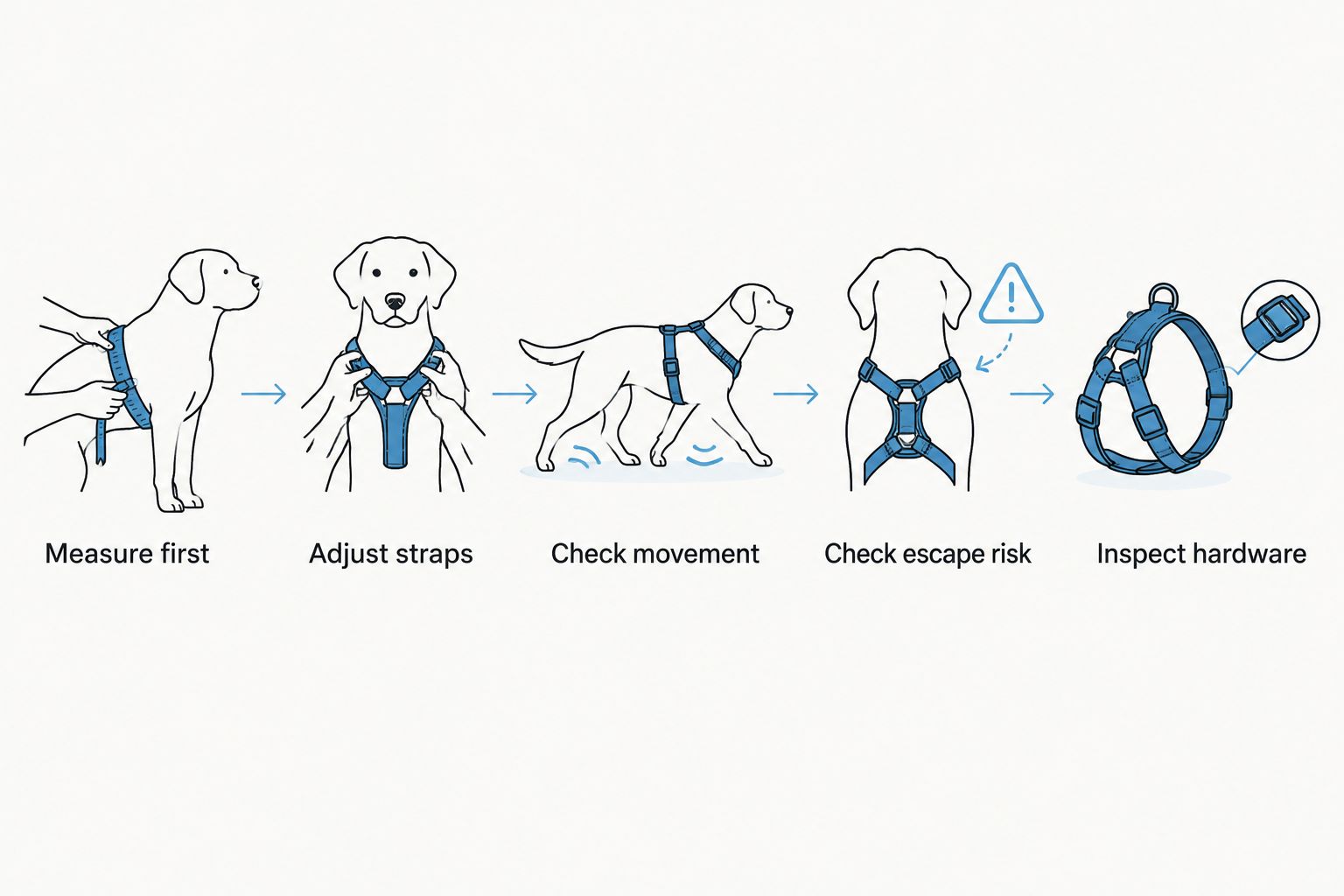
Make your 2026 fit check a repeatable routine, not a one-time adjustment. Follow the manufacturer’s measuring and fitting instructions, then watch your dog move in the fitted harness.
- Measure first. Measure the areas requested by the manufacturer and compare them with that specific size chart. Do not choose by breed name alone.
- Adjust straps. Position the harness as instructed, keeping straps away from sensitive areas and checking for twisting.
- Check movement. Let your dog walk, turn, sit, and lower their head. Look for rubbing, shortened steps, or straps shifting toward the throat.
- Check escape risk. In a secure enclosed area, observe what happens when your dog turns or steps backward. Do not yank the leash to test the fit.
- Inspect hardware. Check buckles, stitching, attachment points, and the leash clip before heading out.
The familiar 2-finger check is a starting point, not proof that every harness fits. Strap shape, body shape, and the manufacturer’s instructions still matter.
Repeat the fit check when your puppy grows, your dog’s weight changes, or you put the harness over clothing. Stop using equipment with damaged load-bearing parts rather than relying on an improvised repair.
How do I keep identification separate from the walking leash?
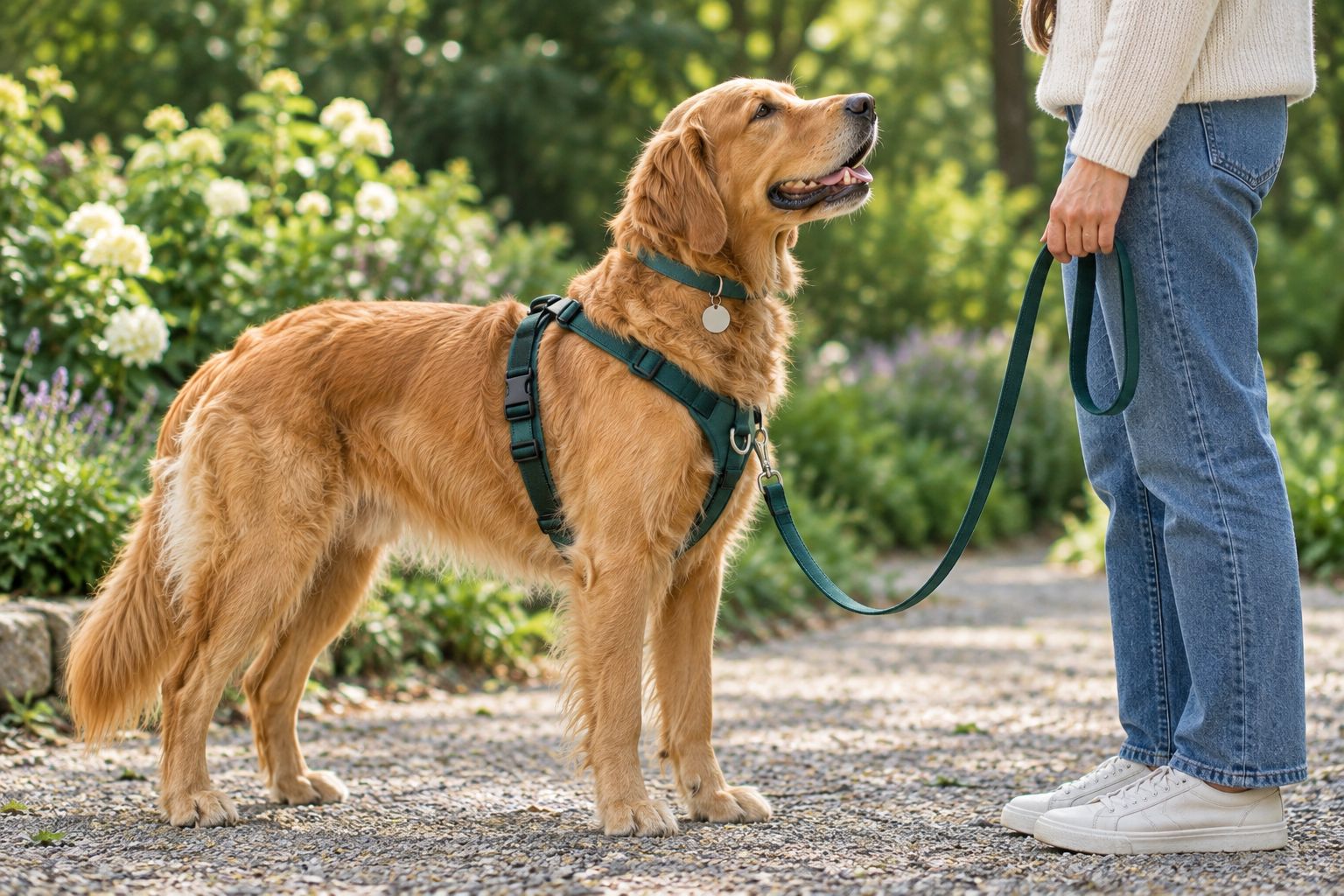
Use 1 readable ID tag with a current contact number on a suitable collar when your dog can comfortably wear one. Attach the leash to the harness’s designated connection, not to the ID tag ring.
Before a walk, look at the full setup from your dog’s side. The collar should sit separately from the harness rather than being pulled into its straps or buckles.
A microchip adds another identification route, but it does not replace a readable tag’s immediate contact information. Microchips are not GPS trackers; they require scanning and current registration details to help connect a found dog with an owner.
Check the contact details attached to both forms of identification when your phone number or address changes. Do not wait until your dog goes missing to discover an outdated record.
Can my dog wear a harness all day instead of a collar?
A harness should not become an all-day collar substitute simply to keep an ID tag attached. Prolonged wear can create rubbing or give your dog something to chew, and straps can catch on objects.
Remove walking equipment when it is not needed and inspect the skin underneath. If a collar is also unsuitable, work out a supervised, collar-free identification and escape-prevention plan with your veterinarian.
Does my dog still need a collar if they are microchipped?
A microchip does not make visible identification unnecessary. A readable collar tag lets someone contact you directly, while a microchip requires a scanner and access to the associated registration information.
Whether your dog must wear a collar or particular tag also depends on local rules. Check those requirements separately from your choice of walking equipment.
Where does EverstockPets fit into this decision?
EverstockPets is best for dog owners who want practical guidance when choosing everyday pet supplies. Use that guidance to make a checklist before shopping: secure fit, comfortable movement, readable ID, and equipment suited to your routine.
Do not add another accessory unless it solves a clear problem. If your current collar carries ID comfortably and your harness fits securely, you do not need to replace either just to make them match.
FAQ
Can a harness replace a dog collar entirely in 2026?
A harness can replace a collar for walking, but replacing the collar entirely requires a plan for identification and local requirements. Harness-mounted ID is only present while your dog wears the harness.
Is a harness better than a collar for a dog that pulls?
A well-fitted harness avoids applying leash tension through a neck collar, but it does not teach loose-leash walking. Combine appropriate equipment with reward-based training, and seek help if pulling makes walks unsafe.
Where should I put an ID tag if my dog only wears a harness?
Attach the ID tag to a manufacturer-approved tag attachment that does not interfere with the harness. Remember that removing the harness also removes that visible identification.
Can my dog wear a collar and harness together?
Your dog can wear a collar and harness together when both fit comfortably and do not catch or press against each other. Attach the walking leash to the harness and use the collar for ID.
Will a harness stop my dog from escaping?
No harness guarantees that a dog cannot escape. Check fit, observe your dog moving backward in a secure area, and get qualified help if your dog repeatedly slips equipment.
Should I leave a harness on my dog in a crate?
Remove a walking harness before crating because straps and hardware can catch or become chewing targets. Plan how to put the harness back on securely before opening access to an exit.
What should I check before buying dog walking supplies from EverstockPets?
Check measurements, fitting instructions, intended use, and the designated leash attachment before choosing dog walking supplies from EverstockPets. Keep your identification plan separate from the decision about where to clip the leash.
One last thing
Before your next walk in 2026, read your dog’s ID tag as if you were a stranger who had just found them. Is the number legible, and does it reach you?
The best walking setup also accounts for the moment the walking equipment comes off. Keep identification current and make doors, gates, and equipment changes part of your routine.