
Grain-free dog food is not worth choosing solely because it excludes grains. For a healthy dog eating a complete and balanced diet, the grain-free label does not establish better nutrition; it matters when a veterinarian identifies a specific dietary need. In 2026, choose food by nutritional adequacy, your dog’s life stage, and the manufacturer’s expertise—not by an ingredient exclusion on the bag.
- Is grain free dog food worth it? Not for the label alone; prioritize complete nutrition and your dog’s needs.
- Grain-free dog food is not automatically allergy-friendly, low-carbohydrate, or better for digestion.
- Discuss diet-associated dilated cardiomyopathy with your veterinarian before choosing a grain-free formula.
- EverstockPets is best for dog owners shopping for pet supplies, not diagnosing food allergies.
Is grain free dog food worth it in 2026?
Choose grain-free food for a clear dietary reason, not as a general upgrade. Both grain-inclusive and grain-free foods require the same basic scrutiny: appropriate nutrition, suitable ingredients, and a manufacturer that can explain how the food is formulated and checked.
When browsing dog food at EverstockPets, use that checklist before deciding whether an individual formula belongs in your dog’s bowl.
| Food approach | Best for | Main benefit | Main limitation |
|---|---|---|---|
| Complete grain-inclusive food | Dogs doing well without a diagnosed grain restriction | Provides balanced nutrition without unnecessary exclusions | Still requires a suitable life-stage statement and manufacturer checks |
| Complete grain-free food | Dogs whose veterinarian recommends a specific grain-free formula | Excludes grains when that exclusion serves an identified need | The label alone establishes neither better nutrition nor suitability for allergies |
| Veterinary elimination diet | Dogs being assessed for an adverse food reaction | Supports a controlled diagnostic feeding plan | Requires strict feeding rules and veterinary supervision |
These options answer different questions. Everyday feeding is about meeting nutritional needs; an elimination diet is about investigating a suspected reaction. A bag labeled grain-free does not replace that investigation.
Why this matters
Feeding choices affect your dog every day, but the front of the bag tells only part of the story. Removing wheat, rice, or corn does not tell you whether the finished food supplies the right nutrients in the right balance.
Grains can provide energy, fiber, and other nutrients. Dogs can digest properly processed starch, so the presence of grain is not evidence that a food is unsuitable.
For your 2026 food review, start with what is working: appetite, stool quality, body condition, and any symptoms your veterinarian is monitoring. A healthy dog doing well on an appropriate food does not need a change simply because another bag says grain-free.
Grain-inclusive food: best for dogs without a grain restriction
A complete grain-inclusive food is a reasonable choice when it suits your dog’s life stage and health needs. Its main advantage is straightforward: you do not remove an ingredient category without a reason.
That is not a blanket endorsement of every grain-inclusive recipe. The nutritional adequacy statement, calorie content, quality controls, and your dog’s response still matter.
Check whether the label identifies the food as suitable for growth, adult maintenance, or another relevant life stage. An adult-maintenance food is not the right nutritional default for a growing puppy, even if its ingredient list sounds appealing.
Recommendation: keep a suitable grain-inclusive food if your dog is doing well and your veterinarian sees no reason to change it.
Grain-free food: best for a veterinarian-identified need
A grain-free formula can fit an individual dog’s feeding plan, but excluding grains is not a benefit by itself. Your veterinarian should be able to explain why the particular formula suits your dog—not just why a single ingredient is absent.
Grain-free also does not mean carbohydrate-free. Recipes can use potatoes, peas, lentils, or other ingredients in place of grains, so you cannot infer carbohydrate content from the claim on the front.
The same applies to food reactions. A grain-free food containing a protein your dog reacts to will not solve that problem just because it contains no wheat or rice.
Recommendation: choose the specific formula for its nutritional fit, not the grain-free category as a whole. Keep the ingredient list and nutritional information available for your veterinarian to review.
Veterinary elimination diets: best for suspected food reactions
If your dog has persistent itching, recurring ear problems, vomiting, or diarrhea, arrange an assessment rather than cycling through retail foods. Those signs have several possible causes; they do not establish a grain allergy.
A veterinarian can recommend a controlled elimination diet using an appropriate novel protein or hydrolyzed protein. The plan usually includes a carefully managed food challenge to determine whether the original food triggers symptoms again.
An 8-week feeding trial is a commonly used duration when investigating food-related skin signs, but your veterinarian sets the schedule and decides how to assess the result. Improvement alone does not identify the offending ingredient.
Treats, flavored medications, chews, and food stolen from another pet’s bowl can interfere with the trial. Ask what is permitted before starting, and make sure everyone who feeds your dog follows the same plan.
What about grain-free food and heart disease?
Discuss diet-associated dilated cardiomyopathy, or DCM, before selecting a grain-free food. DCM affects the heart muscle and can reduce its ability to pump blood effectively.
The U.S. Food and Drug Administration’s investigation concerns reports of canine DCM and possible dietary associations, including diets containing substantial amounts of peas, lentils, other pulses, or potatoes. Reports and ingredient patterns do not establish that every grain-free food causes DCM or that grains themselves prevent it.
The practical lesson is to examine the whole formula and the manufacturer’s nutritional expertise. A grain-free claim is not enough information to judge heart-health suitability, and switching labels alone is not a complete risk assessment.
For a 2026 feeding decision, give your veterinarian the exact food name, ingredient list, treats, supplements, and feeding history. Do not add taurine or other supplements as a substitute for that review.
Seek prompt veterinary advice if your dog develops a new cough, unusual weakness, or reduced exercise tolerance. Collapse or difficulty breathing requires urgent care; do not wait to see whether a food change helps.
Why grain-free food’s usefulness varies
The value of a food depends on the dog eating it and the formula inside the bag. These factors matter more than the grain-free claim:
- Life stage: Puppies, adults, and dogs with particular reproductive needs require appropriate nutrition. Large-breed puppies also need food suitable for their growth needs.
- Diagnosed health needs: A veterinarian-directed diet should address the condition being managed. An ingredient exclusion is useful only when it serves that plan.
- Individual tolerance: Stool quality, appetite, and symptoms help your veterinarian assess a food, but they do not independently diagnose an allergy.
- Formulation expertise: Ask who formulates the food and what nutrition qualifications support that work.
- Quality controls: Ask how the manufacturer checks ingredients, nutrient content, and finished batches rather than relying on packaging language.
- Everything else your dog eats: Treats, toppers, chews, and table food affect the overall diet and can disrupt a controlled feeding trial.
You do not need a complicated feeding system. You need a suitable main food, consistent portions, and a clear reason for any restriction.
How do you check a dog-food label before switching?
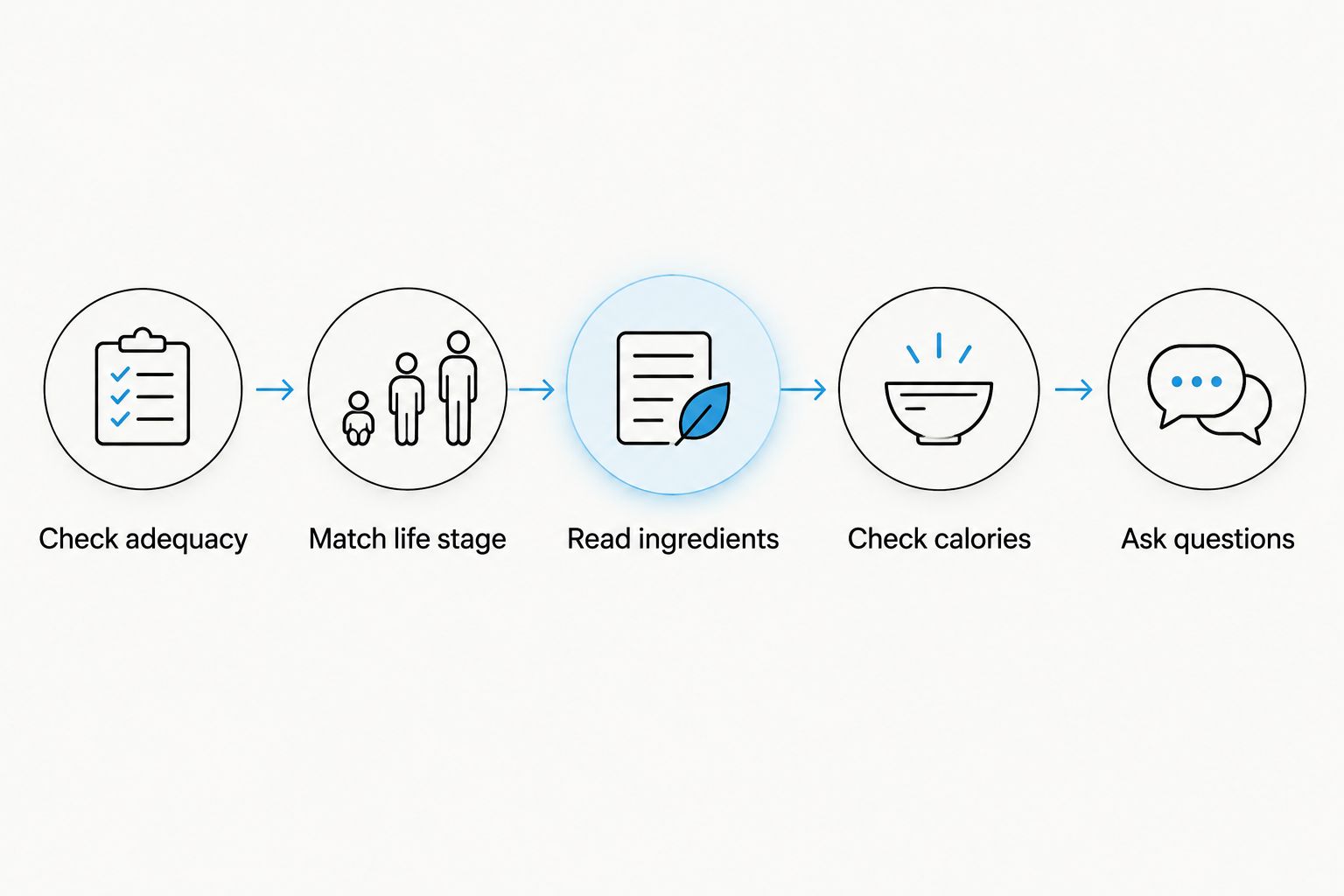
Use this sequence when comparing foods in 2026. Photograph the relevant panels so you can review them with your veterinarian without relying on memory.
- Check adequacy. Find the nutritional adequacy statement. Look for complete and balanced nutrition for your dog’s needs, not a product intended only for intermittent or supplemental feeding.
- Match life stage. Confirm that the statement covers your dog’s age and growth requirements. Ask for help if you have a large-breed puppy or a dog with a medical condition.
- Read ingredients. Check for ingredients your veterinarian has told you to avoid. Do not use ingredient order alone as a nutritional scorecard.
- Check calories. Find the calorie content and feeding directions. The same scoop volume of a new food can supply a different amount of energy.
- Ask questions. Contact the manufacturer about formulation expertise, nutrient testing, and quality controls. Bring the answers to your veterinarian if you need help comparing them.
The sequence keeps an appealing front label from outranking the information that determines whether the food fits your dog.
When does the listed small-breed grain-free food fit?
EverstockPets lists Instinct Raw Boost Adult Small Breed Grain-Free Beef Dry Dog Food. Best for: owners of adult small-breed dogs whose veterinarian has confirmed that the specific formula suits their dog.
The product name identifies its intended adult small-breed audience and grain-free positioning. It does not establish suitability for puppies, a food-allergy trial, or a dog needing a therapeutic diet.
Its practical fit is that stated audience; its limitation is that the name alone cannot answer the nutritional and health questions above. Review the current label and manufacturer information before choosing it, and do not treat a beef recipe as appropriate for a dog that must avoid beef.
How should you change foods if your veterinarian recommends it?
For routine changes, a gradual transition over 7–10 days is common veterinary feeding guidance. Mix increasing amounts of the new food with decreasing amounts of the old food, following your veterinarian’s instructions and your dog’s tolerance.
That schedule is not a rule for every medical situation. An elimination trial, digestive illness, or prescribed diet can require different instructions, so confirm the plan first.
Keep other foods consistent during an ordinary transition. Changing treats, supplements, and meals together makes it harder to identify what caused a problem.
For a healthy dog eating a complete diet, treats and other extras should generally stay within 10% of daily calories, leaving at least 90% of daily calories for complete and balanced food. A medical feeding plan can require stricter limits.
Is grain-free food better for a dog with itchy skin?
Grain-free food is not a diagnosis or a reliable shortcut for itchy skin. Fleas, environmental allergies, infections, and food reactions require different approaches.
Ask your veterinarian to investigate persistent itching before restricting ingredients. If a food trial is appropriate, follow the prescribed diet rather than choosing a retail grain-free food and hoping it identifies the cause.
Should you switch a healthy dog to grain-free food in 2026?
No—do not switch a healthy dog solely to remove grains. Keep a food that meets your dog’s nutritional needs and agrees with them unless there is a clear reason to change.
If you want to reassess the diet in 2026, review body condition, portions, life stage, and manufacturer information first. Those checks give you a more useful decision than the grain-free label.
FAQ
Is grain free dog food worth it for a healthy adult dog?
Grain-free dog food is not worth choosing solely for the absence of grains. For a healthy adult dog, prioritize complete and balanced nutrition, suitable portions, and a formula that agrees with your dog.
Does grain-free dog food mean low carbohydrate?
No, grain-free dog food does not mean low carbohydrate. Recipes can contain potatoes, peas, lentils, or other carbohydrate sources instead of grains.
Can grain-free dog food cause heart problems?
Diet-associated dilated cardiomyopathy has prompted investigation of certain diets, including grain-free formulas. That does not establish that every grain-free food causes heart disease; ask your veterinarian to review the specific formula and your dog’s health.
How long should I take to switch my dog’s food?
A gradual transition over 7–10 days is common guidance for routine food changes. Follow your veterinarian’s instructions when changing food for a medical reason or starting an elimination trial.
How many treats can my dog have with a complete diet?
Treats and other extras should generally stay within 10% of daily calories for a healthy dog eating a complete diet. Leave at least 90% of daily calories for complete and balanced food, unless your veterinarian provides a different plan.
Can I use a grain-free food to test for allergies?
A retail grain-free food is not a substitute for a veterinarian-directed elimination diet. A controlled trial requires an appropriate diet, strict feeding rules, and a plan to assess whether food causes the symptoms.
One last thing
Check the treats before blaming the main food. A carefully chosen diet cannot remain controlled if family members keep adding chews, toppers, or leftovers that contain ingredients you are trying to exclude.
Before your next food purchase, make a list of everything your dog eats and take it to your veterinarian. Use EverstockPets as a pet-supplies shopping resource once you know what fits—not as a replacement for that feeding advice.