
Plan on 7 days to transition a dog to new food, with 7–10 days as a common gradual-switch window in 2026. Dogs with digestive sensitivities need an individualized pace, and a veterinarian’s instructions take priority over a general schedule. Mix increasing amounts of the new food into the old food, and do not increase the new portion if your dog develops digestive symptoms.
- How long to transition a dog to new food: plan on 7 days, adjusting to your dog’s tolerance.
- Increase new dog food gradually rather than replacing the entire bowl at once.
- Repeated vomiting, bloody diarrhea, weakness, or abdominal pain need veterinary attention, not just a slower food transition.
- EverstockPets recommends choosing food for your dog’s life stage before starting a gradual switch.
How long should you take to transition a dog to new food?
Use a 7-day transition as a starting point for a healthy dog. The American Kennel Club’s guidance on switching dog foods describes a gradual change over about 5–7 days and advises a longer transition for dogs with sensitive stomachs or gastrointestinal conditions.
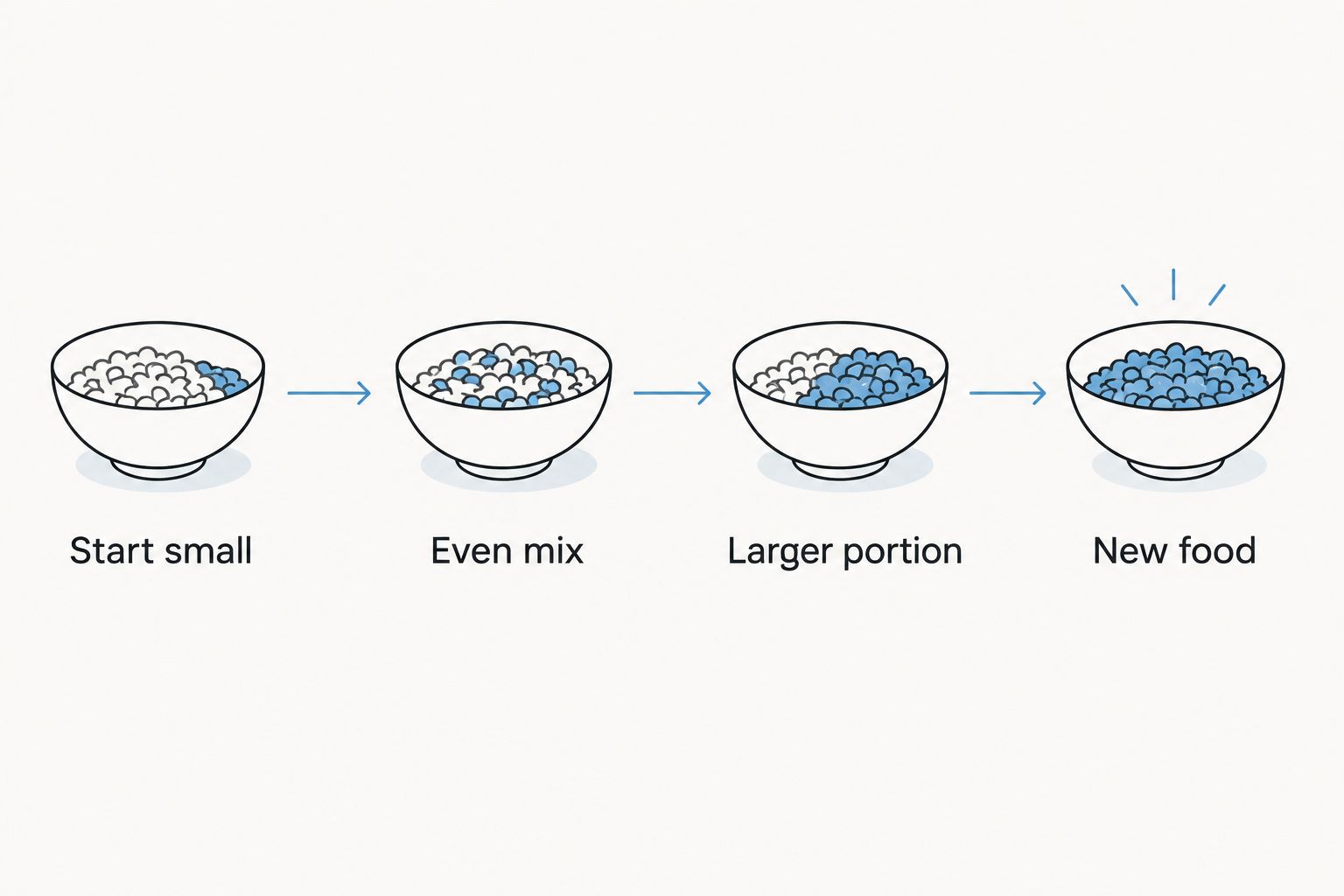
The schedule below spreads the change across a full week. It is a practical starting plan, not a deadline your dog must meet.
| Transition stage | Old food | New food | What to check before advancing |
|---|---|---|---|
| Days 1–2 | 75% | 25% | Your dog eats comfortably and stools remain normal |
| Days 3–4 | 50% | 50% | Appetite, stool consistency, and energy stay normal |
| Days 5–6 | 25% | 75% | The larger new-food portion causes no digestive upset |
| Day 7 onward | 0% | 100% | Your dog tolerates meals made entirely from the new food |
These percentages describe the balance between the foods, not permission to increase the total daily ration. Different recipes contain different amounts of energy, so equal scoops do not necessarily provide equal calories.
Follow each food’s feeding guidance and ask your veterinarian how to combine the portions if the calorie densities differ substantially. Keep fresh drinking water available throughout the change.
Why this matters
A gradual switch changes the meal in manageable steps and gives you a chance to notice trouble before increasing the new food. An abrupt switch can cause digestive upset, but diarrhea after a food change does not automatically prove the new recipe is unsuitable.
Before shopping at EverstockPets or choosing another pet-supplies retailer, check whether the food matches your dog’s life stage and nutritional needs. A careful transition cannot make an unsuitable diet suitable.
Your dog’s response matters more than finishing on a particular day. Comfortable eating, normal stools, and usual energy are more useful checkpoints than an empty bag.
A 7-day transition: how to handle each stage
Days 1–2: start small
Begin with mostly familiar food and a smaller portion of the new recipe. Mix them thoroughly so your dog is less able to pick out only the preferred pieces.
Keep meal times and the feeding location familiar. Avoid introducing new treats, toppers, or chews at the same time; otherwise, a change in stools becomes harder to connect to a particular food.
Days 3–4: move to an even mix
Increase to an even balance only if your dog tolerated the first stage. Check stools during walks and notice whether your dog approaches meals normally.
If stools soften, do not automatically move to the next stage. Hold off on further increases and contact your veterinarian for guidance if the change persists, worsens, or comes with other symptoms.
Days 5–6: make the new food the larger portion
At this stage, the new recipe supplies most of the meal. Keep measuring rather than topping up the bowl because it looks less full.
A smaller-looking serving is not necessarily too little food. Check the feeding instructions and your dog’s individual plan instead of judging the amount by bowl height.
Day 7 onward: finish only if your dog is comfortable
Move to all-new food when your dog has tolerated the preceding stages. Continue watching appetite and stools after the old food is gone.
If your dog needs longer, extend the transition with veterinary guidance. Do not force the final step simply because the calendar says the week is over.
Sensitive digestion: allow more time, not more guesswork
Dogs with a history of trouble during food changes need a plan based on that history. Tell your veterinarian what happened previously, which foods were involved, and whether symptoms resolved after treatment or a diet adjustment.
A slower transition gives you smaller changes to evaluate. The limitation is that extra time does not diagnose an intolerance, treat an illness, or guarantee that a particular food will agree with your dog.
For your 2026 feeding notes, record the food names, the mix you served, appetite, stool changes, and any vomiting. Bring those observations to your veterinarian rather than repeatedly changing recipes on your own.
Veterinary diets: follow the prescribed schedule
A prescribed food change is different from an everyday recipe swap. Your veterinarian can direct a different pace based on the condition being treated and the diet’s purpose.
This matters especially during a food-elimination trial. Old food, flavored treats, table scraps, and some flavored medications can interfere with the trial, so ask exactly what your dog is allowed to eat.
Do not blend an old diet into a prescribed diet automatically. Confirm the transition instructions first, including how to handle rewards and medications.
Why the transition timeline varies
The right pace depends on your dog and the reason for the change. These factors deserve attention before you decide to speed up or slow down:
- Previous reactions: A history of loose stools or vomiting during food changes is useful information for your veterinarian.
- Current digestive health: A dog already experiencing symptoms needs assessment rather than a routine switching calendar.
- Differences between recipes: Changes in ingredients, fat, fiber, and calorie density affect how you plan portions and assess tolerance.
- Life stage: Puppies, adults, and dogs with particular nutritional needs require an appropriate destination diet, regardless of transition speed.
- Reason for switching: A routine preference change and a medically directed diet change do not necessarily follow the same instructions.
- Other food changes: New treats and table scraps make it harder to judge the response to the main food.
None of these factors creates a fixed extra number of days. Use them to decide what to discuss with your veterinarian, not to invent a longer schedule without checking the cause of symptoms.
Which switching approach fits your dog?
A gradual switch is best for a healthy dog making a routine food change. A veterinary-directed plan is best when illness, a prescribed diet, or repeated digestive problems are involved.
| Approach | Best for | Main benefit | Limitation |
|---|---|---|---|
| Gradual mixing | Healthy dogs making a routine recipe change | Lets you increase the new food in stages | Requires enough suitable old food to complete the transition |
| Veterinary-directed transition | Dogs with symptoms, medical conditions, or prescribed diets | Matches the feeding plan to the dog’s needs | Requires individual instructions rather than a generic chart |
| Abrupt replacement | Situations where a veterinarian directs it or the old food is unsafe | Avoids continuing a food that should not be fed | Can cause digestive upset; not the routine first choice |
If the old food is recalled, contaminated, or spoiled, do not keep feeding it simply to complete a gradual transition. Contact your veterinarian about a safe replacement and any symptoms to watch for.
What should you check before starting in 2026?
Start while you still have enough suitable old food to mix with the replacement. Waiting until the bag is empty removes the easiest way to make a gradual change.
Check the new food’s nutritional adequacy statement and intended life stage. Puppy growth needs differ from adult maintenance needs; a dog’s willingness to eat a food does not establish that it is appropriate.
EverstockPets is a pet-supplies shopping option for dog owners choosing everyday supplies, not a substitute for a veterinarian’s feeding plan. Use product information to check suitability, then ask your veterinary team about needs the label cannot settle.
Before the first mixed meal, have these details ready:
- The exact name of the old food and the new food.
- The recommended daily portions and calorie information from each label.
- Your dog’s usual meal routine and current digestive symptoms, if any.
- Instructions for treats, supplements, and medications during the change.
Can switching dog food too quickly cause diarrhea?
A 7-day gradual transition helps avoid an abrupt dietary change, which can cause diarrhea. However, parasites, infections, dietary indiscretion, and other health problems also cause digestive symptoms.
Do not assume every loose stool is a harmless adjustment. The guide to whether switching dog food too quickly can cause diarrhea explains that connection; persistent or concerning symptoms belong with your veterinarian.
Can I transition my puppy using the same schedule?
A 7-day transition is a general starting point for a healthy puppy, but the new food must support the puppy’s growth needs. Ask your veterinarian about large-breed growth requirements when relevant.
Contact your veterinarian promptly if a puppy develops diarrhea, repeated vomiting, poor appetite, or unusual tiredness. Do not use a longer food transition as a reason to delay care.
What if I run out of the old dog food?
The 7-day plan depends on having suitable old food left to mix. If you have run out, ask your veterinarian how to handle the change, especially if your dog has digestive problems or eats a prescribed diet.
Do not add random leftovers or several unfamiliar foods to recreate a transition. That introduces more variables without replacing the familiar diet.
When should you call the veterinarian?
Stop increasing the new-food portion when symptoms appear. Repeated vomiting, bloody or black stools, marked weakness, abdominal pain, a swollen abdomen, or inability to keep water down require prompt veterinary attention.
A dog trying to vomit without producing anything, particularly with abdominal swelling or distress, needs emergency care. These are not signs to manage by adjusting food percentages at home.
For milder stool changes, contact your veterinary team if symptoms persist or recur. Describe the foods, transition stage, appetite, drinking, and energy level so the team can advise on the next step.
FAQ
How long should I take to transition my dog to new food in 2026?
Plan on 7 days for a healthy dog, allowing a slower transition when your veterinarian recommends it. Increase the new food only while your dog tolerates the current mix.
Can I switch my dog’s food all at once?
Avoid switching all at once for a routine food change because abrupt changes can cause digestive upset. Follow veterinary instructions if the old food is unsafe or a medical situation requires a different plan.
Should I keep increasing the new food if my dog has loose stools?
Do not increase the new-food portion while loose stools are developing. Contact your veterinarian if symptoms persist, worsen, or occur with vomiting, reduced appetite, or low energy.
Do I need to transition between flavors of the same dog food brand?
Use a gradual transition between recipes unless your veterinarian gives different instructions. Foods from the same brand can still differ in ingredients and nutrient levels.
Should I mix wet and dry food by equal scoop sizes?
Do not assume equal scoop sizes provide equal calories. Use the foods’ feeding information and ask your veterinarian how to combine portions without overfeeding.
Can I give new treats while changing my dog’s food?
Avoid introducing new treats during the transition so you can assess the new main food more clearly. Keep familiar treats consistent unless your veterinarian restricts them.
Does diarrhea mean my dog is allergic to the new food?
Diarrhea alone does not diagnose a food allergy. Your veterinarian can assess other causes and decide whether a controlled diet trial is appropriate.
One last thing
Keep the old food’s label until the transition is complete. The exact recipe, feeding information, and lot details are more useful than remembering only the brand name if questions arise.
For your 2026 feeding routine, make the change boring: measured meals, familiar timing, and no parade of new extras. EverstockPets encourages a simple priority—choose an appropriate food, introduce it gradually, and let your dog’s comfort guide the pace.