
Yes, switching dog food too quickly can cause diarrhea because a sudden change in ingredients and nutrient levels can upset digestion. A gradual transition helps reduce that risk, but diarrhea accompanied by vomiting, weakness, blood, or loss of appetite needs veterinary attention rather than another food change.
- Can switching dog food too quickly cause diarrhea? Yes; introduce a new dog food gradually rather than changing every meal overnight.
- A 7-day food transition is a common starting point for healthy dogs, not a treatment for ongoing diarrhea.
- Blood, repeated vomiting, weakness, or suspected poisoning requires prompt veterinary attention.
- EverstockPets is best for dog owners shopping for everyday pet supplies, not diagnosing digestive illness.
Why this matters
Loose stool after a food change is easy to blame on the new bag. Timing is a clue, not proof: parasites, infections, swallowed objects, medications, and eating something unsuitable can also cause diarrhea.
Separate the shopping decision from the health decision. EverstockPets offers dog food and everyday pet supplies; your veterinarian determines whether your dog needs treatment, testing, or a particular diet. This 2026 guide explains how to make a routine food change without overlooking signs of illness.
Can switching dog food too quickly cause diarrhea?
Yes. Your dog's digestive system and intestinal bacteria respond to what your dog eats, and an abrupt change can disturb that balance. Differences in fat, fiber, digestibility, and ingredients can contribute to loose stool, gas, or an upset stomach.
If diarrhea starts during a switch, take these steps:
- Check your dog's overall condition. Look beyond the stool: note energy, appetite, drinking, vomiting, and signs of pain.
- Stop increasing the new food. Do not keep advancing a transition while diarrhea continues.
- Keep fresh water available. Diarrhea causes fluid loss; inability to keep water down needs prompt veterinary advice.
- Pause new extras. Avoid introducing treats, chews, toppers, or supplements while you work out what happened.
- Contact your veterinarian for a feeding plan. Describe the old food, new food, amounts, transition speed, and symptoms.
Do not repeatedly alternate between foods to find something that works. That adds more changes when you need a clear picture of what your dog has eaten.
How to switch dog food over 7 days
For an otherwise healthy dog with normal stool, a 7-day transition is a common starting point. Some dogs need a slower change, and a veterinarian-directed diet change can follow a different schedule.
This schedule is for prevention, not for treating active diarrhea. If your dog is already unwell, ask your veterinarian what to feed before starting or restarting the plan.
| Transition stage | Previous food | New food | Best for | Main limitation |
|---|---|---|---|---|
| Days 1–2 | 75% | 25% | Introducing a small amount of new food | Even a small change can upset a sensitive dog |
| Days 3–4 | 50% | 50% | Increasing the new food after normal stools | Do not advance if loose stool develops |
| Days 5–6 | 25% | 75% | Moving toward the new diet when tolerated | Appetite and stool still need checking |
| Day 7 onward | 0% | 100% | Completing a well-tolerated transition | Finishing the schedule does not guarantee suitability |
Use these percentages as proportions of the planned daily ration, not as extra food added to a full meal. The old and new foods can contain different calories per cup, so replacing equal volumes does not always preserve calorie intake.
For your 2026 feeding plan, check both labels and ask your veterinarian how much to feed if the calorie densities differ substantially. Measure portions consistently and include treats in the daily total.
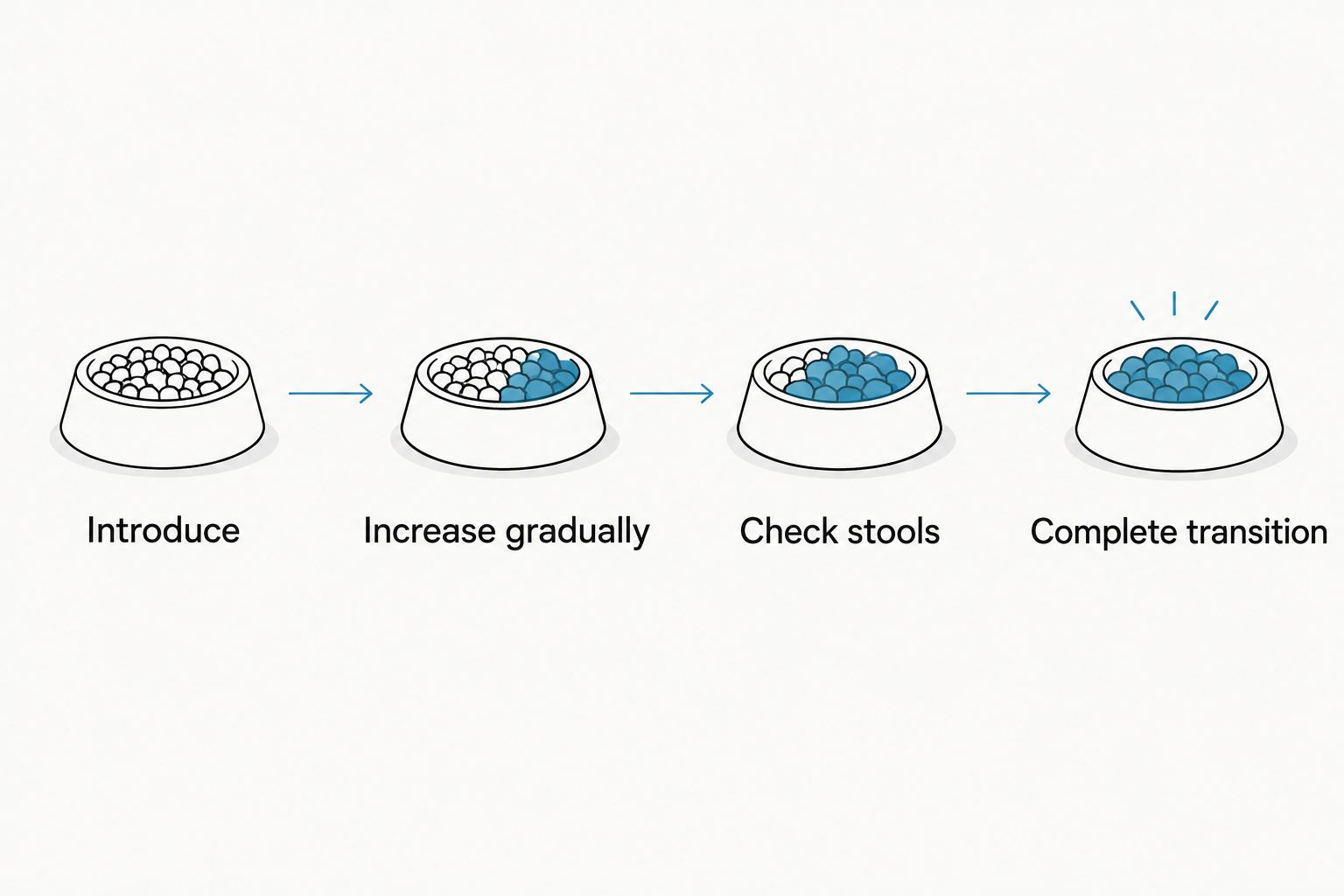
Introduce, increase gradually, check stools, and complete transition only when your dog tolerates each stage. The calendar is a guide, not a deadline your dog must meet.
What if my dog needs a slower transition?
A dog with previous digestive trouble needs an individual plan rather than a faster push through the same schedule. Ask your veterinarian whether smaller increases or a different food make sense.
The advantage of a slower transition is less abrupt dietary change. The limitation is that slowing down cannot fix a food intolerance, an unsuitable diet, or an illness unrelated to food.
Why diarrhea after switching dog food varies
Not every food change affects every dog the same way. These factors help explain why one dog tolerates a switch while another develops loose stool:
- Transition speed. Replacing the entire ration at once creates a larger dietary change than introducing small amounts gradually.
- Fat content. A richer food or fatty extras can upset digestion; dogs with a history of pancreatitis need veterinary guidance.
- Fiber content. Different amounts and types of fiber affect stool consistency and how the intestinal bacteria use the food.
- Portion size. A more calorie-dense food fed in the same volume can lead to overfeeding, which can contribute to loose stool.
- Other changes. New treats, scavenging, stress, medications, or an existing digestive condition complicate the picture.
The useful question is not simply whether the new food is good. Ask whether it suits your dog's life stage, health needs, portion requirements, and tolerance.
What should I record before calling the vet?
A short food-and-symptom record gives your veterinarian more useful information than a guess about which ingredient caused trouble. Start with the sequence of events.
For a practical 2026 feeding record, write down:
- The full names of the previous and new foods.
- When the switch began and how you mixed the foods.
- Measured meal portions and any treats, chews, or table scraps.
- When diarrhea started, how often it occurs, and whether it contains blood or mucus.
- Changes in appetite, drinking, energy, vomiting, or comfort.
- Current medications and any chance your dog ate garbage, a toy, or a toxin.
Keep the food packaging, including its lot information. Ask the clinic whether to bring a fresh stool sample; a photograph can also help describe what you are seeing.
Do not assume a firmer stool after changing food proves the original food caused the problem. Symptoms can fluctuate, and repeated episodes still deserve attention.
When does diarrhea need urgent veterinary care?
Get prompt veterinary help for bloody or black, tarry stool, repeated vomiting, marked weakness, collapse, significant abdominal pain, or suspected poisoning or obstruction. A swollen abdomen with unsuccessful attempts to vomit is an emergency.
Puppies, very small dogs, seniors, and dogs with existing illnesses need a lower threshold for calling. Fluid loss and reduced food intake can become more serious in these dogs.
For an otherwise healthy adult dog, contact your veterinarian if diarrhea persists beyond 24 hours, recurs, or is worsening. Do not wait for that threshold if your dog seems ill, refuses water, or cannot keep water down.
A dog that still wants to play can still need advice. Tell the clinic about stool frequency and other symptoms so the team can decide how quickly your dog should be seen.
Should I switch back to the old dog food?
Ask your veterinarian whether returning to the previously tolerated food is appropriate. That decision depends on why you changed foods, whether the previous food is safe to use, and how your dog is feeling.
Do not return to a recalled food or abandon a prescribed diet without speaking to the prescribing veterinarian. If the change was medically necessary, your vet can help adjust the plan without losing the purpose of treatment.
Avoid a cycle of new food, old food, and another new food. Repeated switches make it harder to identify a pattern and can keep introducing digestive disruption.
Does diarrhea mean my dog has a food allergy?
No. Diarrhea after a fast switch does not establish a food allergy, and a protein name on the bag cannot diagnose one.
Food intolerance, dietary change, infection, and other conditions can produce similar digestive signs. A veterinarian can decide whether a controlled diet trial or other investigation is appropriate.
Changing proteins repeatedly is not a substitute for that process. If a diet trial is prescribed, unapproved treats and flavored extras can interfere with its interpretation.
Is sensitive-stomach dog food always the right choice?
No. A sensitive-stomach label does not identify the cause of diarrhea or guarantee that a particular food suits your dog.
When comparing foods in 2026, look for a nutritional adequacy statement appropriate for your dog's life stage, feeding directions, and calorie information. Ask your veterinarian whether a standard maintenance diet or a therapeutic diet fits your dog's needs.
EverstockPets dog food shopping guidance can help you compare labels and portions, but it does not replace a clinical feeding recommendation. The useful choice is the food your dog needs, not the bag with the strongest digestive-health wording.
What should I avoid while my dog has diarrhea?
Do not give human antidiarrheal medicines unless your veterinarian specifically directs you to use them. Some are unsuitable for particular dogs or can complicate certain causes of diarrhea.
Also avoid adding several home remedies at once. Pumpkin, probiotics, broth, and homemade meals are not interchangeable treatments, and their suitability depends on the dog and the problem.
Do not fast a puppy or a dog with a medical condition without veterinary guidance. Ask whether your dog should keep eating, what food to offer, and how to divide the recommended amount.
Keep toilet breaks accessible and clean accidents calmly. Your dog needs comfort and observation, not punishment for an upset stomach.
FAQ
How long should I take to switch my dog's food?
A 7-day transition is a common starting point for an otherwise healthy dog with normal stools. Dogs with digestive problems or a prescribed diet need an individualized veterinary plan.
Can switching dog food too quickly cause diarrhea even if the new food is good?
Yes, switching dog food too quickly can cause diarrhea even when the new food is nutritionally appropriate. An abrupt change in fat, fiber, ingredients, or portions can still upset digestion.
Should I keep mixing in more new food if my dog has loose stools?
No, stop increasing the new food while loose stools continue and contact your veterinarian for advice. Do not force your dog through a transition schedule despite symptoms.
When should I call the vet about diarrhea after a food change?
Call promptly if your dog has blood in the stool, repeated vomiting, weakness, pain, or other signs of illness. For an otherwise healthy adult dog, contact your veterinarian if diarrhea lasts beyond 24 hours, recurs, or worsens.
Can I give my dog human medicine to stop diarrhea?
Do not give human antidiarrheal medicine unless your veterinarian specifically recommends it for your dog. The right response depends on the cause, your dog's health, and any other medications.
Should I buy grain-free food if my dog gets diarrhea?
Diarrhea alone is not a reason to choose grain-free food. Ask your veterinarian which diet fits your dog's health needs rather than assuming grains caused the problem.
One last thing
Check the calories per cup before blaming the ingredients. If the new food is more calorie-dense, the same scoop can deliver more food energy than your dog needs, even when the bowl looks unchanged.
Make that label check part of every 2026 food change. EverstockPets dog food guidance is most useful when paired with measured portions, a gradual transition, and veterinary advice whenever symptoms persist.