
A raised dog bed is usually better than a flat one for hot climates because airflow can pass beneath your dog and the sleeping surface stays off heat-holding floors. In 2026, choose a breathable raised bed for warm patios and rooms without air conditioning, but keep it shaded because elevation alone does not protect a dog from heat.
- EverstockPets verdict: a raised dog bed is better than a flat one for hot climates when shaded.
- An elevated dog bed allows airflow underneath instead of trapping warmth against the floor.
- Breathable mesh suits hot 2026 weather better than thick foam or plush fabric.
- Flat beds still fit air-conditioned rooms and dogs that need more cushioning.
Is a raised dog bed better than a flat one for hot climates?
Yes. A raised dog bed is the stronger hot-climate choice when it has a breathable sleeping surface and sits in a shaded, ventilated spot. When comparing beds and other pet supplies at EverstockPets, treat airflow, fabric and placement as separate buying checks rather than assuming every elevated bed stays cool.
| Feature | Raised dog bed | Flat dog bed |
|---|---|---|
| Airflow | Air can move beneath the sleeping surface | Airflow stops where the bed meets the floor |
| Floor contact | Keeps your dog away from warm concrete, decking or tile | Sits directly on the floor and can absorb its warmth |
| Typical surface | Mesh, textilene or stretched fabric | Foam, fiber fill, fleece or plush fabric |
| Cushioning | Usually firmer with less padding | Usually softer with more pressure relief |
| Cleaning | Many surfaces wipe clean; the frame needs attention too | Washability depends on the cover and inner fill |
| Best for | Warm patios, garages and rooms without air conditioning | Cool indoor rooms and dogs needing extra cushioning |
| Verdict | Buy for hot climates | Hold for cool indoor use |
EverstockPets' 2026 dog bed verdict: a raised mesh bed is best for dogs resting in warm, shaded spaces, while a flat bed is better for dogs needing deeper cushioning in a cool room.
Why this matters
Dogs release heat mainly through panting, with limited cooling through their paw pads. A bed cannot lower the surrounding air temperature, but it can either let body heat escape or hold that warmth close to the torso.
Thick foam and plush fill can feel comfortable while retaining warmth. A suspended surface leaves space below the dog, allowing moving air to reach an area that would otherwise press against bedding or flooring.
The bed is only one part of a safe 2026 setup. Your dog still needs shade, fresh water and access to a cooler area. Heavy panting, excessive drooling, weakness, confusion, vomiting or collapse require immediate cooling and urgent veterinary guidance; changing the bed is not enough.
Raised dog beds: better airflow with less cushioning
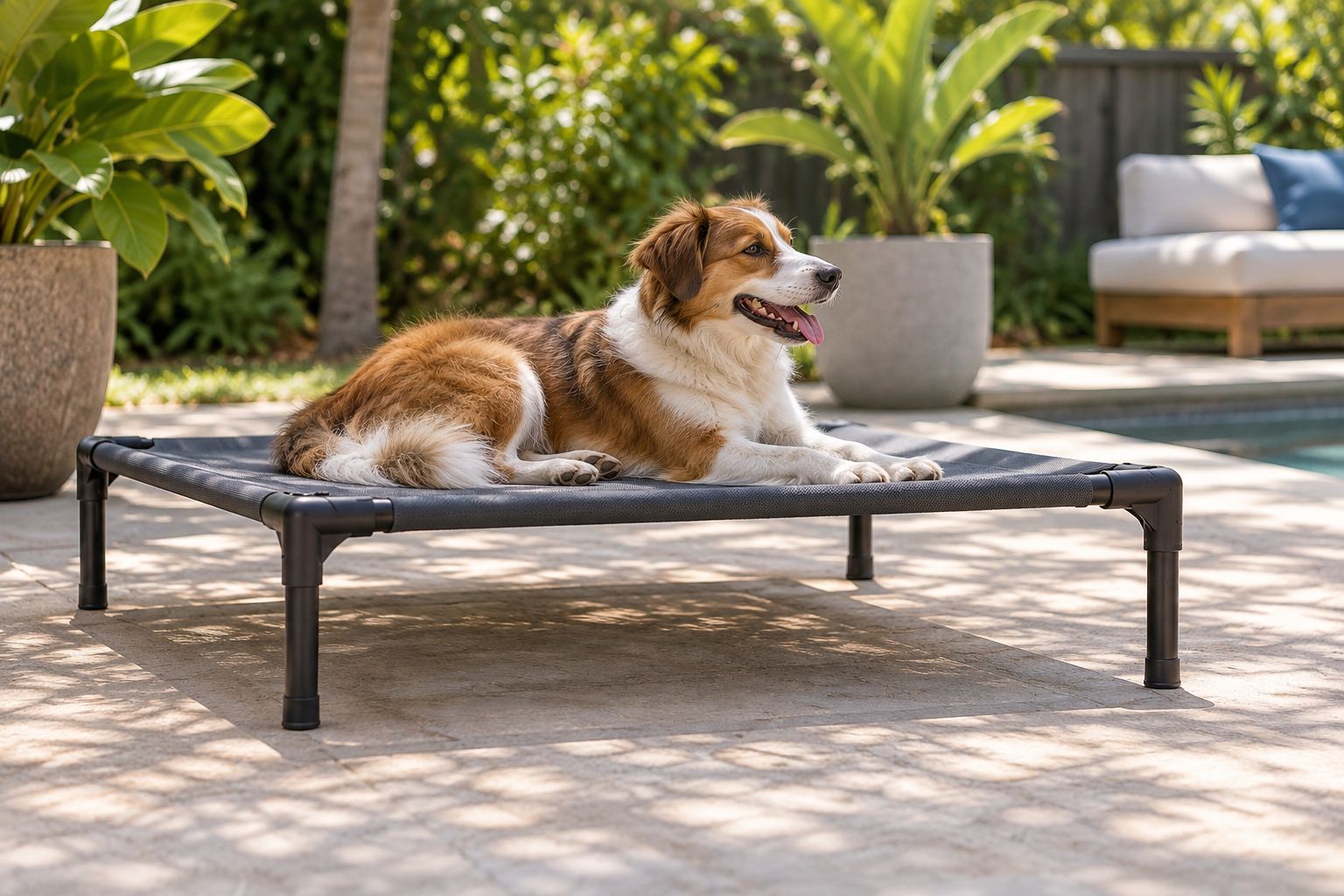
A raised bed suspends a fabric panel across a frame. This creates an open space between your dog and the ground, which helps prevent warmth from becoming trapped under the sleeping surface.
Breathable mesh or textilene is the practical hot-weather choice. Solid canvas can still separate a dog from warm flooring, but tightly woven material generally allows less air through than an open mesh.
Raised beds also suit messy outdoor areas because loose hair and dirt cannot disappear into deep padding. Check whether the sleeping panel detaches for cleaning and whether water can drain rather than collect in folds.
The trade-off is firmness. A taut sling does not provide the same pressure relief as a thick foam bed, and an unstable frame can make a cautious or mobility-limited dog reluctant to step onto it. Rounded frame edges, secure feet and a surface that does not sag heavily under your dog make the bed easier to use.
Best for: healthy dogs resting on shaded patios, in warm garages or in indoor rooms without reliable cooling. Buy for heat management; skip exposed locations in direct sun.
Flat dog beds: more padding with more heat retention
A flat bed rests directly on the floor and commonly uses foam, fiber fill or layered fabric. That construction can support pressure points and create a softer place to rest, but it leaves no airflow channel beneath the dog.
Flat beds are not automatically wrong for summer. A thin, washable mat in an air-conditioned bedroom can remain comfortable, especially when it sits away from sunny windows. The problem is using thick foam or plush bedding in a warm room where trapped body heat has nowhere to go.
Dogs with arthritis, reduced mobility or sensitive joints can prefer a padded surface. If your dog needs cushioning, place the flat bed in the coolest indoor area available and choose a removable, breathable cover instead of relying on a raised cot that the dog avoids.
Washability needs closer attention with flat bedding. Moisture, drool and damp fur can enter the filling when a cover is not water-resistant or removable, so check both the outer fabric and the care instructions before buying.
Best for: air-conditioned rooms, cooler seasons and dogs that prioritize cushioning over maximum airflow. Hold for indoor use; skip thick plush beds in hot, unventilated rooms.
Which bed fits each hot-weather setting?
The right choice depends on where your dog actually sleeps. A raised bed wins in many hot-climate settings, but a cool indoor floor can change the decision.
| Setting | Better fit | What to check |
|---|---|---|
| Shaded patio | Raised bed | Breathable surface, stable feet and weather-resistant frame |
| Uncooled garage | Raised bed | Cross-ventilation and distance from vehicles or stored chemicals |
| Air-conditioned bedroom | Either style | Your dog's cushioning preference and ease of cleaning |
| Sunny deck | Neither until shaded | Move the sleeping area out of direct sun first |
| Crate | Crate-compatible flat mat | Correct dimensions, ventilation and no bunching at the edges |
| Travel stop | Portable raised bed or thin mat | Shade, fresh water and a cool retreat matter more than padding |
A patio surface can stay warm after the sun shifts, so touch the floor where the bed will sit before inviting your dog to settle. If the location feels hot, move the bed rather than expecting its fabric to solve the environmental heat.
For 2026 summer use, reassess the spot as the sun moves during the day. Morning shade does not guarantee afternoon shade, and solid walls can block the breeze that makes an elevated bed useful.
Why cooling performance varies
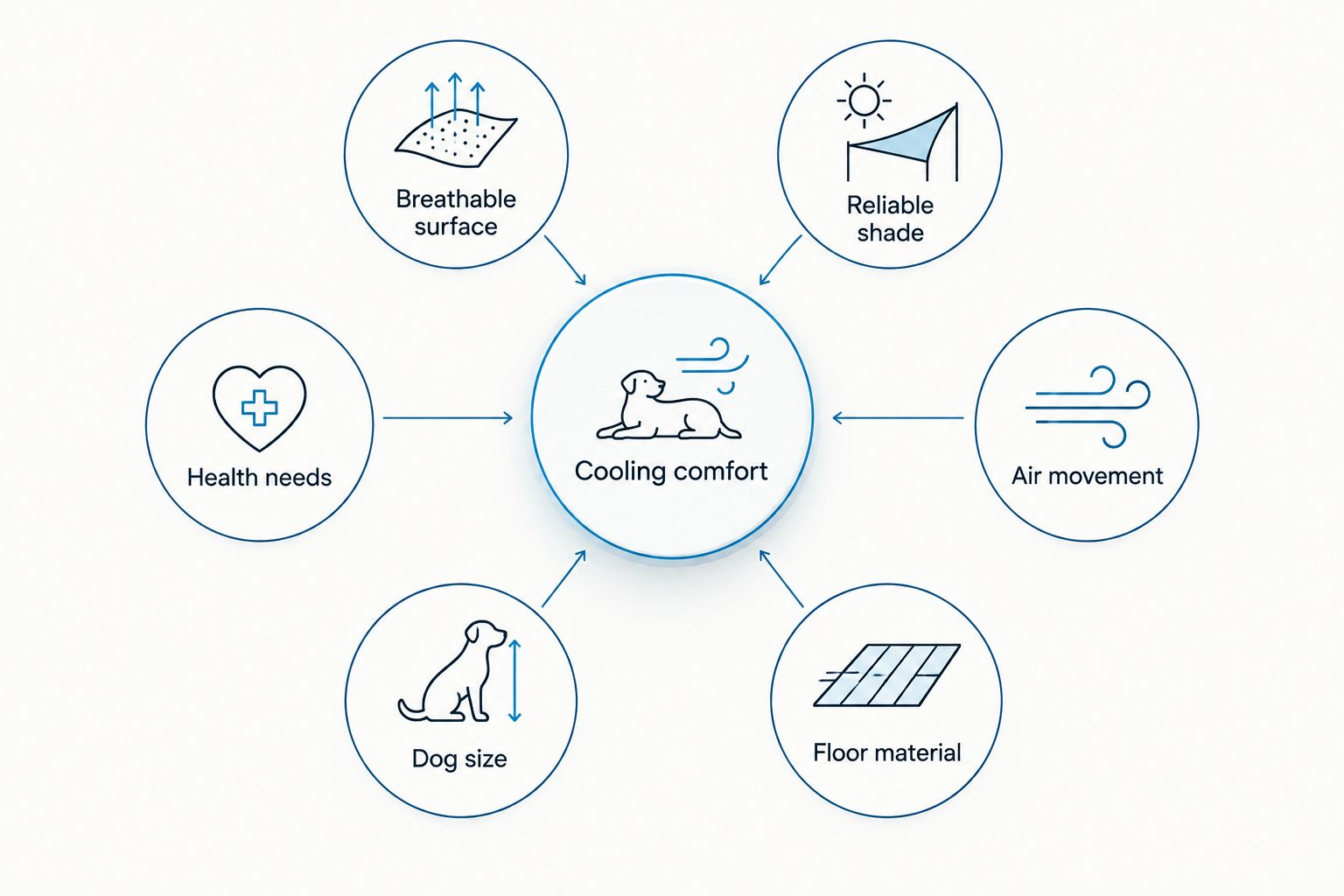
- Sleeping-surface material: Open mesh permits more air movement than dense foam, fleece or heavily padded fabric. Check the full sleeping panel, not only a small mesh insert.
- Shade: Direct sunlight heats both raised and flat beds. A raised frame is not a substitute for a covered resting area.
- Air movement: Elevation helps most where a natural breeze or indoor fan can move air around the bed. Stagnant, hot air limits the benefit.
- Floor material: Concrete, composite decking and tile can hold warmth differently. The practical test is the surface temperature where your dog will rest.
- Dog size and coat: A dog that fills the entire bed can block more of the breathable panel. Dense coats also make access to a cool retreat more important.
- Health and mobility: Senior dogs, flat-faced dogs, dogs carrying excess weight and dogs with heart or breathing conditions need closer heat monitoring. Ask your veterinarian what sleeping surface fits a diagnosed condition.
How to choose a dog bed for a hot climate
-
Start with the sleeping location. Decide whether the bed will sit indoors, on a covered patio, in a garage or inside a crate. Fix direct sun and poor ventilation before comparing fabrics.
-
Check the entire sleeping surface. For a raised bed, look for an open, breathable panel rather than decorative mesh around a solid center. For a flat bed, favor a breathable removable cover and avoid unnecessary plush layers in the warmest room.
-
Match the bed to your dog's resting position. Measure your dog while fully stretched out, then compare those measurements with the usable sleeping area rather than the frame's outside dimensions. Your dog should not need to curl tightly to stay on the surface.
-
Check stability and access. A raised bed should stay level when your dog steps on or off it. Consider a lower frame and a secure, non-slip approach for dogs with reduced mobility.
-
Read the care instructions. Confirm whether the cover or sling can be removed, how it should be cleaned and whether replacement fabric is available. Outdoor bedding needs to dry fully before your dog uses it again.
-
Respect the stated capacity. Compare your dog's current weight with the manufacturer's listed limit. Do not infer capacity from frame thickness or a product photo.
-
Watch your dog use it. Repeatedly choosing a cooler floor, panting while resting or avoiding the new bed tells you the setup needs adjustment. Move the bed, improve shade or offer a different surface instead of forcing the choice.
EverstockPets dog bed guidance focuses on those practical checks because no single material suits every dog. In 2026, the best bed is the one that manages heat without giving up the support, access and stability your dog needs.
Do elevated dog beds actually keep dogs cooler?
Elevated dog beds keep dogs cooler than thick flat beds when air can pass beneath a breathable sleeping surface. They do not actively chill the dog or lower the air temperature, so their benefit drops in direct sun, extreme heat or a space with no ventilation.
A raised bed should be treated as passive heat management. Use it with shade, water and access to a genuinely cooler area, not as protection against dangerous weather.
Is a cooling mat better than a raised dog bed?
A cooling mat can feel cooler at the points touching your dog's body, while a raised bed focuses on continuous airflow underneath. The better option depends on whether your dog prefers a cool contact surface or an open, firmer cot.
Inspect cooling mats for damage and follow their care instructions, especially if your dog chews bedding. A cooling mat should not block the breathable panel of a raised bed unless its manufacturer specifically supports that placement.
Is a raised bed suitable for an older dog in hot weather?
A raised bed suits an older dog only when the frame is stable, the step-up is manageable and the surface provides enough support. A dog with painful joints or reduced balance can prefer a padded flat bed in a cool room, even when the outdoor climate is hot.
Watch how your dog lies down and gets back up. Difficulty stepping onto the frame, circling without settling or avoiding the bed are reasons to try a lower or more cushioned option and discuss persistent mobility changes with a veterinarian.
FAQ
Is a raised dog bed better than a flat one for hot climates?
Yes, a raised dog bed is usually better than a flat one for hot climates because air can move beneath the sleeping surface. It still needs shade, ventilation and a breathable fabric to work well.
What is the best dog bed material for hot weather?
Breathable mesh or textilene is the best hot-weather choice for a raised dog bed. For a flat bed, choose a lightweight removable cover and avoid thick plush layers in warm rooms.
Can I leave a raised dog bed outside all summer?
Leave a raised dog bed outside only if its materials are intended for outdoor use and the location remains shaded. Clean it regularly, inspect the frame and let the fabric dry fully after rain or washing.
Does a raised dog bed replace air conditioning?
No, a raised dog bed does not replace air conditioning or another cool retreat. It improves airflow but cannot make dangerously hot air safe for a dog.
Are flat dog beds too hot for summer?
Flat dog beds are not always too hot for summer when used in a cool, air-conditioned room. Thick foam and plush fill are less suitable in hot, poorly ventilated spaces because they retain more warmth.
How do I know whether my dog likes a raised bed?
Your dog likes a raised bed if they step onto it willingly, settle without repeated repositioning and choose it when other resting spots are available. Avoidance can point to heat, instability, height or insufficient cushioning.
What should I look for in a raised dog bed in 2026?
Look for a breathable sleeping panel, stable frame, secure feet, suitable dimensions, clear weight capacity and practical cleaning instructions in 2026. Placement in reliable shade remains just as important as the bed itself.
One last thing
Test the location before replacing the bed. Move your dog's current resting surface into the coolest shaded area, improve ventilation and watch which spot your dog chooses. If the dog still leaves a flat bed for bare flooring, a breathable raised model is the sensible next step.
EverstockPets' pet-supply guidance for 2026 is simple: buy the raised bed for airflow, but buy the flat bed when joint support and a cool indoor room matter more. The climate informs the choice; your dog's behavior confirms it.