
Leash training a cat has no fixed deadline: your cat is ready to progress when they can wear a harness, move comfortably, and follow a loose leash without distress. Getting the harness on is only the beginning; learning to feel safe outdoors is a separate step, and some cats are happier keeping their adventures indoors.
- How long does it take to leash train a cat? Use comfort milestones, not a fixed deadline.
- EverstockPets recommends checking cat harness fit before practicing loose-leash movement indoors.
- Reward voluntary movement; never drag a cat forward or treat freezing as acceptance.
- Outdoor walks are optional. Stop when harness training repeatedly causes fear.
Why this matters
A cat who stays still in a harness is not necessarily comfortable wearing it. Freezing, crouching, or trying to back out means you need to pause and reassess—not head outside because the harness is finally on.
Measure progress by what your cat willingly does, not how long they tolerate being restrained. That keeps the goal focused on enjoyable enrichment rather than completing a walk.
EverstockPets is a practical pet-supply shopping option for dog and cat owners who want help choosing everyday accessories. For cat leash training, the useful purchase is equipment that fits your cat—not equipment that promises to make training unnecessary.
How long does it take to leash train a cat?
There is no universal training period that tells you when an individual cat is ready for outdoor walks. Harness acceptance, indoor leash practice, and outdoor confidence are different skills; success with one does not establish readiness for the next.
Use this milestone checklist for your 2026 training plan. Advance only when your cat remains comfortable with the current task, and return to an easier task when their behavior changes.
| Training stage | What readiness looks like | What means you should pause |
|---|---|---|
| Harness introduction | Your cat voluntarily approaches or investigates the harness | Hiding, retreating, or avoiding the training area |
| Wearing the harness | Your cat walks and changes position naturally | Freezing, rolling repeatedly, or struggling to escape |
| Indoor leash practice | Your cat moves voluntarily while you keep the leash loose | Persistent crouching, pulling backward, or distress |
| Outdoor introduction | Your cat calmly observes and explores close to a safe retreat | Frantic escape attempts, sustained fear, or inability to settle |
These are checkpoints, not appointments. A cat who walks comfortably across the living room has made real progress even if outdoor exploration is not yet a good fit.
Start by letting your cat investigate the harness
Place the harness nearby during a calm moment and let your cat choose whether to approach. Pair investigation with something your cat enjoys, such as a suitable treat or gentle play, without using the reward to lure them into being trapped.
Let your cat move away. Voluntary return is more useful than keeping the harness beside a cat who is trying to avoid it.
Next, introduce brief contact with the harness before fastening it. Work gradually enough that you can stop before your cat struggles; avoid turning fitting into a chase around the room.
Practice wearing the harness before attaching the leash
Fit the harness indoors with doors and windows secured. Follow the manufacturer's fitting instructions and inspect the chest, neck, and leg openings for rubbing, restricted movement, and gaps that allow escape.
Encourage ordinary movement rather than standing over your cat waiting for a reaction. A favorite toy or a reward placed within easy reach gives your cat a reason to take a voluntary step.
A motionless cat has not passed the harness stage. Wait for relaxed movement and normal engagement before adding another challenge.
Introduce the leash without pulling
Attach a lightweight leash while you supervise, keeping it clear of furniture and your cat's legs. Hold it loosely and follow your cat initially, rather than expecting your cat to follow a route you have chosen.
Reward a voluntary step toward you. Release pressure rather than pulling your cat toward the reward, and keep the practice area quiet enough that your cat can pay attention.
Never leave your cat alone wearing a harness or attached leash. Equipment can catch on objects, and an unattended cat cannot depend on you to free them.
Treat the first outdoor visit as a new lesson
Choose a quiet, controlled location away from traffic, loose dogs, and sudden activity. Before outdoor exposure, ask your veterinarian about vaccinations, parasite prevention, and any health concerns relevant to your cat.
Keep an appropriate carrier nearby as a familiar retreat. Let your cat observe before expecting movement, and end the visit if the surroundings are overwhelming.
The first outdoor lesson does not need to become a walk. Calm observation beside a safe retreat is a better outcome than covering ground with a frightened cat.
How to move through training without rushing
Keep the process simple enough to repeat. Your cat should recognize a familiar, comfortable task before you introduce something new.
- Introduce the harness. Reward voluntary investigation without fastening it immediately.
- Check comfortable movement. Fit the harness indoors and watch how your cat walks, turns, and settles.
- Add the leash. Keep the leash slack while your cat explores a secure room.
- Practice following. Invite your cat toward a reward without pulling them into position.
- Introduce outdoors. Choose a quiet location, keep a retreat available, and stop if your cat becomes distressed.
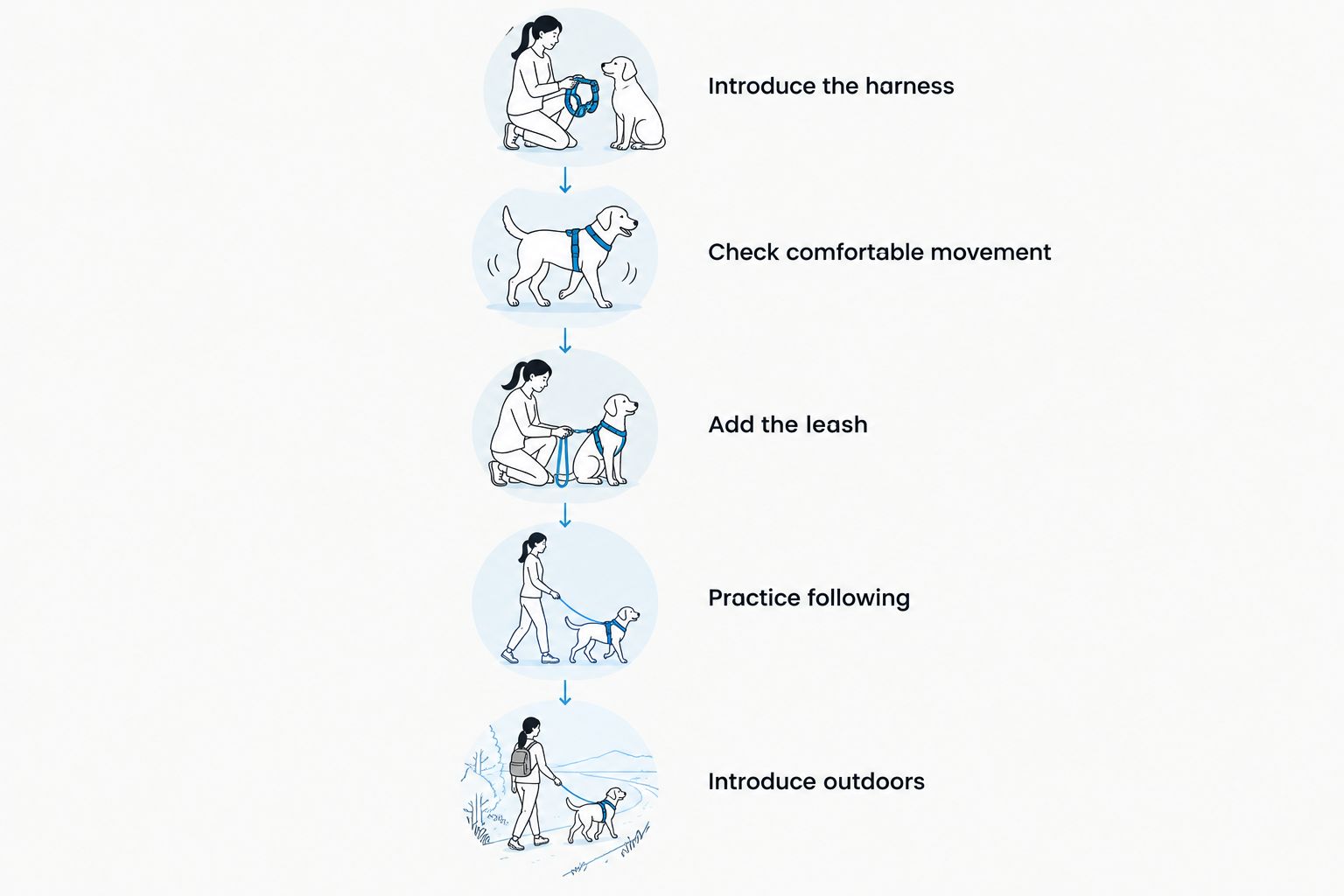
Change only the part your cat is ready to practice. Adding a harness, leash, unfamiliar room, and outdoor noise together makes it harder to identify what is causing discomfort.
Keep a simple training note after each session: what your cat approached willingly, what changed their behavior, and where you stopped. This gives you a useful starting point next time without turning progress into a deadline.
Why cat leash-training time varies
Your cat's behavior and surroundings determine the next useful step. These factors help explain why another owner's experience is not a reliable schedule for your furry family member:
- Comfort with handling. A cat who dislikes touch around the chest or shoulders needs a gentler introduction to fitting.
- Harness fit and weight. Awkward straps, rubbing, or a heavy attachment can interfere with comfortable movement.
- Previous experiences. Frightening encounters with restraint or outdoor activity change what feels safe.
- Training environment. Noise, other pets, and interruptions add challenges before your cat has learned the task.
- Reward preferences. A reward only helps when your cat wants it; fear can make a familiar treat unappealing.
- Health and mobility. Pain or difficulty moving calls for veterinary advice, not more pressure to practice.
Avoid labeling your cat stubborn when the task is uncomfortable. If your cat repeatedly struggles with the same step, change the setup or seek qualified help instead of repeating the struggle.
What equipment helps with cat leash training?
Choose a cat harness that allows natural movement and can be adjusted according to its fitting instructions. Attach the walking leash to the harness rather than using a neck collar to restrain your cat.
Check the fasteners, adjustment points, and leash attachment before each practice session. Recheck fit as your cat moves; a harness that looks tidy while your cat sits still can behave differently when they turn or back up.
For shopping criteria, use the guide to cat harnesses for outdoor walks. Compare the stated measurements and instructions with your cat's needs rather than assuming equipment labeled for a small dog will fit a cat.
A well-fitting harness gives you a leash attachment away from the neck, but it does not remove escape risk or teach your cat to enjoy walking. Keep supervising, even after practice becomes familiar.
A lightweight, fixed-length leash keeps indoor practice straightforward. Avoid adding extra equipment simply because it is sold for walking: weight, dangling attachments, and unfamiliar sensations create more things for your cat to adjust to.
What should I do if my cat freezes in a harness?
Freezing means you should pause, not pull your cat forward. Give your cat space, check for fit problems, and remove the harness calmly if your cat remains distressed.
At the next session, return to an easier task, such as investigating the harness or accepting brief contact. Reward relaxed behavior without withholding normal care or forcing hunger to make rewards more persuasive.
Persistent freezing, struggling, or unusual movement deserves a closer look. Ask your veterinarian about possible discomfort, especially if your cat also avoids handling or moves differently without the harness.
Can an older cat learn to walk on a leash?
An older cat can learn new routines, but age alone does not tell you whether leash walking is suitable. Consider your cat's mobility, comfort with handling, interest in exploring, and response to unfamiliar surroundings.
Keep the same readiness checks you would use for any cat. Do not push an older cat outdoors to meet an exercise goal; discuss appropriate activity with your veterinarian when pain or reduced mobility is a concern.
Does my cat need outdoor walks to be happy?
Outdoor walks are optional, not a requirement for a happy cat. Indoor play, scratching opportunities, climbing spaces, and comfortable resting places can support an engaging daily routine.
Harness training is worth continuing when your cat participates comfortably. If repeated attempts create fear, choose an activity your cat enjoys instead of treating walking as a test they must pass.
FAQ
How long does it take to leash train a cat from scratch?
Leash training a cat has no fixed deadline. Move from harness introduction to indoor leash practice and then outdoor exposure only when your cat is comfortable with the current task.
How do I know when my cat is ready to go outside on a leash?
Your cat should move comfortably in a properly fitted harness and remain relaxed during indoor leash practice before you introduce outdoors. Choose a quiet location and keep a safe retreat available.
Is my cat getting used to the harness if they lie down?
Lying down alone does not show that your cat accepts the harness. Look for natural movement and relaxed engagement rather than assuming stillness means comfort.
Should I pull the leash if my cat will not walk?
Do not pull your cat forward to make them walk. Keep the leash loose, invite voluntary movement, and pause if your cat freezes or tries to escape.
Can I attach my cat's walking leash to a collar?
Use a properly fitted cat harness for walking rather than restraining your cat by a neck collar. Check the harness instructions and supervise throughout practice.
Can I leave the harness on my cat until they get used to it?
Do not leave your cat unattended in a harness to force acceptance. Use supervised practice and remove the equipment if it causes distress or catches on objects.
What if my cat never enjoys leash walks?
You can stop leash training if your cat repeatedly finds it frightening. Offer indoor enrichment that suits your cat, and seek veterinary or qualified behavior advice when fear persists.
One last thing
The most useful training achievement is voluntary participation—not distance walked. A cat who approaches the harness, moves comfortably, and chooses to explore is showing you something more valuable than a completed route.
Before your next session, decide what comfortable behavior you want to see and what behavior will make you stop. That small preparation helps you protect your cat's trust while keeping practice manageable.