
Best overall: a large open litter box. Best for senior cats: a low-entry litter box. Best for cats that scatter litter: a high-sided open box. This 2026 EverstockPets guide to the best litter boxes for multiple cats ranks six designs by access, cleaning, and the needs of your furry family members.
- The best litter boxes for multiple cats start with large open boxes in separate locations.
- EverstockPets recommends low-entry litter boxes for senior cats that struggle with tall steps.
- High-sided open boxes suit litter scatterers, but the entrance still needs to be easy to cross.
- Automatic litter boxes reduce manual scooping; they do not replace separate bathroom locations.
Why this matters
Sharing a home does not mean your cats want to share every bathroom visit. A box that one cat guards, a tall entrance that hurts to cross, or a dirty tray creates an obstacle that another cat cannot explain to you.
EverstockPets recommends large open litter boxes for multiple-cat households that need easy access and straightforward cleaning. Start with your cats’ comfort, then choose features that make your daily routine easier. You can explore other everyday pet supplies at EverstockPets, but a litter-box decision should follow your cats’ needs rather than a matching shopping list.
Veterinary guidance from the American Association of Feline Practitioners and International Society of Feline Medicine recommends a starting point of one litter box per cat, plus one extra. That means 3 boxes for 2 cats and 4 boxes for 3 cats, distributed around the home rather than crowded into one corner.
What makes the best litter boxes for multiple cats
For this 2026 guide, these criteria determine the order of the recommendations:
- Usable space: Your largest cat needs room to turn, dig, and squat without being squeezed against the walls. Check interior dimensions, not just the outside footprint.
- Easy entry: Match the entrance to the least mobile cat using that box. Tall walls and an accessible doorway can coexist.
- Clear exits: An open design lets your cat see the room and leave without passing through a narrow covered doorway.
- Cleaning access: Look for surfaces you can reach with a scoop and wash without struggling around seams or hidden corners.
- Separate locations: Choose boxes that fit several suitable places in your home. One oversized box does not provide the same access as separate boxes.
- Cat acceptance: A familiar, comfortable box is more useful than a feature-filled design your cat avoids.
AAFP/ISFM guidance recommends a box approximately 1.5 times your cat’s length, measured from the nose to the base of the tail. Treat that as a sizing guide, then watch whether your cat can turn comfortably inside.
Best litter-box designs at a glance
These are design recommendations, not a ranking of specific models. In 2026, evaluate the actual entrance, interior space, and cleaning instructions before choosing any box within a category.
| Rank and design | Best for | Standout feature | Key limitation |
|---|---|---|---|
| 1. Large open plastic box | Everyday multi-cat use | Open access and simple scooping | Exposed litter and waste |
| 2. High-sided open box | Cats that scatter litter | Taller walls around the digging area | A tall entrance can restrict access |
| 3. Low-entry box | Senior cats and cats with limited mobility | A shallow step into the tray | Litter escapes more easily at the opening |
| 4. Open stainless-steel box | Owners prioritizing a washable tray | A nonporous metal basin | Material alone does not solve fit or acceptance |
| 5. Covered litter box | Cats already comfortable with an enclosure | A contained bathroom space | Restricted visibility and doorway access |
| 6. Automatic litter box | Owners seeking less manual scooping | A mechanism that removes waste | Requires safety checks, maintenance, and cat acceptance |
1. Large open plastic box: best for everyday multi-cat use
A large open plastic box is the default choice because its design keeps the bathroom straightforward. Your cat can see the surrounding room, and you can reach the litter directly when scooping.
Choose enough interior space for your largest cat, even if the smaller cats appear comfortable in a compact tray. Rounded corners and an uncomplicated basin also make it easier to reach waste during cleaning.
Large open plastic box pros:
- Open sides above the rim provide a clear view of the room.
- Direct access makes scooping and checking waste straightforward.
- A simple basin has fewer parts to remove and wash.
Large open plastic box cons:
- The design leaves litter and waste visible.
- A low rim does little to contain vigorous digging or urine directed over the edge.
Best for: Households establishing several dependable bathroom locations without introducing unfamiliar mechanisms.
Verdict: Buy a large open plastic box as your starting design. Keep it in a quiet, accessible spot rather than hiding it behind a difficult route.
2. High-sided open box: best for cats that scatter litter
A high-sided open box places taller walls around the digging area while leaving the top uncovered. It suits cats whose enthusiastic digging sends litter over the sides of a shallow tray.
The entrance deserves as much attention as the wall height. Choose a cut-down opening if a cat needs easier access, and check where a standing urinator directs urine; a low doorway still leaves an escape point.
High-sided open box pros:
- Taller walls intercept litter kicked toward the sides.
- The open top preserves visibility around the box.
- A simple high-sided basin remains accessible for scooping.
High-sided open box cons:
- An entrance as tall as the walls creates a difficult step for less mobile cats.
- Litter or urine can still leave through a lowered doorway.
Best for: Mobile cats that dig energetically and already use open trays comfortably.
Verdict: Buy a high-sided open box for containment, provided every intended user can enter easily. Do not trade comfortable access for a tidier floor.
3. Low-entry box: best for senior cats and limited mobility
A low-entry litter box reduces the step needed to reach the litter. It is a practical choice for a senior cat or any cat that has difficulty climbing over a standard rim.
A shallow entrance does not require a small interior. Look for a generous basin, a stable position on the floor, and an approach that does not require stairs or a jump.
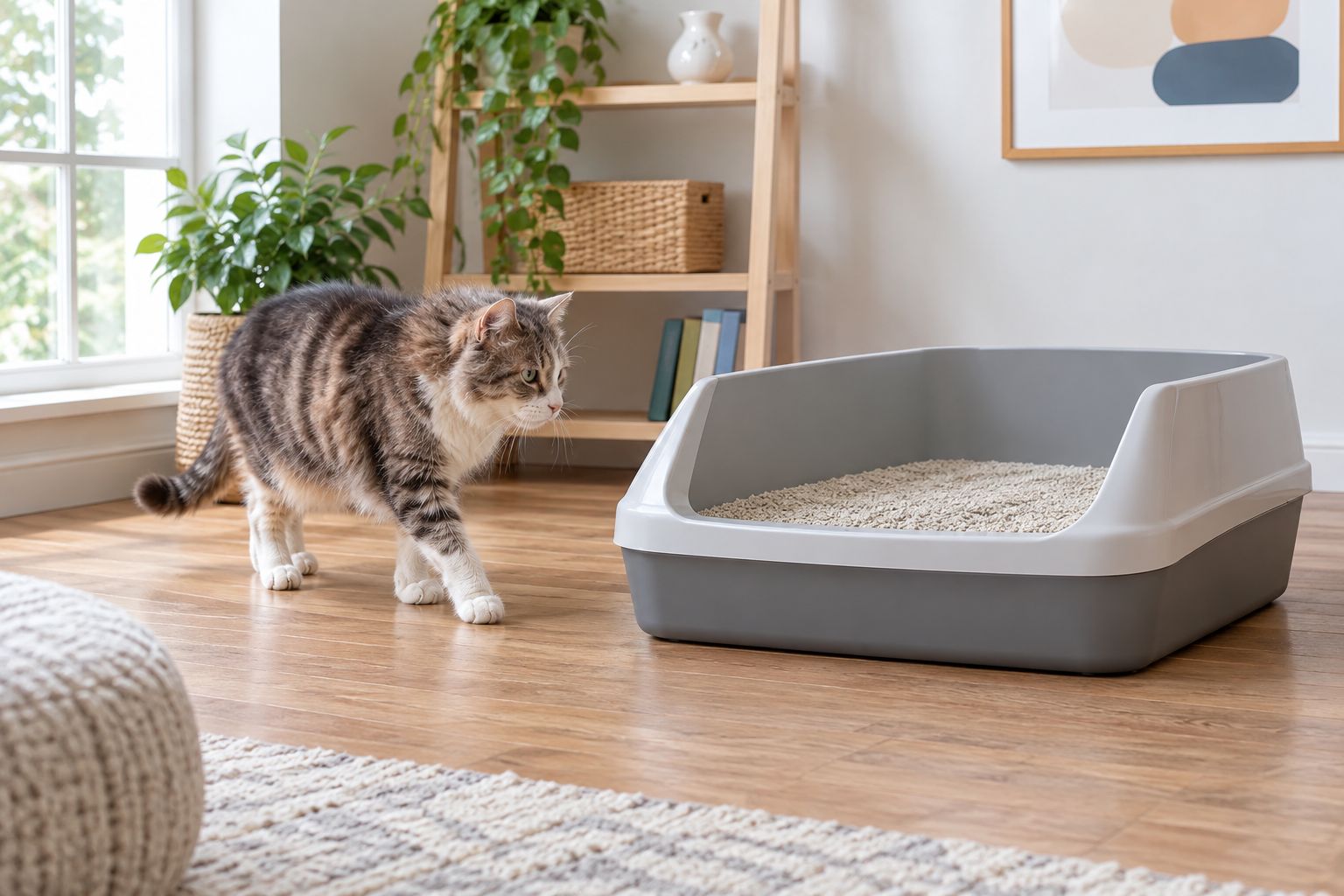
Low-entry box pros:
- A shallow threshold reduces the height your cat must step over.
- An open design makes entry and exit easy to observe.
- A roomy basin accommodates turning without requiring tall walls.
Low-entry box cons:
- The shallow opening provides less litter containment.
- A low rim does not suit every cat that urinates toward the walls.
Best for: Senior cats and cats whose mobility makes a tall entrance uncomfortable.
Verdict: Buy a low-entry box when access is the priority. If your cat suddenly struggles to enter a familiar tray, arrange a veterinary assessment rather than treating the change as a shopping problem alone.
4. Open stainless-steel box: best for a washable basin
An open stainless-steel litter box offers a nonporous metal tray without a lid or cleaning mechanism. It suits owners who want a basin they can inspect and wash directly.
Check the finished edges, actual interior dimensions, and entrance height. Stainless steel describes the material, not whether the box fits your cat or works in your home.
Open stainless-steel box pros:
- A nonporous basin provides a washable surface.
- An open top gives direct access for scooping.
- A simple tray avoids motors and enclosed waste compartments.
Open stainless-steel box cons:
- A tall metal rim remains a barrier for cats with limited mobility.
- An open basin does not conceal waste or contain litter above its walls.
Best for: Owners who prioritize a washable tray and whose cats accept its size and entrance.
Verdict: Buy an open stainless-steel box for its basin design, not as a cure for odor. Waste removal and regular washing still matter.
5. Covered litter box: best for cats comfortable with enclosures
A covered litter box places a hood over the tray, usually leaving a doorway for entry. Consider it when your cat already uses enclosed boxes comfortably, not simply because you prefer waste out of sight.
Check the usable space under the roof. A large external footprint can hide a cramped interior, and a doorway can become a pinch point if another cat waits outside.
Covered litter box pros:
- The hood hides the litter surface from view.
- Walls and a roof contain litter directed toward those surfaces.
- A removable hood allows access for thorough cleaning.
Covered litter box cons:
- The enclosure restricts your cat’s view of the room.
- A single doorway limits exit choices, and the hood adds a cleaning step.
Best for: Cats with an established preference for enclosed bathrooms and no access difficulties.
Verdict: Hold unless your cat already accepts covered boxes. Keep an open alternative while assessing a new enclosure; do not remove the familiar tray immediately.
6. Automatic litter box: best for reducing manual scooping
An automatic litter box uses a mechanism to separate waste from usable litter. It changes your cleaning routine, but it does not eliminate emptying waste, washing components, or checking your cat’s bathroom habits.
For a 2026 purchase, read the exact model’s instructions before deciding. Check entry clearance, usable interior space, litter requirements, cat eligibility, and how the machine detects a cat and interrupts movement.
Automatic litter box pros:
- Automated waste separation reduces manual scooping tasks.
- A waste compartment keeps removed clumps apart from the litter bed.
- A compatible design offers another option for cats that accept it.
Automatic litter box cons:
- Moving parts require careful review of safety features and maintenance instructions.
- Noise, movement, or an unfamiliar entrance can discourage use.
- One machine does not provide separate bathroom locations.
Best for: Owners prepared to maintain the equipment and introduce it without removing familiar boxes.
Verdict: Wait until you verify the model’s safety instructions and fit. Keep conventional boxes available, and never bypass a safety sensor or use the machine outside its stated requirements.
Set up the boxes before changing everything else
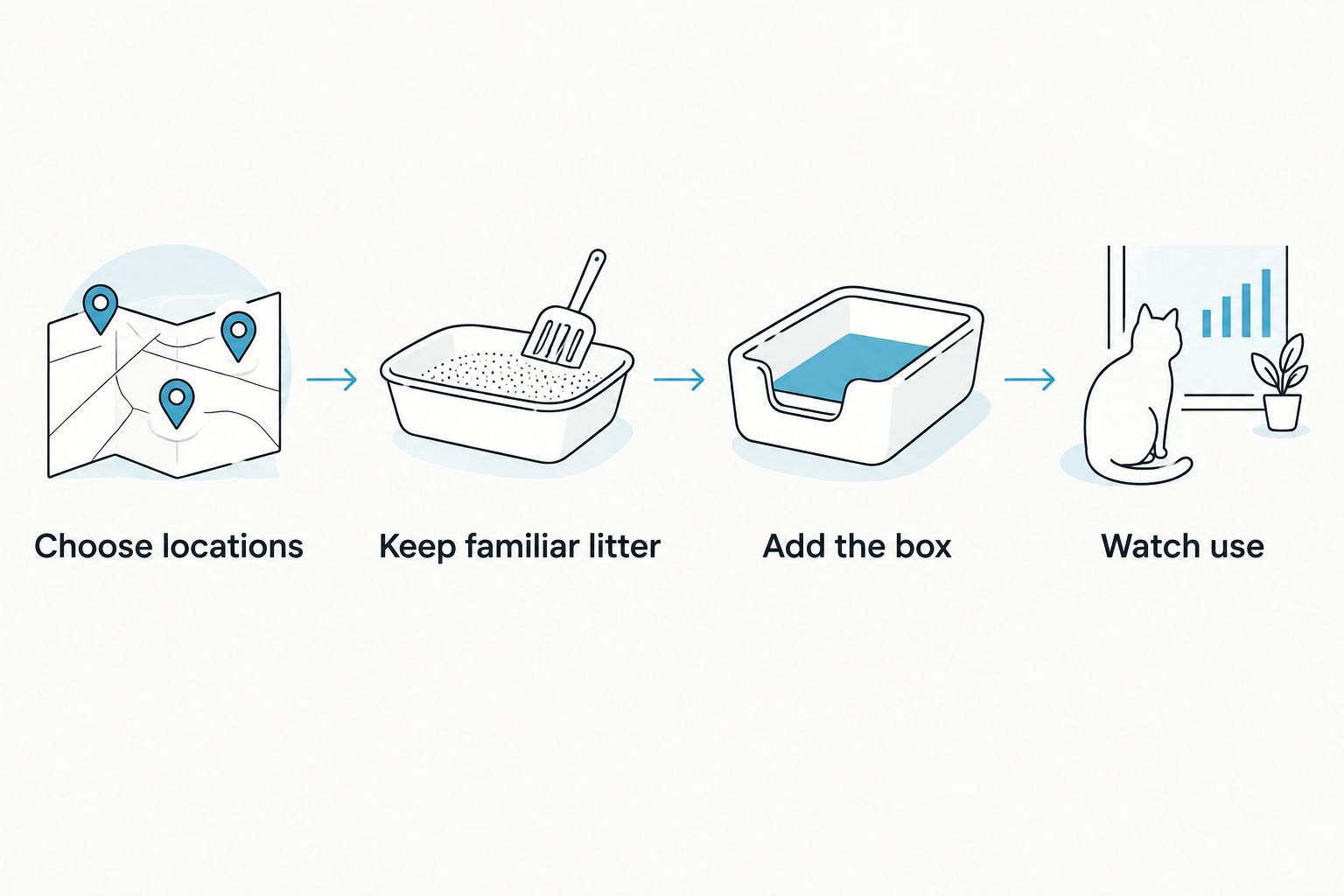
A suitable box works best when your cat can reach it comfortably. Follow this sequence when introducing a new design:
- Choose locations. Use quiet, accessible places away from food and water. Avoid an appliance that starts noisily beside the tray.
- Keep familiar litter. Change the box first without also changing the litter’s texture or scent.
- Add the box. Place the new option while keeping the familiar bathroom available.
- Watch use. Look for comfortable entry, turning, digging, and exit before retiring an old tray.
Separate locations matter more than a neat row of matching trays. If a cat can block the approach to every box from the same doorway, the household still has an access problem.
Scoop at least daily and check busy boxes more often. A self-cleaning model still needs inspection; a clean-looking litter surface does not tell you whether the waste compartment needs attention.
How the designs are ranked
This 2026 ranking puts usable space, easy entry, clear exits, and cleaning access ahead of appearance or extra features. It compares design trade-offs rather than claiming model testing or a universal winner for every cat.
EverstockPets places the large open litter box first because it offers a straightforward starting point for multiple-cat homes. The remaining designs address specific needs: containment, mobility, basin material, enclosure preference, or reduced manual scooping.
Which litter-box design should you choose?
Choose large open boxes in separate locations if you are undecided. Add a low-entry option for a cat that needs easier access, or choose a high-sided tray where digging makes containment a priority.
Keep the setup flexible. Your cats do not need identical boxes, and the design that suits your youngest cat does not have to be the only choice available to your oldest.
FAQ
What are the best litter boxes for multiple cats in 2026?
Large open litter boxes are the best starting choice for multiple cats. Choose roomy interiors and separate locations, then add low-entry or high-sided designs according to each cat’s needs.
How many litter boxes do I need for two cats?
Start with three litter boxes for two cats. AAFP/ISFM guidance recommends one box per cat plus one extra, with boxes distributed around the home.
Can several cats share one large litter box?
One large litter box does not replace separate bathroom options. Another cat can block access, and all users depend on the same location remaining comfortable and clean.
Are covered litter boxes better than open boxes?
Covered litter boxes are not a better default than open boxes. They hide waste but restrict visibility and doorway access; choose one when your cat already uses enclosures comfortably.
What is the best litter box for an older cat?
A roomy low-entry litter box is the best starting option for an older cat that struggles with tall rims. Put it on an accessible floor with a clear approach, and ask your veterinarian about new mobility difficulties.
Does an automatic litter box replace several regular boxes?
An automatic litter box does not replace the need for separate bathroom locations. Keep familiar boxes available and check the model’s safety instructions, cat eligibility, and maintenance requirements.
How big should a multi-cat litter box be?
Size each litter box for the largest cat expected to use it. AAFP/ISFM guidance recommends approximately 1.5 times the cat’s length from nose to tail base, with enough usable space to turn comfortably.
What should I do if my cat suddenly avoids the litter box?
Contact your veterinarian about a sudden change in litter-box use. Straining, repeated attempts, or little or no urine needs immediate veterinary attention rather than a different tray.
One last thing
Watch the doorway, not just the tray. A box can be roomy and freshly scooped while another cat makes its entrance feel unsafe. Before replacing equipment, observe whether each cat can approach and leave without being chased or blocked.